Uttarakhand Temples Enforce Entry Restrictions for Non-Hindus
In a significant development affecting several prominent Hindu shrines in Uttarakhand, temple committees have unanimously decided to prohibit the entry of non-Hindus into sacred sites including the Badrinath shrine, Kedarnath shrine, and Gangotri Dham. This move has sparked discussions about religious traditions and access to places of worship in the state known as Devbhoomi.
Gangotri Dham and Mukhba Implement Strict Prohibition
According to reports from news agency ANI, the Shri Gangotri Temple Committee held a meeting on Sunday where members unanimously agreed to ban non-Hindus from entering Gangotri Dham. The restriction extends beyond the main temple to include Mukhba, which serves as the winter abode of Maa Ganga.
Suresh Semwal, Chairman of the Shri Gangotri Temple Committee, confirmed that "the entry of non-Hindus into the Dham will be strictly prohibited" following this decision. He emphasized that this ban would remain in effect at both Gangotri Dham and Mukhba, ensuring consistent enforcement across associated religious sites.

Badrinath-Kedarnath Temple Committee Proposes Expanded Ban
In a parallel development, the Shri Badrinath-Kedarnath Temple Committee is considering a proposal to restrict non-Hindu entry not only to these two major shrines but to all temples under its jurisdiction. Hemant Dwivedi, Chairman of the committee, indicated that this proposal would be formally presented during an upcoming board meeting.
Dwivedi explained that "preserving the religious and cultural traditions of Devbhoomi Uttarakhand was of paramount importance" in considering these restrictions. He suggested that previous non-BJP governments had allowed violations of what he described as "long-standing traditions" at these sacred sites.
"To ensure the sanctity of these shrines and proper observance of age-old traditions, concrete steps will now be taken by the temple committee," Dwivedi stated, outlining the committee's commitment to maintaining what they perceive as traditional practices.
Har Ki Pauri Implements Century-Old Restrictions
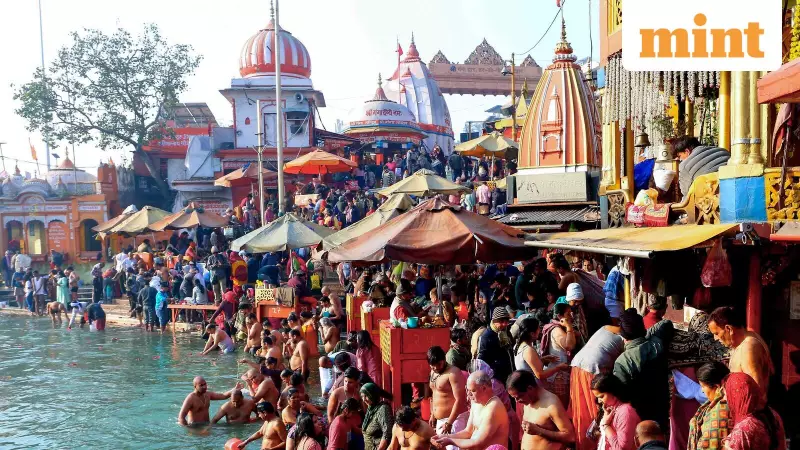
Meanwhile, in Haridwar, signs reading 'Non-Hindu prohibited area' have been prominently displayed at Har Ki Pauri, one of the most sacred ghats along the Ganges River. The Ganga Sabha, the organization responsible for managing this area, installed these signs at all entry points including bridge railings and pillars.
Nitin Gautam, President of Ganga Sabha, clarified that these restrictions are not new but rather enforcement of existing regulations. "According to the Haridwar Municipal Bylaws of 1916, the entry of non-Hindus into the Har Ki Pauri area is completely prohibited," he explained. "This sign has been put up to inform everyone about this bylaw."
Haridwar Municipal Commissioner Nandan Kumar corroborated this information, confirming that the 1916 bylaws indeed prohibit non-Hindu entry into the Har Ki Pauri area. The recent installation of signs followed a viral video showing two young men wearing traditional Arab attire in the area, though it was later determined they were Hindus creating content for a YouTube channel.
Political Reactions and Broader Implications
The implementation of these restrictions has drawn criticism from opposition parties in Uttarakhand. Suryakant Dhasmana, Congress state vice-president, characterized the moves as "diversionary tactics of the BJP government."
"There is no need for any such formal prohibition as non-Hindus don't enter these temples," Dhasmana argued. "They (BJP) just want to divert the public attention from pressing issues of the state."
Looking ahead, the Ganga Sabha has reportedly requested that all religious places, temples, and Ganga ghats in the entire Haridwar Kumbh area be restricted for non-Hindus before next year's Ardh Kumbh celebration. Sources indicate the Uttarakhand government is seriously considering this broader proposal, which could significantly impact access to multiple religious sites during major Hindu gatherings.

These developments highlight ongoing tensions between preserving religious traditions and ensuring inclusive access to culturally significant sites in India. As temple committees and local authorities implement these restrictions, the debate continues about how to balance religious sanctity with principles of accessibility in places of worship across the country.