China's Top Military Official Faces Probe Over Nuclear Secrets and Bribery Allegations
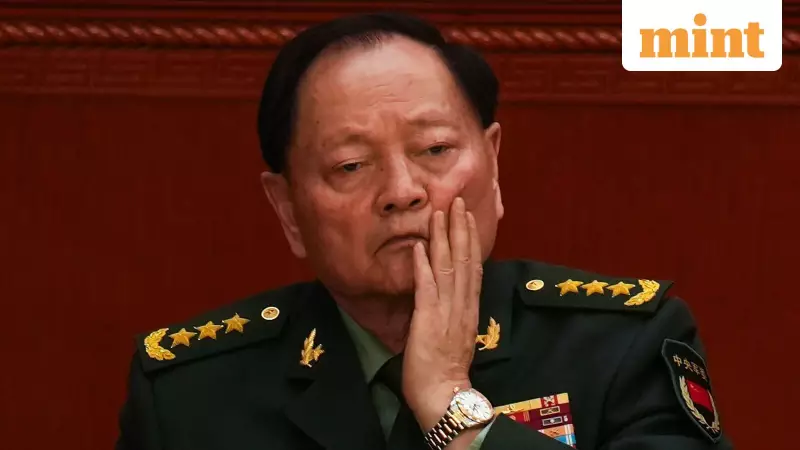
In a stunning development that has sent shockwaves through China's political and military establishment, authorities have launched a high-level investigation into General Zhang Youxia, the vice chairman of China's Central Military Commission. Once regarded as President Xi Jinping's most-trusted military ally, Zhang now stands accused of leaking sensitive information about China's nuclear weapons program to the United States and accepting substantial bribes in exchange for official promotions.
Unprecedented Allegations and Internal Briefing Details
The investigation was announced following a confidential briefing attended by some of the military's highest-ranking officers. According to sources familiar with the matter, the briefing revealed that Zhang is under scrutiny for:
- Forming political cliques that undermine party unity
- Abusing his authority within the Central Military Commission
- Oversight failures in military hardware procurement
- Accepting huge sums of money for official promotions
The most explosive allegation centers on Zhang's alleged leaking of core technical data on China's nuclear weapons to the United States. Evidence against him reportedly came from Gu Jun, former general manager of the China National Nuclear Corp., who is also under investigation for severe violations of party discipline and state laws.

Historical Context and Political Implications
At 75 years old, Zhang represents a significant figure in China's military hierarchy. As a member of the party's elite Politburo and a "princeling"—descendant of revolutionary elders—his downfall carries profound implications. His father fought alongside Xi's father during the Chinese civil war, making this investigation particularly noteworthy in the context of China's political dynamics.
Analysts describe this move as "unprecedented in the history of the Chinese military" and represent what some experts call "the total annihilation of the high command." The investigation marks the most aggressive dismantling of China's military leadership since the Mao Zedong era, reflecting Xi's intensified crackdown on corruption and disloyalty within the armed forces.
Broader Military Purge and Readiness Concerns
The investigation into Zhang is part of a broader pattern of military purges that has seen:
- More than 50 senior military officers and defense-industry executives investigated or removed in the past 2½ years
- Top officers unseated across army, air force, navy, strategic-missile force, and paramilitary police
- The Central Military Commission reduced from six professional military members to just one active uniformed officer
This sweeping purge has raised serious concerns about military readiness. Experts warn that the "vacuum at the top is untenable" and likely to impact the People's Liberation Army's ability to undertake major, complex military operations in the short to medium term.
Connection to Former Defense Minister and Taiwan Strategy
The investigation has also linked Zhang's downfall to his promotion of former Defense Minister Li Shangfu, whom he allegedly helped elevate in exchange for large bribes. Li was removed as defense minister in 2023 and expelled from the party the following year for corruption.
Analysts suggest that Xi's decision to target Zhang signals that corruption, patronage networks, and compromised state secrets are viewed as existential threats to China's goal of gaining control over Taiwan. However, some experts believe the resulting hollowing out of senior ranks might actually lower the immediate risk of a cross-strait invasion as Beijing pivots to a more calculated strategy.

Political Motivations and Power Consolidation
The opacity of China's political system makes it difficult to ascertain Xi's precise motivations for targeting a longtime ally. Internal explanations provided to party elite don't always reflect complete or true motivations behind such decisions. However, a recent editorial in the PLA Daily accused Zhang of having "severely trampled on and undermined" the institutional basis of the CMC chairman's authority, suggesting political factors play a significant role in the case.
Regardless of the underlying reasons, experts note that Xi's decision to cast out Zhang demonstrates his confidence in consolidating power over the military. As one analyst observed, "It's not a sign of weakness, but of strength, for Xi." The investigation represents a dramatic escalation in China's ongoing anti-corruption campaign and signals potentially significant shifts in the country's military and political landscape.