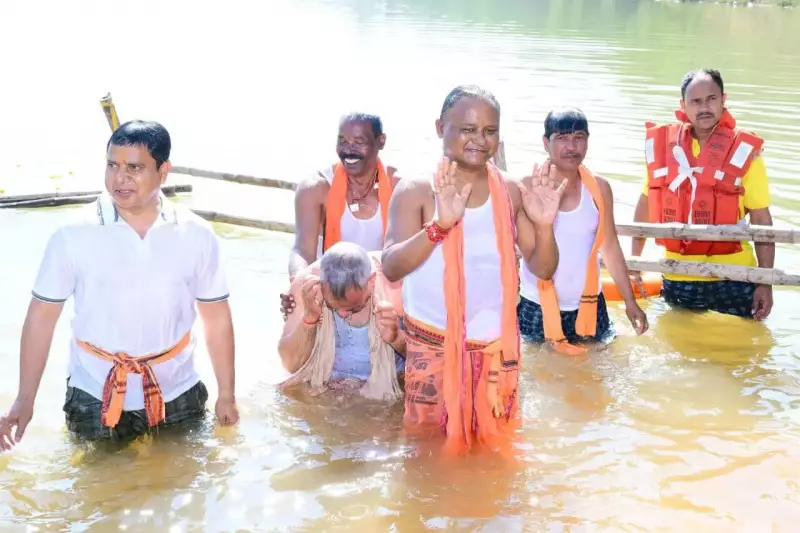
Odisha Chief Minister Mohan Charan Majhi performed traditional Makar Sankranti rituals at the sacred Baitarani river on Wednesday. Accompanied by his wife Priyanka Marandi, the chief minister took a holy dip at Shaibya Kaveri Ghat near Rajnagar in Keonjhar district's Patna block.
Seven Dips and Temple Visit
Majhi arrived at the ghat around 11:30 am amid tight security arrangements. Following tradition, he took seven dips in the river waters. He then offered holy water to the sun god. The chief minister visited the nearby Raghunath Jew temple on the riverbank after completing the ritual.
He offered prayers at the temple and extended good wishes to the people of Odisha. "He took seven dips as per tradition and later had Makar pitha after the darshan of Lord Raghunath Jew," said BJP leader Kiranbala Nayak, a close associate of the chief minister.

Prayers for Development
Majhi stated that he prayed for industrial growth in Keonjhar district and overall development of both the district and the state. The district administration had made elaborate arrangements for the visit, with extensive security measures implemented by police and fire services.
Telkoi MLA Fakir Mohan Naik joined the chief minister for the ritual. Two of Majhi's childhood friends also participated in the holy dip ceremony. Last year, Majhi had performed similar rituals at Anusuya Teertha Ghat of the same river near the Patna block headquarters.
Sacred Baitarani River
The Baitarani river holds significant religious importance in Odisha. It originates from Gonasika hill in Keonjhar's Banspal block. The river flows approximately 360 kilometers through Keonjhar, Bhadrak and Jajpur districts before merging into the sea.
Ancient epics mention the Baitarani river, making it particularly revered among devotees and researchers. The river's historical and spiritual significance attracts pilgrims throughout the year, especially during important festivals like Makar Sankranti.
Devotees Throng Kalijai Temple
Meanwhile, Kalijai island inside Chilka lake witnessed massive crowds on Wednesday. Devotees braved winter chill to visit the temple dedicated to Goddess Kalijai, the presiding deity of fishermen. People traveled from various parts of Odisha and neighboring Andhra Pradesh to catch a glimpse of the goddess and take holy dips in the blue lagoon.
Hundreds of boats were anchored at multiple locations including Balugaon, Barkul, Keshapur and Krushna Prasad to ferry devotees to the temple. Devotees believe that worshipping Maa Kalijai on this occasion helps wipe away sins, according to local traditions.
Transport and Safety Arrangements
Basant Nayak, president of Maa Kalijai Motorboat Owners' Association, explained the transportation arrangements. "We have engaged around 200 boats to carry devotees to the Kalijai temple from Barkul jetty," he said. Approximately 120 additional boats operated from Balugaon jetty to transport temple visitors.
Boat drivers reported favorable conditions on the lake due to dry weather without morning fog. Police maintained strict vigil to ensure safety regulations were followed during passenger transport. JK Parida, inspector-in-charge of Balugaon police station, emphasized safety measures.
"The passengers have been asked to wear life jackets. At the same time, we also ensure to avoid overloading in the boats," Parida stated. Adequate police personnel were deployed at both Balugaon and Barkul jetties to monitor operations.
Pongal Celebrations in Berhampur
In Berhampur, the Telugu community celebrated the three-day Pongal festival with traditional fervor. The festival began on Tuesday with Bhogi celebrations. Wednesday marked the second day, known as Pongal or Makar Sankranti.
Community members gathered at Samajam to celebrate Sankranti with colorful rangoli displays and traditional bonfire nights. Women and children participated actively in the celebrations. Andhra Mahila Samajam organized cultural programs featuring cine singers invited from Andhra Pradesh.
MLA K Anil Kumar attended the event as a special guest. The celebrations showcased traditional Telugu culture while marking the important harvest festival. The festive atmosphere reflected the cultural diversity of Odisha during the Makar Sankranti period.