Words possess an extraordinary ability to travel across boundaries, flowing like rivers, scaling hills, and transforming as they encounter diverse cultures and landscapes. While many nations experience multilingual environments daily, one country stands unparalleled in its linguistic richness, hosting more languages than any other on our planet.
Papua New Guinea: The Undisputed Language Giant
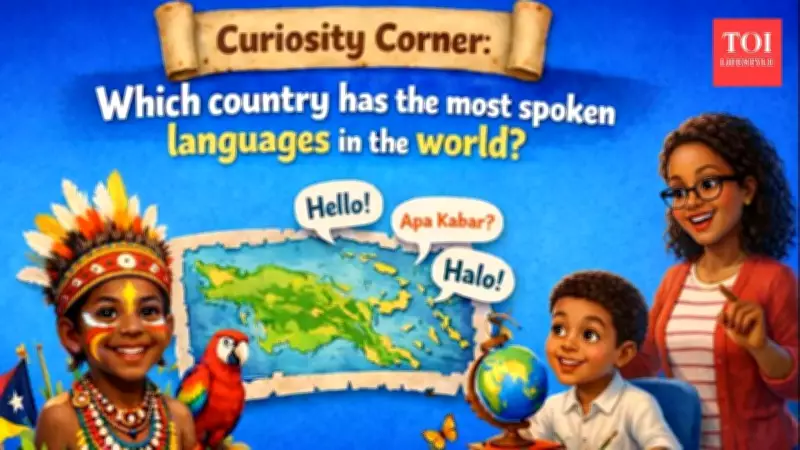
Nestled in the Pacific Ocean near Australia, Papua New Guinea may appear modest on global maps, yet it represents a monumental linguistic treasure. According to comprehensive data from Our World in Data, this remarkable nation is home to over 840 living languages. This staggering figure means Papua New Guinea alone contains more linguistic diversity than the entire continents of Europe and North America combined.
Each of these languages belongs to distinct communities with their own rich cultural tapestries—unique songs that echo through generations, captivating stories passed down through elders, and humor that reflects local perspectives. This linguistic wealth transforms Papua New Guinea into a living museum of human expression.

The Geographic Roots of Linguistic Diversity
What explains this extraordinary concentration of languages in one relatively small nation? The answer lies in Papua New Guinea's dramatic topography. Towering mountain ranges, dense rainforests, and deep river valleys have historically created natural barriers between communities. For centuries, villages remained isolated, with residents interacting more frequently with their natural surroundings than with neighboring settlements.
Over generations, this geographical separation allowed each community to develop its own distinct linguistic identity. A river here or a mountain pass there gradually transformed what might have been dialectical variations into completely separate languages, creating the complex linguistic mosaic we observe today.
Languages Born from Daily Existence
Many Papua New Guinean languages emerged directly from practical needs and environmental interactions. Vocabulary developed around fundamental aspects of life: specific terms for different types of rainfall essential for agriculture, precise words for various fishing techniques, and nuanced expressions for family relationships.
Some languages feature remarkably specialized vocabulary, including distinct words for different types of mud or specific forest sounds. This linguistic precision demonstrates how closely communities, from children to elders, have observed and engaged with their natural environments throughout their development.
Multilingual Childhood: Navigating Home, School, and Community
For children growing up in Papua New Guinea, multilingualism becomes a natural part of daily life. Most begin by learning their local indigenous language at home, absorbing cultural knowledge and community values through this primary linguistic lens.
At school, many children encounter Tok Pisin, an English-based creole language that serves as a crucial lingua franca, enabling communication between speakers of different native languages across the nation's diverse regions. English education also forms part of the curriculum, creating a trilingual environment for many young learners.
This seamless switching between languages becomes as routine as changing games during playtime, developing cognitive flexibility and cultural adaptability from an early age.
Global Linguistic Comparisons
While Papua New Guinea leads the world in linguistic diversity within a single nation, other countries also demonstrate remarkable multilingual landscapes. Indonesia ranks second globally, with more than 700 languages spoken across its numerous islands. Nigeria follows closely with over 500 languages, each bearing influences from the region's vibrant civilizations and complex historical interactions.
Despite these impressive numbers from other nations, Papua New Guinea maintains its unique position at the pinnacle of linguistic diversity, preserving an unparalleled concentration of distinct languages within its national borders.

The Profound Value of Linguistic Preservation
Every language represents more than just a communication system—it carries unique emotional expressions, philosophical concepts, and collective memories. When a small language disappears, humanity loses not just vocabulary but an entire way of perceiving and understanding the world.
Papua New Guinea serves as a powerful reminder to younger generations about the importance of attentive listening and cultural preservation. Each linguistic community, regardless of size, possesses stories worth preserving, perspectives worth understanding, and voices worth amplifying in our global conversation.
Disclaimer: Language counts are based on widely accepted linguistic research and may evolve as languages develop, merge, or fall out of regular use. The numbers mentioned reflect current best estimates rather than fixed, unchanging totals.