Experts at Patna Conclave Emphasize Buddhism's Global and Sustainable Legacy
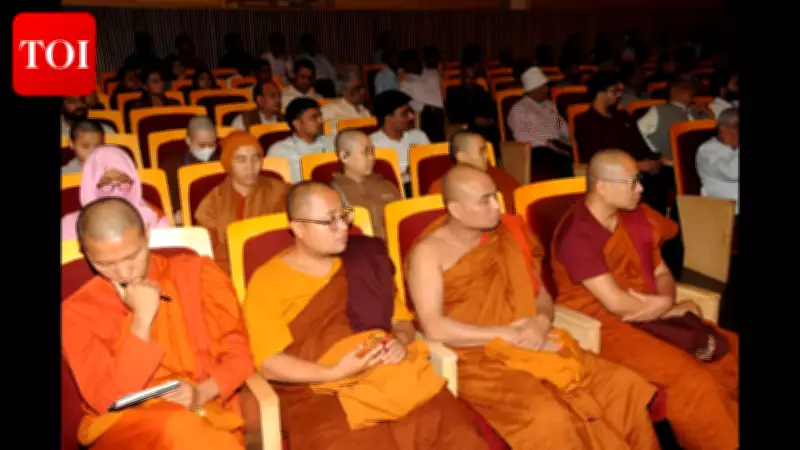
Patna witnessed a significant gathering of eminent national and state experts during the inaugural plenary session of a two-day conclave held at the Bihar Museum on Saturday. The event, centered on the theme 'Buddhist heritage, culture and sustainability', featured in-depth deliberations on the profound impact of Buddhism as a dynamic and non-rigid doctrine that has shaped global cultural landscapes.
Buddhism as a Flexible and Influential Heritage
Leading the discussion, former Indian foreign secretary and president of the India International Centre (IIC), Shyam Sharan, described Buddhism as a major Indian heritage. He emphasized that its remarkable adaptability, free from rigid doctrines, facilitated its spread to diverse regions including China, Tibet, Japan, South East Asia, Nepal, and Bhutan. Sharan noted, "Buddhism did not impose any rigid doctrine, but provided sparks that led to the emergence of multi-cultural heritage." He explained that each country developed its own unique Buddhist textual heritage, which later disseminated globally and was preserved through scriptures and manuscripts.
Sharan further highlighted the historical preservation efforts, mentioning that manuscripts from ancient Buddhist learning centers like Nalanda were taken by colonial powers and safeguarded in various universities. The IIC has already collected and digitized 4,000 such manuscripts, underscoring ongoing initiatives to protect this invaluable heritage.

Global Recognition and Local Identity
Bihar Museum director general Anjani Kumar Singh shared insights from his experiences abroad, where he conceptualized the museum's format according to global standards. He observed that while people in the West were familiar with Nalanda and Bodh Gaya, they often lacked awareness of Patna and Bihar's association with these sites. Singh stated, "Therefore, the Buddhist heritage of Bihar and Patna is an important aspect that gives global identity not only to them, but also to India." This perspective reinforces the critical role of local heritage in enhancing national and international recognition.
Contemporary Relevance and Spiritual Tourism
Former diplomat and National Human Rights Commission (NHRC) member D M Mulay presented a creative short text imagining Buddha addressing modern global conflicts. In this narrative, when asked by a disciple about the path to choose today, Buddha advised, "Be your own path, so that others follow you… Technology, politics and economics should be aligned with wisdom and justice." This reflection underscores Buddhism's enduring relevance in guiding ethical and sustainable practices in contemporary society.
JD(U) functionary Neeraj Kumar highlighted the efforts led by Chief Minister Nitish Kumar to strengthen Bihar's Buddhist heritage and promote spiritual tourism. These initiatives have successfully attracted large numbers of visitors, boosting the region's cultural and economic landscape.
Conclave Organization and Participants
The conclave was organized by the civil society group Deshkal Society as part of the eighth edition of its Bodh Gaya Global Dialogues, with support from the Bihar Museum and the Indian Council of World Affairs (ICWA). Other notable speakers included senior columnist Harish Khare, author Arvind Mohan, and ICWA representative Subodh Chandra Bharti. Deshkal Society founder Sanjay Kumar welcomed the guests, while Dr. Shruti from Haryana conducted the proceedings, ensuring a smooth and engaging event.
This conclave not only celebrated Buddhism's historical and cultural significance but also explored its potential to foster sustainability and global harmony in today's world.