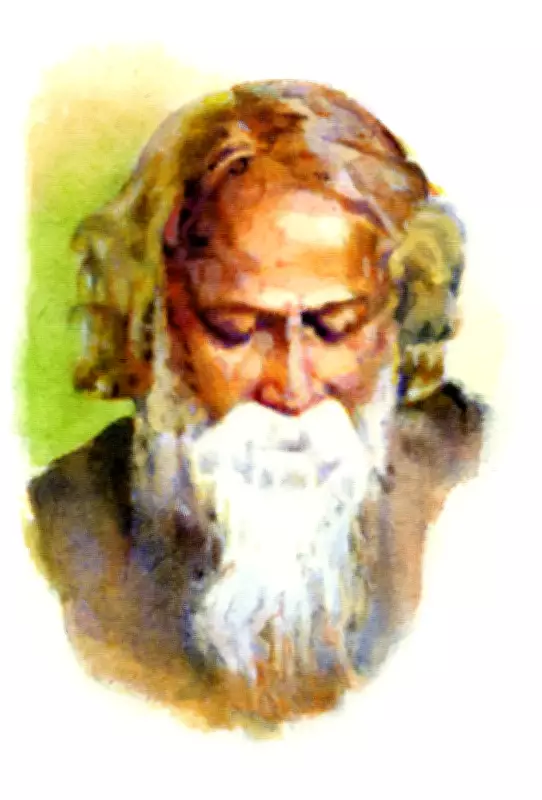
As the nation celebrates the 165th birth anniversary of eminent litterateur and Nobel laureate Rabindranath Tagore on Thursday, the city of Patna fondly remembers its historical connection with the 'Bard of Bengal'. Historians provide vivid accounts of Tagore's contribution in influencing and shaping the cultural life of the city through his cultural manifestations.
Tagore's Visit to Patna in 1936
According to historical records, Tagore visited Patna with his troupe on March 16 and 17, 1936. He arrived by the Danapur-Howrah Express train and was received at Patna Junction by Rajendra Prasad, who later became the first President of India. While Tagore himself stayed as a guest of the legendary lawyer P R Das at his house on Fraser Road, his troupe stayed at the Sultan Palace, the residence of Sir Sultan Ahmad, on Beer Chand Patel Path. Barrister P R Das was the brother of Deshbandhu Chittaranjan Das, who played an important role in India's freedom struggle.
The House 'Shanti Niketan' on Fraser Road
The house on Fraser Road where Tagore stayed was named 'Shanti Niketan'. Presently occupied by some shopkeepers, the house was known for its Burmese teak staircase. Tagore's troupe performed the dance drama 'Chitraganda' at the Elphinstone Theatre, the city's oldest cinema hall near Gandhi Maidan.

Public Reception at Wheeler Senate Hall
Shankar Ashish Dutt, former chairman of Bihar Sangeet Natak Academy and ex-principal of College of Arts and Crafts, said Tagore was accorded a public reception at the historic Wheeler Senate Hall (now known as Jayaprakash Narayan Hall) on March 17, 1936. Tagore is believed to have recited a poem from Gitanjali during his reception. The citizens of Patna presented a purse of Rs 1,500 to him as their support for Visva-Bharati University.
Establishment of Rabindra Parishad and Rabindra Bhawan
Jayadeo Mishra, former head of Patna University's ancient Indian history department, said that Rabindra Parishad, a cultural organisation named after Tagore, was established in 1948. It started constructing the present Rabindra Bhawan on Beer Chand Patel Path. In 1957, Indira Devi Choudhary, Tagore's niece, named the musical wing of Rabindra Bhawan as Geeta Bhawan, which was started with the purpose of imparting music, especially Rabindra Sangeet and Manipuri dance, to local talents.
Rabindra Bhawan Today
Today, Rabindra Bhawan is an important theatre in the city where all sorts of cultural activities take place. In 2011, former Chief Minister Nitish Kumar inaugurated the renovated theatre with increased seating capacity from 650 to 1,000. The Bhawan also contains several sculptures, photographs, and stamps connected with Tagore in its library. Furthermore, the Fraser Road-Dakbungalow Road crossing was renamed Kabiguru Rabindra Chowk in memory of Tagore's visit to the city, Mishra added.
Tagore's Enduring Legacy in Patna
Tagore's visit and the celebration of his works have made him an important figure in Patna's intellectual and cultural heritage. They connect Bengali literature with Bihar's cultural life, said Sovan Chakraborty, an English teacher at Patna Science College.