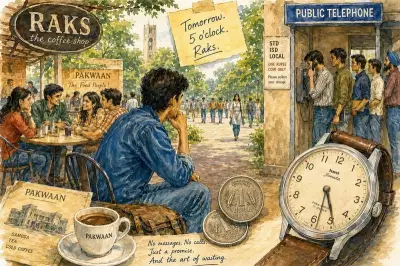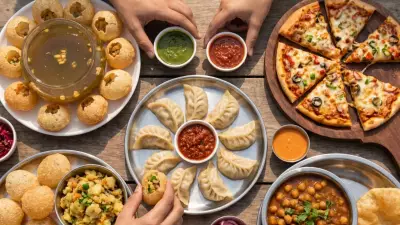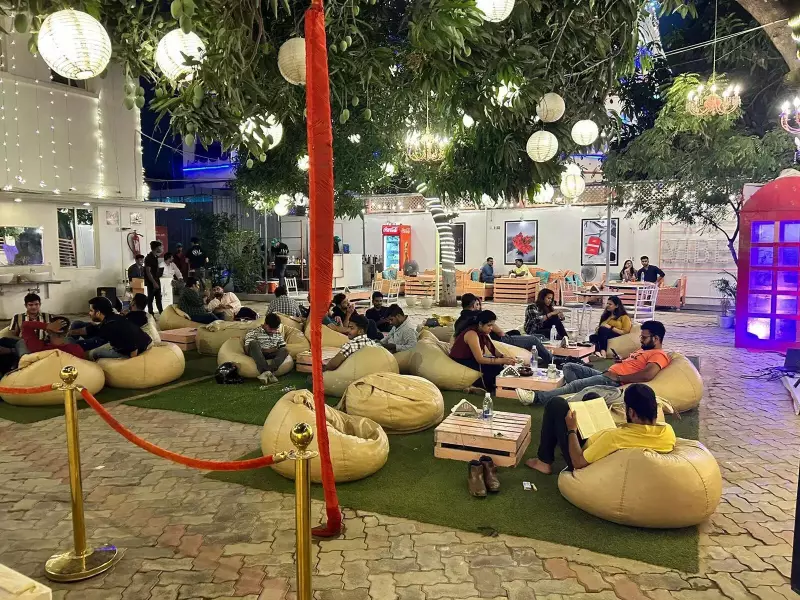
The urban landscape of Patna is undergoing a quiet but profound transformation. The bustling lanes of neighbourhoods such as Boring Road, Patliputra Colony, and Kankarbagh are shedding their old identities, now pulsating with a new energy defined by the rich aroma of roasted coffee, curated acoustic music, and what the city's youth fondly describe as 'aesthetic vibes'. This marks a significant departure from the city's conventional dining scene, moving towards an experimental playground of design, music, and culinary fusion that mirrors the evolving aspirations of its younger generation.
More Than Just Coffee: The Rise of Curated Experiences
These new-age establishments are far more than mere eateries. They are meticulously crafted visual narratives where every element is designed to tell a story. Visitors are greeted by walls washed in soft pastel hues, lush greenery spilling from shelves, and rustic corners that transport them away from the city's congestion. Architecture plays a starring role, with features like rooftop seating, framed sunset views, colour-coded walls, and strategic lighting transforming a simple meal into an immersive, staged experience. Here, the table is a set, the plate a prop, and the customer an active participant in creating the next shareable moment.
For Patna's youth, the ambience is non-negotiable. Ridhima Singh Rathore, enjoying a cafe with friends, highlights this shift: "The luxury of sitting for hours in a comfortable, climate-controlled, and hygienic space makes the higher price completely worth it for a hangout." These cafes effectively function as an extension of personal space—a hybrid of a living room, a workspace, and a social stage.

The Driving Forces: Social Media, Work, and Student Life
This transformation is powerfully fueled by the performative nature of social media. In an ecosystem where visibility equals relevance, a cafe's visual appeal has become its most valuable currency. Owners now prioritize decor, sometimes with more intensity than the kitchen, knowing that a single well-composed Instagram story can create a ripple effect, attracting customers eager to replicate the aesthetic for their own profiles. Dining has thus evolved from mere consumption to active participation in a shared visual culture.
The post-2020 work-from-home culture further cemented the cafe's role as a hybrid sanctuary. Professionals and freelancers, like Rishabh Sinha, seek these themed environments for a productive change of scenery. "I come here to work when I'm bored at home. It's usually quiet during the day, perfect with some beverages," he shares. Students have also integrated cafes into their daily rhythm. Akash Kumar, a Class XII student, heads straight to a cafe after coaching classes to decompress, preferring its themed informality over stiff, traditional restaurants.
The Entrepreneurs Behind the Scenes: Adaptation and Challenge
Astute entrepreneurs have quickly adapted to this evolving demand. Yasheel Anand Singh, who launched Cafe 13 in 2018 and later The Grind House in 2022, describes a journey of constant recalibration. "Cafe 13 was designed to capture the high-energy youth with items like Makhni Pasta," he says, reflecting on a time when Eco Park and the zoo were prime hangout spots. "The Grind House was an intentional pivot toward a more 'elite' and family-oriented crowd."
Despite the emphasis on visuals, Singh believes ambience is only the hook; food quality builds lasting loyalty. He recalls Cafe 13 attracting nearly 10,000 people a month initially due to limited competition. Today, in a more crowded market segmented by budget, his establishments see a steadier but more discerning 100 to 150 customers daily.
Syed Aabish Hassan, founder of 53 Cafe House (started in 2020), identifies a dedicated clientele in Patna that consistently chooses relaxed cafes over formal dining. "There's a selected group of people you will find moving from one cafe to another frequently," he notes, citing professionals shaped by remote work as a core audience.

However, Hassan is candid about the challenges. He observes that a cafe's peak popularity in Patna typically lasts around five years. Sustaining interest demands either a distinctive culinary signature or constant reinvention. "I've experimented a lot—introducing bean bags, hosting open mics, live performances, and bonfires. I even tried bringing Aslam chicken tikka, but Chinese remains more in demand," he explains. Crowds fluctuate with seasons and occasions, swelling during year-end holidays with 'homecomers' and on days like Father's Day, creating a festive mix of celebrations and reunions.
This cafe revolution in Patna is more than a passing trend. It is a clear reflection of the city's changing social fabric, where spaces are curated not just for consumption, but for connection, creation, and the perpetual pursuit of the perfect 'vibe'.