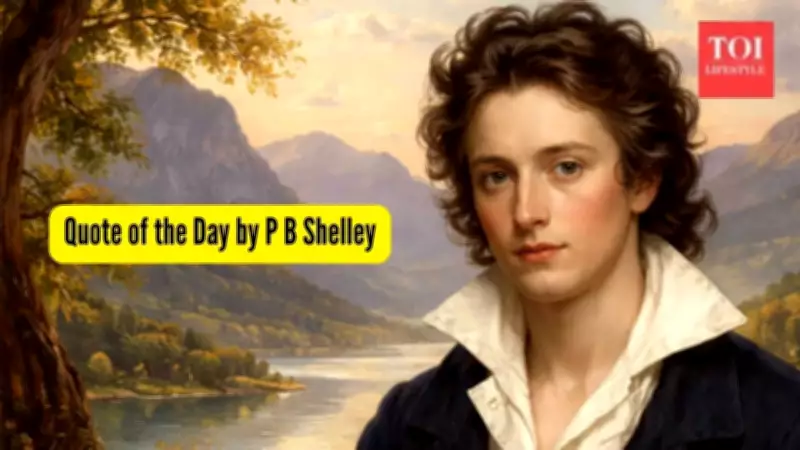
Percy Bysshe Shelley: The Revolutionary Poet's Life and Works
Percy Bysshe Shelley stands as one of the most iconic figures in the Romantic movement, celebrated not only for his profound poetry but also for his influential essays. His work burned brightly and quickly, leaving behind a legacy that continues to move and inspire readers worldwide.
Early Life and Rebellious Spirit
Shelley was born in 1792 into a wealthy English family. His childhood at Field Place, near Horsham, was filled with imagination that clashed with the strict societal norms of his time. At Eton, he avoided bullies by immersing himself in books and playing pranks, showcasing his early nonconformity.
In 1811, Shelley shocked Oxford University by publishing The Necessity of Atheism, a pamphlet that led to his expulsion when he refused to deny authorship. That same year, he eloped with 16-year-old Harriet Westbrook and became deeply involved in radical politics, writing pamphlets advocating for Irish rights and opposing the monarchy, all while relying on family funds.

Tragedy struck in 1816 when Harriet drowned, allowing Shelley to marry Mary Godwin, daughter of feminists Mary Wollstonecraft and William Godwin. Their elopement was tumultuous, including a famous "haunted summer" in Switzerland with Lord Byron, which inspired Mary's Frankenstein. In 1818, they moved to Italy due to illness and the loss of children, where Shelley produced his greatest works. He died in a boating accident off the coast of Livorno at the age of 29.
Writing Style: Lyrical Fire and Vision
Shelley's writing is characterized by its intense, musical quality, rich with vivid imagery that immerses readers in nature's fury or human dreams. He favored precise, tactile language, avoiding fluff and using similes, metaphors, and symbols to evoke strong emotions. His work employs "uncontrolled passion" and "lofty imagination" to explore ideas, transforming personal struggles into universal calls for change. It doesn't merely describe; it transforms, making readers feel the "smooth, stormy march" of his thoughts.
Iconic Works That Shook the World
Shelley's best poems blend politics, nature, and myth, many of which were unpublished during his lifetime due to their controversial nature.
- Queen Mab (1813): His first major work, a utopian epic criticizing war, commerce, church, and marriage while envisioning a sin-free world.
- Ozymandias (1818): A sonnet mocking the fleeting power of tyrants with the famous line, "Look on my Works, ye Mighty, and despair!" showcasing Shelleyan irony.
- Ode to the West Wind (1819): A powerful call to the wind as both destroyer and preserver, featuring the hopeful cry, "If Winter comes, can Spring be far behind?" symbolizing revolution.
- Prometheus Unbound (1820): An epic drama reimagining Aeschylus, where chained Prometheus forgives Jupiter, creating a new moral world through love instead of revenge.
- The Cenci (1819): A dark tragedy exploring incest and patricide, blending Elizabethan drama with moral ambiguity in Shelley's theatrical attempt.
- Adonais (1821): An elegy for Keats in Spenserian stanzas, where the poet's spirit "outsoars the shadow of our night," merging grief with immortality.
Other works like To a Skylark, Mont Blanc, and The Masque of Anarchy (inspired by the Peterloo protest) highlight his range from lyrical beauty to political activism. These pieces are not relics but calls to rethink power, love, and society, often offering hope amid despair.
Quote of the Day from A Defence of Poetry
In his unfinished essay A Defence of Poetry (1821), Shelley wrote: "A man, to be greatly good, must imagine intensely and comprehensively; he must put himself in the place of another and many others; the pains and pleasures of his species must become his own." He argued that imagination is the "great instrument of moral good," driving empathy by requiring individuals to deeply feel others' experiences. This "intense and comprehensive" imagining fosters sympathy and love, with poetry awakening this in minds and setting ethical standards. Shelley famously declared poets as "unacknowledged legislators of the world."

Why It Matters: Imagination as a Moral Force
Shelley believed imagination combats tyranny not with hatred but with expansive love, serving as fuel for activists, writers, and anyone striving for good. He viewed poetry as working on the "moral nature of man," akin to exercise strengthening muscles; without it, we risk becoming selfish shells. His ideas remain relevant, emphasizing the transformative power of art in fostering empathy and social change.
About the Author
TOI Lifestyle Desk
The TOI Lifestyle Desk is a dynamic team of dedicated journalists who, with unwavering passion and commitment, sift through the pulse of the nation to curate a vibrant tapestry of lifestyle news for The Times of India readers. At the TOI Lifestyle Desk, we go beyond the obvious, delving into the extraordinary. Consider us your lifestyle companion, providing a daily dose of inspiration and information. Whether you're seeking the latest fashion trends, travel escapades, culinary delights, or wellness tips, the TOI Lifestyle Desk is your one-stop destination for an enriching lifestyle experience.