New Pompeii Study Challenges Vesuvius Eruption Date with Wool Clothing Evidence
The ancient city of Pompeii has long been viewed as a moment frozen in time, with streets abruptly halted, meals abandoned on tables, and bodies captured in their final, desperate movements. For centuries, it has been widely accepted that Mount Vesuvius erupted in late August of CE 79, during the sweltering heat of a southern Italian summer. However, a groundbreaking new study is now casting doubt on this long-held certainty, suggesting that the timeline of this catastrophic event may need to be reconsidered.
Wool Clothing Clues from Plaster Casts
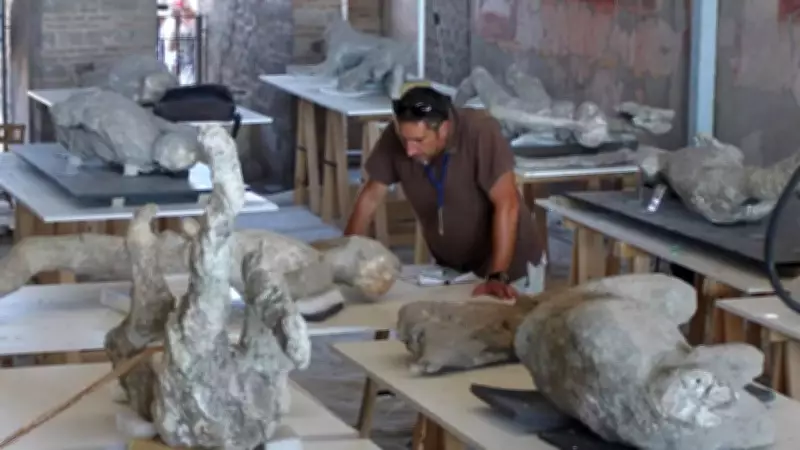
Researchers from the ÁTROPOS group at the University of Valencia have conducted a detailed analysis of fourteen plaster casts recovered from the Porta Nola necropolis in Pompeii. These casts, which famously preserve the shapes of victims and sometimes faint impressions of their clothing, have revealed a surprising detail: many individuals were wearing thick wool tunics covered by heavy wool cloaks. In four of the casts, textile impressions were clear enough to allow experts to analyze the weave, confirming that the garments were made from dense, weighty materials.
While wool was a common and affordable fabric in the Roman world, the presence of such heavy layers in late August raises significant questions. Why would residents of southern Italy be bundled up in wool during what is typically the hottest time of the year? This anomaly has reignited a long-running debate about the actual date of the eruption and the weather conditions on Pompeii's final day.

Reevaluating Historical Accounts and Archaeological Findings
For generations, the eruption date has largely relied on the writings of Pliny the Younger, who described the disaster in letters and placed it in late August. Many historians have accepted this account, but archaeological evidence has increasingly complicated the narrative. Discoveries in Pompeii's ruins, such as autumn fruits like pomegranates and walnuts, along with signs of wine fermentation, suggest activities more consistent with cooler autumn months rather than high summer.
Additionally, some houses in Pompeii contained lit portable heaters and other small heating devices, further hinting at colder conditions. These findings challenge the traditional August date and open up the possibility that the eruption might have occurred later in the year, perhaps in October or November, when temperatures would have been more conducive to wearing wool.
Alternative Explanations: Eruption Response vs. Cold Weather
The heavy wool garments might not necessarily indicate cold weather. Instead, they could represent a desperate response to the eruption itself. Mount Vesuvius did not unleash a single blast but rather a prolonged catastrophe, with hours of falling ash, toxic gases, and darkness enveloping the city in the middle of the day. If ash began falling early, residents may have instinctively layered up, grabbing whatever clothing was nearby to protect themselves from the harsh, abrasive environment.
This theory could explain why both individuals inside buildings and those out in the open streets appear to be dressed in similar heavy attire. The final moments of the victims, preserved in haunting plaster casts, offer a poignant glimpse into their struggles. One of the most recognizable casts is that of a male victim whose posture was frozen in ash, later filled with plaster to create a lasting memorial. Researchers are now reading these casts almost like forensic evidence, uncovering clues that challenge a date written nearly two thousand years ago.
Implications for Historical Understanding
This study underscores how ordinary details, such as clothing, can profoundly impact our understanding of historical events. By examining the wool garments of Pompeii's victims, scientists are not only questioning the eruption date but also shedding light on the daily lives and immediate responses of ancient Romans in the face of disaster. The debate continues, with further research needed to reconcile textual accounts with archaeological data.

As investigations proceed, the story of Pompeii remains a powerful reminder of nature's unpredictability and human resilience. The city's ruins continue to yield secrets, prompting us to rethink what we know about one of history's most famous tragedies.