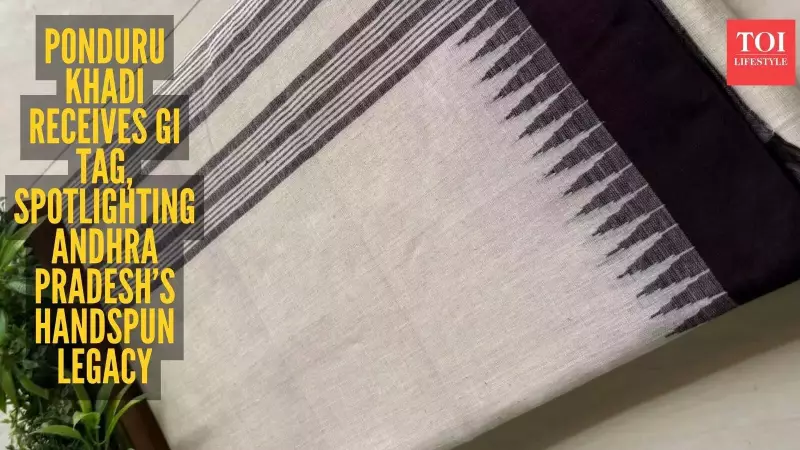
A century-old dream has finally been woven into reality. Ponduru Khadi, the iconic handspun fabric from Andhra Pradesh that once captured the admiration of Mahatma Gandhi, has been officially granted the prestigious Geographical Indication (GI) tag by the Government of India.
A Validation for Generations of Weavers
For the artisan communities in Srikakulam district, this is far more than bureaucratic paperwork. The GI tag, issued by the Union Ministry of Commerce and Industry, serves as a long-awaited validation of their unique craft, officially linking the fabric's identity to its place of origin. Ponduru, a tranquil town located roughly 20 kilometres from Srikakulam, is where Khadi is not a fleeting fashion trend but the very fabric of daily life and livelihood.
Generations of weavers have sustained themselves through this craft, persisting even during periods of widespread neglect. The news was proudly announced on social media platform X by Union Civil Aviation Minister K. Rammohan Naidu, who had previously championed the cause by raising the demand for a GI tag in Parliament.

The Unique Craft That Captured Gandhi's Attention
The distinction of Ponduru Khadi lies in its painstaking, traditional manufacturing process. The journey begins with locally grown cotton, which is then meticulously cleaned by hand. The fibres are spun on traditional charkhas and uniquely softened using rice starch before the final weaving. This method employs no mechanical shortcuts, resulting in a fabric celebrated for its raw texture, breathability, and remarkable strength.
It was this honest, slow, and self-reliant process that drew the attention of Mahatma Gandhi nearly 100 years ago, when Khadi became a powerful symbol of India's dignity of labour and quest for self-sufficiency.
The Path to Recognition and a Hopeful Future
The journey to securing the GI tag was neither swift nor simple. A significant push came in 2020 when Finance Minister Nirmala Sitharaman visited Ponduru, met with the artisans—many of whom face financial hardships—and assured them of the government's support in obtaining the GI status. Years later, that promise has materialized.
The implications of the GI tag are profound. It legally protects the craft from imitation and misuse, assuring buyers of its authentic origin and traditional making. For the weavers of Srikakulam, this recognition is a beacon of hope. It promises better market visibility, fairer prices for their labour, and a sustainable future for a craft that has endured decades of obscurity.
This moment is a deeply personal triumph for a fabric and its keepers. Ponduru Khadi is not merely being remembered; it is being formally acknowledged and elevated. For the community that has preserved it, thread by patient thread, this recognition weaves a new chapter of respect and opportunity.