Ramzan vs Ramadan: The Linguistic Debate That Divides India Every Year
Every year, as the crescent moon of the holy month is sighted, social media platforms and WhatsApp groups become flooded with greetings of 'Ramzan Mubarak' or 'Happy Ramzan.' A significant number of people also use the greeting 'Ramadan Mubarak!' This simple variation in spelling and pronunciation ignites an age-old debate that divides communities annually. The question of whether it should be Ramadan or Ramzan sparks discussions across the country.
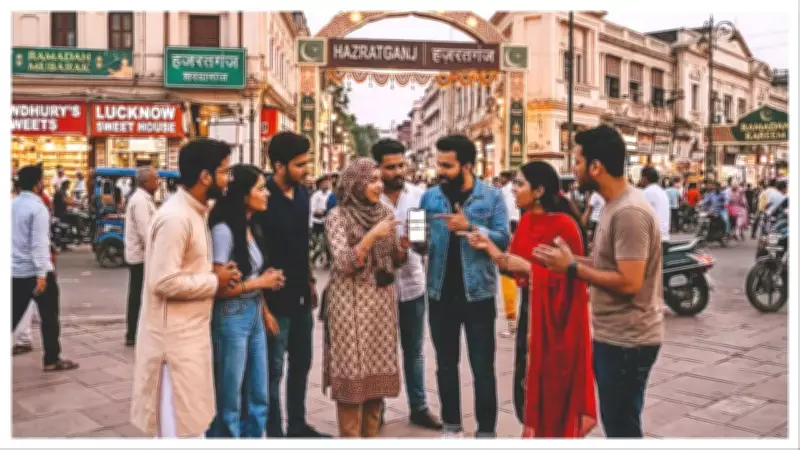
Public figures such as Gauhar Khan and Shashi Tharoor have commented on this topic online, while many individuals find themselves debating it with friends and family at home. In cities like Lucknow, residents are often corrected with the phrase, 'Ramzan hota hai Ramadan nahi!' This persistent debate raises the question: what's truly in a name?
More Than Just Spelling: A Window Into History and Globalization
With historians and linguistic content creators engaging through reels and memes, pulling people to one side or the other, this discussion transcends mere spelling. It serves as a fascinating window into how history, migration, and globalization have quietly influenced the way we speak. The shift from Ramzan to Ramadan in common usage is largely attributed to the impact of social media and global interconnectedness.

Abbas Nayyar, Head of the Urdu Department at Lucknow University, provides expert insight into the origins of this variation. He explains that the difference stems primarily from pronunciation. "We grew up hearing Ramzan in our homes, neighbourhoods, and everyday conversations. However, the word Ramadan has entered our vocabulary more recently, largely because globalization and social media have made the world smaller," Nayyar states.
He elaborates on the linguistic journey: "In Arabic, the word is Ramadan because the letter Z is not present. Hence, Arabic speakers pronounce it with a D sound, not Z as we do. As the word travelled from Arabia to Persia and then to South Asia, languages adapted it to their own phonetic systems. That's how Ramadan gradually became Ramzan in Persian and later in Urdu, which is primarily spoken in India."
Both Are Linguistically Correct, Experts Assert
Nayyar emphasizes that "the right pronunciation was, is, and will always be Ramzan for us in the context of Urdu. However, it would not be correct to dismiss people who say Ramadan either, as they are simply working within the limits of their phonetic tradition. So language-wise, they are both right; we are just more accustomed to the Urdu way of saying Ramzan."
He shares examples from Indian colloquial languages to illustrate how such changes are common when words move between languages across regions. "Every language has sounds it can and cannot produce. For instance, in Bengal, rasgulla becomes roshogulla, and Ramzan is pronounced Romjan. Languages naturally adjust sounds according to what is easier for speakers," Nayyar explains.
Javed Akhtar, renowned poet and lyricist, concurs with this perspective. He states, "Both are right. In the context of Urdu, it is Ramzan, while Ramadan is Arabic. Just because we speak Urdu more, it is Ramzan for us." This endorsement from a cultural icon underscores the validity of both terms within their respective linguistic frameworks.
Cultural Resonance in Stories and Shayari
Umair Shah (@sikkawala), a Delhi-based heritage storyteller and creator, whose reel on the Ramzan versus Ramadan debate went viral on Instagram last year, highlights the cultural significance. He opens his video with a poignant line that immediately captured viewers' attention: "Hamari kahaniyon mein, hamari shayari mein, jab Ramzan hai, toh Ramadan ka chand kaise accha lagega?"
Speaking about the intention behind creating the video, Shah says, "The line emerged from a thought I had been reflecting on for some time. Since childhood, we have been saying Ramzan, and suddenly, while growing up, we started calling it Ramadan. That prompted me to create a reel explaining the difference between the two."

The reel garnered numerous responses in the comments section, with users expressing gratitude by writing 'Thank you for explaining this' and 'Thank you for debunking the confusion.' Shah adds, "The reaction to the reel was as if many people felt the same way about both Ramzan and Ramadan, but they just needed someone to articulate it aloud."
This annual debate, therefore, is not merely about correctness but about identity, tradition, and the evolving nature of language in a globalized world. It reflects how linguistic practices are shaped by historical migrations and contemporary digital influences, making both Ramzan and Ramadan valid expressions of cultural and religious observance in India.