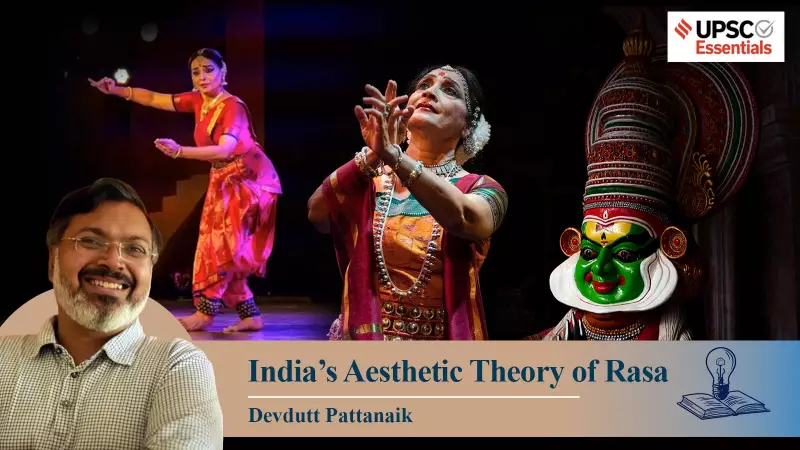
In the rich tapestry of Indian cultural thought, the concept of Rasa stands as a profound and unique theory of aesthetics. Developed over millennia, this framework explains how art—be it dance, music, poetry, or theatre—evokes distilled emotional experiences in its audience. Unlike Western models focused on narrative and moral consequence, the Indian approach treats art as a psychological journey where the self momentarily dissolves into a universalised mood.
The Core of Rasa: From Bharata's Foundation to Universal Emotion
The foundational text for this theory is Bharata Muni's Natya Shastra, composed around 200 AD. Bharata proposed that performing arts use situations, gestures, and mental movements to create refined feelings, or rasa, in the spectator. The term itself means 'juice' or 'essence'. He systematically outlined eight primary rasas: love (shringara), sorrow (karuna), rage (raudra), humour (hasya), fear (bhayanaka), disgust (vibhatsa), courage (vira), and wonder (adbhuta).
Critically, these are not personal emotions. They are universal moods accessed when the spectator forgets their individual self. Bharata explained that rasa emerges from a combination of determinants (vibhava), consequent physical states (anubhava), and transient emotions (vyabhichari bhava). This early formulation laid the bedrock for all subsequent discourse on Indian aesthetics.

The Philosophical Expansion: Abhinavagupta and the Ninth Rasa
A monumental shift occurred nearly eight centuries later with the Kashmiri philosopher Abhinavagupta (c. 1000 AD). In his seminal commentary, Abhinavabharati, he reinterpreted the aesthetic experience through the lens of Kashmiri Shaiva philosophy. He argued that the relish of rasa (rasasvada) offers a glimpse of spiritual bliss (brahmic ananda), as it temporarily dissolves the ego.
Abhinavagupta's most significant contribution was formally adding shanta (peace or tranquility) as the ninth rasa. He provided detailed arguments, elevating the secular experience of art to a spiritual or quasi-Vedic one. This reinterpretation deeply influenced the purpose of art, aligning it with the goal of self-transcendence.
Diffusion Across Regions and Art Forms
The journey of rasa theory is a story of continuous adaptation. Early echoes are found in Vedic ritual texts and later in the Tamil grammar and poetic tradition, notably in Tolkappiyam and the epic Silappadikaram. Tamil genius mapped the rasas onto specific landscapes (akam poetry), linking inner emotion to ecological zones like mountains, forests, and coasts.
From Kashmir, the tradition flowed southward. Texts like Sangeeta Ratnakara in the Deccan simplified and updated the concepts for practical application in music. During the medieval period, scholars like Anandavardhana and Mammata applied rasa theory to literary poetry. Anandavardhana introduced dhvani (suggestion) as the primary vehicle for evoking rasa, a idea elaborated in Mammata's authoritative manual, Kavyaprakasha.
By the time of the Mughal, Vijayanagara, and Sultanate periods, the theory was fully embedded in practice. It shaped the abhinaya (expressive dance) manuals of Odissi and Bharatanatyam, defined the elaborate bhava-rasa system of Kathakali, and guided the association of specific emotional moods with ragas in North Indian classical music.
Colonial Encounter and Modern Relevance
Colonial-era scholars often attempted to equate rasa with Aristotelian catharsis. However, 20th-century Indian scholars successfully reframed it as a distinct psychological and aesthetic theory. Today, rasa theory remains central not only to Indian classical arts but also to contemporary fields like film studies, performance theory, and comparative aesthetics. It offers a unique lens to understand the emotional architecture of Indian narrative and performative traditions, from regional retellings of the Ramayana to modern cinema.

The theory's endurance lies in its profound insight: art is not merely a mirror to life or a moral lesson, but a crafted conduit for experiencing universal human emotions in their pure, essence form—a taste of the divine through the delight of the senses.