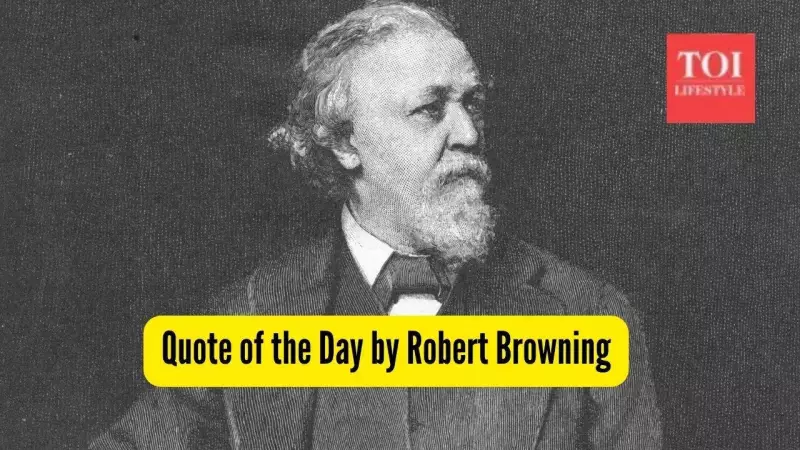
Robert Browning stands as one of the most original and influential poets of the Victorian era, renowned for his mastery of the dramatic monologue and his unparalleled ability to delve into the human psyche. Born in 1812 and passing away in 1889, Browning's life was a tapestry of literary triumphs, a deeply passionate marriage, and a poetic style that artfully blended hope with unflinching truth.
Early Life and Education
Browning's formative years were shaped by a family that nurtured his intellectual and creative pursuits. His father, who worked as a bank clerk, was an avid bibliophile who instilled in him a love for literature. His mother, a talented musician, encouraged his artistic inclinations from a young age. This supportive environment laid the foundation for Browning's future as a poet.
Remarkably, Browning received his early education at home, where his father taught him Latin, Greek, and the classics. This unconventional schooling sparked a lifelong fascination with history and Renaissance figures, themes that would later permeate his work. By his teenage years, Browning had abandoned formal schooling altogether, choosing instead to immerse himself in poetry, drawing inspiration from Romantic poets like Percy Bysshe Shelley and John Keats.

Literary Beginnings and Evolution
Browning's literary journey began with the publication of his first book, Pauline: A Fragment of a Confession in 1833. This early work, brimming with teenage angst, was met with criticism from notable figures such as John Stuart Mill, who deemed it overly self-indulgent. This feedback proved pivotal for Browning, prompting him to shift away from confessional poetry and adopt more objective narrative voices.
His subsequent works, including Paracelsus (1835) and Sordello (1840), showcased his growing genius but also highlighted his penchant for complexity. Paracelsus offered a profound exploration of a Renaissance doctor's inner struggles, while Sordello bewildered readers with its dense references to medieval Italy. During this period, Browning also ventured into playwriting with Strafford (1837), though he ultimately found his true calling in poetry.
A Fateful Romance and Life in Italy
In 1845, Browning's life took a dramatic turn when he initiated correspondence with Elizabeth Barrett, a fellow poet who was confined to her father's home due to illness. Their exchange of letters blossomed into a deep romance, leading to secret meetings and, ultimately, their elopement to Italy in 1846—a move that caused considerable scandal at the time.
The couple settled in Pisa and later Florence, where they found both personal and creative fulfillment. Their son, Pen, was born in 1849, and Elizabeth's health notably improved under the Tuscan sun. Their home became a vibrant hub of art, political discourse—particularly their support for Italian unification—and intellectual exchange. Browning's works from this period, such as Christmas Eve and Easter Day (1850), grappled with themes of faith and doubt, while Elizabeth penned her acclaimed epic, Aurora Leigh.
Literary Mastery and Iconic Works
Browning's reputation as a poet reached new heights with the publication of Men and Women in 1855. This collection featured some of his most celebrated dramatic monologues, including "My Last Duchess," a chilling narrative of a Duke's boastful confession about his deceased wife, and "Porphyria's Lover," a disturbing tale of obsession and violence. Through these works, Browning perfected his signature technique of allowing readers to peer into the minds of complex, often morally ambiguous characters through their fragmented and revealing speech.
Tragically, Elizabeth's death in 1861 from lung issues left Browning heartbroken, yet he continued to produce significant work in the years that followed.
The Timeless Wisdom of "Rabbi Ben Ezra"
Among Browning's most enduring contributions is his poem "Rabbi Ben Ezra," written in 1864. It contains the famous lines: “Grow old along with me! The best is yet to be, the last of life, for which the first was made. Our times are in his hand who saith, 'A whole I planned, youth shows but half; Trust God: See all, nor be afraid!”

These words, often quoted at weddings and inscribed on tombstones, appear romantic at first glance but carry a profound Biblical connotation. Browning, who experienced the early loss of his wife, emerges here as a brilliant optimist, reframing aging not as a decline but as a phase where wisdom unveils the divine plan obscured in youth's haste. The poem serves as a timeless antidote to midlife anxieties, reminding us that life's early years are merely a prologue to greater understanding and fulfillment.
Legacy and Impact
Robert Browning's legacy extends far beyond his lifetime, influencing generations of poets and readers alike. His innovative use of the dramatic monologue revolutionized Victorian poetry, offering unprecedented insights into human nature. His works continue to be studied and admired for their psychological depth, lyrical beauty, and enduring relevance.
From his unconventional upbringing to his transformative love story and literary achievements, Browning's life and poetry remain a testament to the power of art to explore the complexities of the human condition. His ability to blend hope with harsh truth ensures that his voice resonates as powerfully today as it did in the Victorian era.