India's Rock-Cut Architecture: Stone Chronicles of Civilization
India's rock-cut architecture stands as a monumental testament to the ingenuity and artistic prowess of ancient civilizations, carving intricate structures directly from living rock to create enduring legacies that span thousands of years. This unique form of architecture, which involves excavating and sculpting solid stone to form caves, temples, monasteries, and monuments, offers a fascinating glimpse into the technological, religious, and cultural evolution of the subcontinent. From the earliest Buddhist caves to the grand Hindu and Jain temples, these stone chronicles reveal a sophisticated understanding of engineering, aesthetics, and spirituality that has shaped India's historical narrative.
Historical Evolution and Significance
The development of rock-cut architecture in India dates back to around the 3rd century BCE, with the Mauryan period marking some of the initial efforts. Early examples include the Barabar and Nagarjuni caves in Bihar, which served as monastic retreats for Ajivika and Buddhist monks. These simple yet functional structures laid the groundwork for more elaborate creations in subsequent centuries. As Buddhism spread, rock-cut architecture flourished, particularly during the Satavahana and Gupta periods, leading to the creation of iconic sites like the Ajanta and Ellora caves in Maharashtra.
These sites are not merely architectural marvels but also cultural repositories, adorned with exquisite sculptures and paintings that depict religious narratives, daily life, and artistic trends of their times. The transition to Hindu and Jain rock-cut temples, such as those at Elephanta and Badami, further diversified this architectural tradition, reflecting the syncretic nature of Indian society. Each phase of development showcases advancements in carving techniques, from basic rock shelters to multi-storeyed complexes with intricate pillars, facades, and inner sanctums, highlighting a continuous refinement of skills over millennia.

Key Sites and Architectural Features
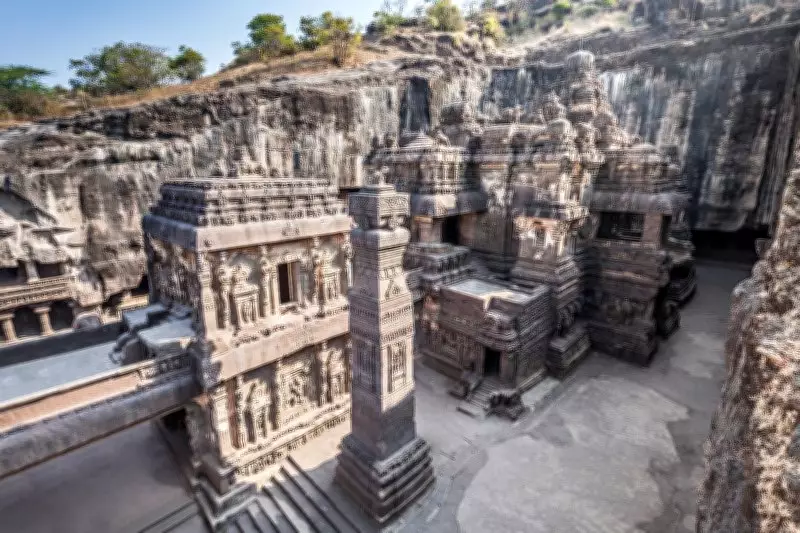
India boasts numerous rock-cut sites that exemplify the diversity and grandeur of this architectural style. The Ajanta Caves, a UNESCO World Heritage Site, are renowned for their Buddhist mural paintings and sculptures dating from the 2nd century BCE to the 6th century CE. These 30 caves, carved into a horseshoe-shaped cliff, include chaityas (prayer halls) and viharas (monasteries), demonstrating a blend of religious function and artistic expression. Similarly, the Ellora Caves, another UNESCO site, feature 34 caves representing Buddhist, Hindu, and Jain traditions, with the Kailasa Temple (Cave 16) being a standout example of monolithic rock-cut architecture, carved from a single basalt cliff.
Other significant sites include the Elephanta Caves near Mumbai, famous for their Hindu sculptures dedicated to Lord Shiva, and the Badami Cave Temples in Karnataka, which showcase early Chalukyan architecture with influences from Dravidian and Nagara styles. The architectural features of these sites often include elaborate facades, pillared halls, sanctums with deity idols, and detailed reliefs that narrate mythological stories. The use of natural light, ventilation, and acoustic properties in these structures underscores the advanced engineering knowledge of ancient builders, who worked without modern tools to create spaces that were both functional and spiritually uplifting.
Technological and Cultural Insights
The creation of rock-cut architecture required remarkable technological expertise, as artisans used simple tools like chisels, hammers, and wedges to carve massive rock formations. This process involved precise planning to avoid structural weaknesses and ensure durability, with many sites surviving for centuries despite natural wear. The choice of locations, often in remote hills or cliffs, provided natural protection and a serene environment for religious practices, while also showcasing a deep connection with the landscape.

Culturally, these structures served as centers of learning, worship, and community life, influencing regional art and architecture across India. They reflect the religious pluralism of ancient India, where different faiths coexisted and inspired each other's artistic expressions. For instance, the Ellora Caves illustrate how Buddhist, Hindu, and Jain artisans worked in proximity, sharing techniques and motifs. Today, these sites are vital for historical research, tourism, and cultural preservation, offering insights into India's rich heritage and the enduring legacy of its stone chronicles.
Preservation and Modern Relevance
Preserving India's rock-cut architecture poses challenges due to environmental factors, tourism pressure, and natural decay. Organizations like the Archaeological Survey of India (ASI) and UNESCO have undertaken conservation efforts to protect these sites from erosion, vandalism, and structural damage. Initiatives include regular maintenance, controlled visitor access, and digital documentation to ensure that future generations can appreciate these wonders.
In the modern context, rock-cut architecture continues to inspire contemporary design, art, and cultural studies, emphasizing the importance of sustainable building practices and heritage conservation. It also plays a crucial role in India's tourism industry, attracting millions of visitors annually and contributing to local economies. As symbols of resilience and creativity, these stone chronicles remind us of the timeless human quest to leave a mark on the world, blending artistry with engineering in a way that transcends generations.