Remarkable Discovery: Thousands of Ancient Roman Coins Found in Sardinian Waters
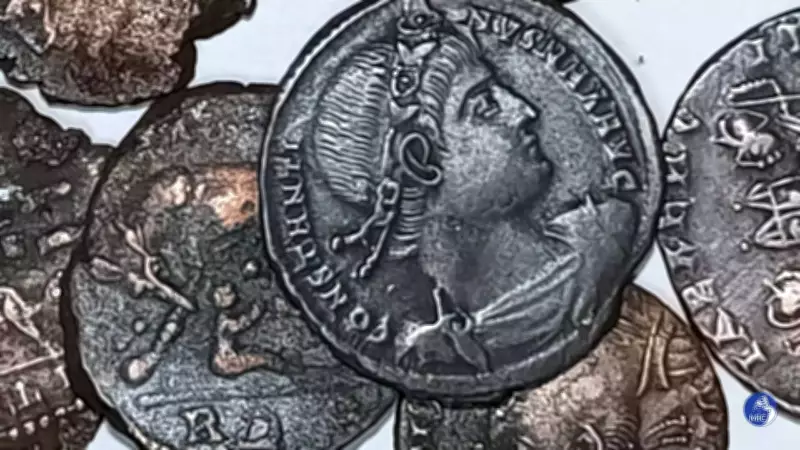
A casual swim off the picturesque coast of Sardinia has led to an extraordinary archaeological discovery that is capturing global attention. Near the town of Arzachena, a diver initially spotted unusual metal objects on the seabed, sparking immediate curiosity. Authorities were promptly alerted, and what they uncovered has astonished experts: a massive hoard of fourth-century bronze coins, estimated to number between 30,000 and 50,000 individual pieces.
The Underwater Treasure Trove: Location and Composition
The coins were found scattered across sandy seabed areas between the beach and underwater seagrass meadows, with small fragments of amphorae resting nearby. This stretch of Sardinia's northeastern coastline was a bustling trade route during late Roman times, connecting various parts of the empire. The discovery offers a rare, tangible glimpse into the past, preserved for centuries beneath the clear Mediterranean waters.
Luigi La Rocca, general director of Archaeology, Fine Arts and Landscape at Italy's Ministry of Culture, emphasized the significance of this find: "The treasure found in the waters off Arzachena represents one of the most important coin discoveries in recent years." Experts note that such discoveries tell stories far beyond collectors' shelves, capturing crucial moments in the economy, politics, and daily life of the Roman world.

Historical Significance: What the Coins Reveal About Roman Society
This is more than just a collection of old coins—it's a detailed window into history. The seabed where the coins were found forms a shallow platform where currents have spread objects without burying them too deeply. Investigators have mapped two main zones in the sand, bordered by dense seagrass that has played a crucial role in preservation.
Most of the coins are follis coins, large bronze currency introduced during Emperor Diocletian's currency reforms. Early folles weighed approximately ten grams and featured a thin silver wash that made the base metal appear more respectable. Over time, both the silvering and weight declined, reflecting the economic pressures Rome faced in funding its armies, bureaucracy, and public projects.
Trade Networks and Economic Connections
The amphora fragments found alongside the coins provide additional context, with some originating from North Africa and others from eastern provinces. This suggests merchants were mixing goods from different trade routes on single voyages, highlighting the interconnected nature of Roman commerce. By the early fourth century, folles coins linked people across the empire, used by sailors, farmers, and merchants alike.
Such hoards help historians track how far coins traveled and how interconnected the Roman Empire truly was. The Sardinia discovery sets a new reference point for late Roman money in the western Mediterranean, surpassing even the Seaton Down Hoard in Britain, which contained approximately 22,888 late Roman coins.
Preservation and Archaeological Insights
Nature played a crucial role in protecting these artifacts over time. Posidonia oceanica seagrass has locked the artifacts in low-oxygen sediment, significantly slowing decay. These underwater meadows trap particles, dampen wave action, and create a quiet archive where coins and ceramics can survive for centuries.
Large coin groups typically tell specific stories—perhaps a storm spilled cargo, or a captain stashed payment for the next port. Currents near Arzachena naturally slow, which could have helped concentrate objects. Scattering patterns suggest containers broke apart, with coins tumbling and lodging in sand pockets near amphora fragments.
Future Research and Historical Reconstruction
Archaeologists hope to reconstruct the voyage, its cargo, and perhaps its abrupt end through careful analysis. Each coin carries precise information through icons, inscriptions, and mint marks that reveal names of rulers and contemporary slogans. The metal chemistry provides clues about water and sediment conditions, while tool marks reveal workshop practices.

Matching amphora clay recipes might even link the coins to specific cargoes of oil or wine, providing unprecedented detail about Roman trade networks. This discovery represents not just archaeological treasure, but a living connection to the economic systems and daily realities of the late Roman Empire.