Russian Photographer Faces Widespread Criticism After Painting Jaipur Elephant Pink in Viral Video
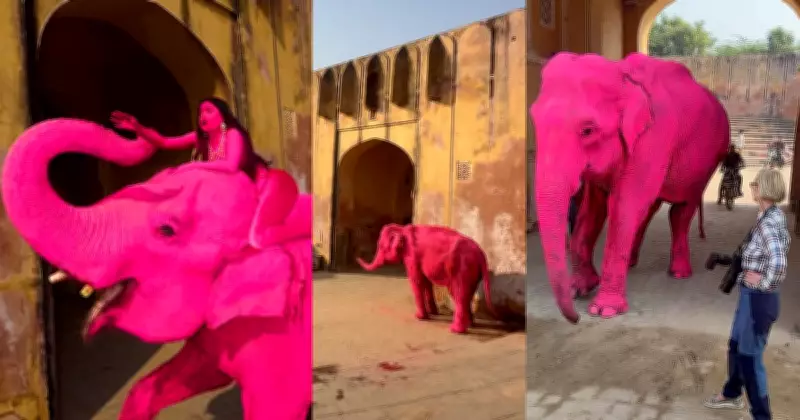
A video showing a Russian photographer painting an elephant in Jaipur, Rajasthan, a vibrant shade of pink has ignited a firestorm of controversy across social media platforms. The footage, which rapidly went viral, has drawn severe condemnation from netizens and animal rights advocates who are labeling the act as blatant animal abuse.
Outrage Erupts Over Alleged Mistreatment
Social media users expressed profound distress and anger upon viewing the video. Comments flooded in with phrases like "deeply upsetting" and "this is animal abuse," reflecting a collective concern for the elephant's welfare. Many questioned the ethics and necessity of subjecting the animal to such cosmetic alteration, regardless of the paint's purported safety.
The incident has highlighted ongoing debates about the treatment of elephants in tourist and cultural settings within India.Photographer's Defense: Organic and Festival-Safe Paint
In response to the escalating backlash, the photographer, identified as Julia Buruleva, issued a statement attempting to quell concerns. She asserted that the paint used was organic and locally manufactured, specifically the same type traditionally utilized by locals during various festivals and celebrations in the region.

"For anyone worried about the elephant — we used organic, locally made paint, the same kind locals use for festivals, so it was absolutely safe for the animal," Buruleva explained. Her defense centers on the claim that the practice is culturally embedded and non-harmful, aiming to align her actions with local customs rather than exploitation.
Broader Implications and Public Reaction
Despite the photographer's assurances, the public reaction remains largely skeptical and critical. Key points of contention include:
- The potential stress or discomfort caused to the elephant during the painting process.
- Whether such practices, even if culturally traditional, should be perpetuated in modern contexts prioritizing animal welfare.
- The role of social media in amplifying incidents of perceived cruelty and holding individuals accountable.
The viral nature of the video has ensured that this incident receives significant attention, pushing discussions about ethical tourism and animal rights to the forefront. Authorities and animal welfare organizations in Rajasthan may face increased pressure to scrutinize and regulate similar activities involving elephants.
As the debate continues, the episode serves as a stark reminder of the delicate balance between cultural practices and contemporary standards of animal care. The online community's swift condemnation underscores a growing global sensitivity towards the treatment of wildlife, particularly in high-visibility scenarios captured and shared digitally.