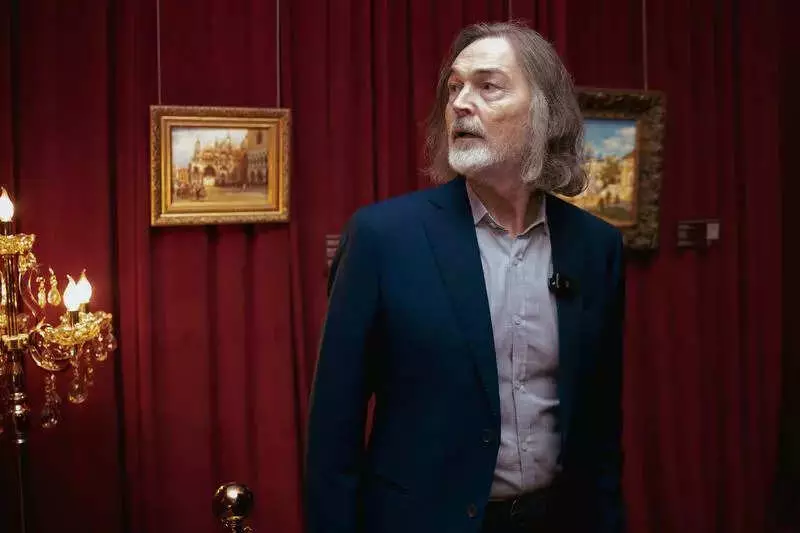
A unique fusion of classical painting and cutting-edge artificial intelligence captivated visitors at Mumbai's National Gallery of Modern Art (NGMA) last week. The opening of 'Dream Vision,' a major non-commercial solo exhibition by renowned Russian artist Nikas Safronov, turned the gallery into an interactive realm where art gazed back at its audience.
The Mirror That Paints Your Soul
Beyond the 45 canvases on display—ranging from Marilyn Monroe in Elizabethan attire to goddess Lakshmi with bejewelled elephants—it was an AI-powered 'neuro-mirror' that became the star attraction. As visitors, including theatre veteran Dolly Thakore, passed by, the device transformed their reflections into floating, painted avatars. This immersive experience prompted instinctive reactions, with phones rising to capture the moment where technology made the art feel alive and responsive.
The exhibition was inaugurated in Mumbai on December 29, following a phenomenally successful run in New Delhi. The Delhi leg of the tour attracted an estimated 5.6 lakh visitors in just 14 days, marking it as one of the largest international art exhibitions India has seen in decades. Safronov, a People's Artist of the Russian Federation, expressed his awe, stating, "New Delhi gave us a record that will become part of my personal history." He is expected to return to Mumbai for the closing ceremony.

Dream Vision: Where Philosophy Meets Technology
Spread across 45 works, the exhibition charts Safronov's artistic journey from classical realism and symbolism to his signature 'Dream Vision' style. This approach blends philosophy, subconscious imagery, and emotional realism. The experience is amplified through immersive multimedia, spatial sound design, and subtle AI elements, creating a sensation of stepping inside the canvas itself. A special set design was crafted specifically for the UNESCO-listed NGMA building in Mumbai.
Despite the high-tech enhancements, Safronov, whose career began in 1973, views technology as a secondary tool. "Technology can enhance perception, but it cannot feel," he explains. "It doesn't doubt, fear or carry lived experience. And it is precisely doubt and vulnerability that make an artist human." His philosophy is a deliberate counterpoint to the speed of modern life, focusing on emotional depth over fleeting trends.
India's Special Place and the Artist's Global Stature
India commands a dedicated section within the exhibition, featuring iconic scenes like Varanasi's ghats, the Taj Mahal from the Yamuna perspective, and Lucknow's Bara Imambara, alongside depictions of deities. "Indian art affected me deeply — through colour, depth and the sacred in everyday life," Safronov notes. He adds that if he were to paint Indian cities, he would approach them psychologically: "I'd paint Delhi as a memory, Mumbai as movement and energy."
The exhibition is supported by the Rosneft Oil Company and is described as their joint "New Year's gift to India." Safronov, recognized globally for his role in cultural diplomacy, has painted over 50 portraits of world leaders, including Narendra Modi, Donald Trump, and Pope Francis. In 2025, his status was further cemented when Pope Francis received him at the Vatican and blessed his international exhibition program.
Reflecting on a world saturated with AI art and NFTs, Safronov remains cautious. "Trends pass. Genuine feeling remains," he asserts. "When art becomes only an investment tool, it loses its soul." For him, the pursuit of beauty is an act of resistance. "It reminds us that we are still alive, still capable of feeling," he concludes, offering a poignant message from his Dream Vision to the heart of Mumbai.