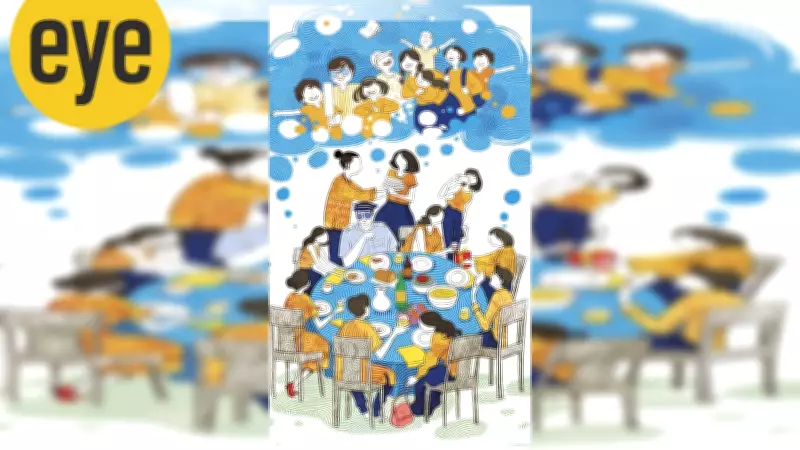
A School Reunion in Delhi: Rediscovering Our Past Selves After Two Decades
Twenty years later, we met ourselves again at a school reunion in Delhi, where time seemed to loosen its grip. Old selves resurfaced, secrets softened, and a generation stood on the edge of who it had become. This gathering was not just a meeting of faces but a profound exploration of identity and memory.
The Invitation: A Letter from Another Life
The reunion message arrived without drama, yet with an intimacy that amused me. It was addressed to me—not to my family, without the usual polite extensions that now trail every invitation I receive as a mother. The line was clear: no spouses, no children. It felt like a letter from another life, its texture young and its grammar belonging to a time when we moved through the world as singular beings.
For nearly twelve years, as a journalist in India, travelling alone had been second nature. Long journeys with photographers or camerapersons, nights spent chasing stories, and days shaped by deadlines and conversations with strangers. Independence was not an idea then; it was muscle memory. I wondered, not without apprehension, whether this reunion with old friends might also be a reunion with that earlier self—the woman who laughed without restraint, moved without calculation, and lived with less fear and more intention.

With that thought, I boarded a Qatar Airways flight to New Delhi in the heart of winter, carrying a thick, uncreased copy of The Loneliness of Sonia and Sunny. It felt like the right kind of companion: dense, introspective, and willing to sit with the ache of memory.
The Gathering: Stepping Back into 2000
We gathered at a place called the House of Joy, tucked away in the far corners of Gurgaon—Delhi's rogue but handsome cousin. An urban middle-class dreamscape of shiny buildings and shinier lives, it speaks a language almost identical to the Capital's but with a different syntax: aspiration turned up a notch and nostalgia buried just beneath the surface.
Walking in felt uncannily like stepping into Class 8A on the first day of school. The year was suddenly 2000 again, before smartphones and social media flattened mystery. India then was poised on the brink of change:
- The IT boom was beginning to hum.
- Cable television had been reshaping evenings.
- The Indian cricket team was a national obsession.
- A R Rahman's music seemed to soundtrack every private longing.
We wrote letters, waited for phone calls on landlines, and lived unarchived lives. There were smiles, some tentative and some radiant, and emotional hugs that arrived without warning. Blushes, laughter, perfunctory handshakes, and deep sighs filled the air. People had come from everywhere—by train, by car, by plane. One of them, a pilot, improbably and gloriously, had flown a plane himself and then walked in, as if that were the most natural thing in the world.
A cricket match broke the ice, as cricket always does in India, followed by teasing, winks, jokes, and the old shorthand returned effortlessly. It was as if the 20 years between us were merely theoretical. These were no longer parents, corporate employees, entrepreneurs, writers, or consultants. They were children again, only older, heavier with experience, and recognisably the same people whose paths had once crossed when they were at their most porous and vulnerable. We had left school standing on the brink of adulthood and were meeting again on the brink of midlife.
Reflections and Revelations
In the months leading up to the reunion, WhatsApp groups had buzzed with speculation and curiosity. How did everyone look? What had they become? Where were they now? But with profile pictures, Instagram grids, and LinkedIn profiles, so much had already been revealed that one wondered what interest remained. Yet, familiarity turned out to be its own comfort. Some people did a double take, then laughed later about remembering someone as taller. Could age shave inches off memory, if not height? Possibly.
What social media never shows, of course, is the full ledger:

- Difficult marriages and divorces.
- Children who didn't sleep.
- Parents who fell ill.
- Loans that lingered.
- Ambitions silently revised.
- Love stories that didn't survive the telling.
Adulthood had spared no one. The toppers, we rediscovered through faded slam-book confessions, had once fancied themselves as cricketers. Images of those pages ricocheted through WhatsApp, stirring a brief, delightful uproar. Those boys had traded bats for boardrooms, labs, and spreadsheets. The romance of ambition had been edited by pragmatism.
The school Romeo was still unmistakable—gravitating towards old crushes, pulling someone into a dance, insisting on being fed from another's plate, and interrupting conversations with the urgency of someone afraid of being forgotten. Was he chasing affection or simply a listener in a room thick with stories?
At a bonfire later that night, a classmate from another section, admired for her fairness—a word we used unthinkingly then—broke down. She had found her person in the first year at school, and it hadn't ended in a fairy tale. As flames crackled and glasses clinked, she wished aloud for the chance to explain herself. Closure, she said, was what she wanted. Whether she would ever get it remained an open question.
A once-naughty, now high-ranking government officer stood quietly apart. His job had taught him caution; his life had taught him restraint. His best friends were there, yet he seemed to carry an unspoken hope that someone might have known him better, then or now. The handsome Punjabi boy was still handsome but gentler, now spiritually inclined, alcohol-free, drama-free, just free. The mischief remained but had softened into ease.
Another classmate, the reunion's unofficial eye candy, had returned to his hometown to join the family business. He wanted nothing except to see everyone together and had spent a year making calls to ensure this happened. When it did, joy settled on his face like something earned. The school's It girl, now mother to a teenager, was ready for Chapter Two—still charming, still the keeper of salacious stories, but kinder. Motherhood, almost always, files down sharp edges.
An athlete spoke openly about his lows and his hope for 2026. Friends gathered around him with cheers and belief, the way they once might have gathered on a school field. In one corner, the father of a newborn checked paracetamol doses with old friends. Later, hugging someone, he cried openly. When an old girlfriend who couldn't make it called from the UK, memories rushed back so quickly he could barely steady himself. Another classmate, a doctor, arrived early the next morning, carrying messages from those who couldn't come, like dispatches from parallel lives.
The Organisers and Unseen Transformations
The organisers—one a sports champion, the other the ever-smiling spine of the group—kept things moving with music, food, gifts, and banter. They had known, even at the turn of the millennium, that action mattered more than speeches. They hadn't changed.
The most striking transformations were not always visible, though. The girl who had once been the accessible, centre of gravity in class had grown quieter with time. She hovered at the edges, choosing one-on-one conversations over group declarations and preferring invisibility over attention. I remembered someone telling her, when she hesitated about attending, Everyone loves you. Maybe that was once true, but perhaps love, like youth, is harder to hold when it becomes diffused, directed towards too many things.
Later, some found the courage to apologise for small cruelties and unintentional harms done back in the day, and forgiveness came easily. What didn't come easily was time alone. Conversations were brief and overlapping—a modern version of speed dating. The batch was large, and its agenda was that of a collective. Individual reckonings had to squeeze themselves into corners.
As the night deepened, singers took centre stage. Old songs filled the air, the music room echoing through years. Past and present pressed against each other: what-ifs, why-nots, still warm. I remembered an interview I once did with a well-known writer who said that a good story is one where, in the end, the protagonist doesn't get what they want, but what they need.
That night, the Batch of 2005 felt like a book of many protagonists, each of us the hero of our own unfinished chapter. Maybe we didn't get what we once imagined, but we left with something sturdier: recognition, connection, and a sense that we had survived ourselves. And yes, somewhere between the music and the silences, I found a version of the old me too—older, altered, but distinctly present.