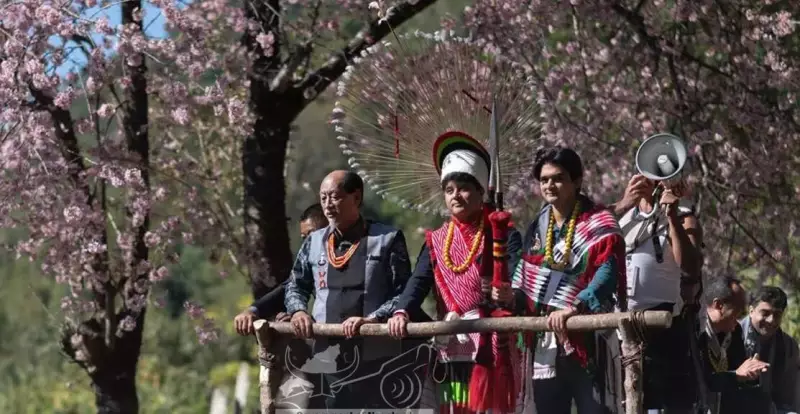
In a vibrant display of Naga cultural heritage, Union Minister Jyotiraditya Scindia participated as the chief guest in the traditional stone pulling ceremony at Touphema village in Kohima district on Friday. The significant event was hosted by Nagaland Chief Minister Neiphiu Rio in collaboration with the state's tourism department.
A Pillar of the Hornbill Festival
The ceremonial stone pulling is one of the most anticipated and symbolic events of the annual Hornbill Festival. This year's ceremony gained added prominence with the presence of a prominent Union Minister, highlighting the national importance of preserving and celebrating India's diverse tribal traditions. The event draws visitors from across the country and the world, serving as a powerful window into the rich cultural tapestry of Nagaland.
Scindia Hails the Spirit of Unity
Addressing the gathering, Jyotiraditya Scindia reflected deeply on the ceremony's profound meaning. He emphasized that the act of pulling the massive stone was far more than a mere physical task for the participants. Scindia described it as a powerful embodiment of the union of body, mind, soul, heart, and spirit—a collective effort that mirrors community harmony and shared purpose.

The Union Minister expressed his heartfelt gratitude to Chief Minister Neiphiu Rio and the warm-hearted people of Nagaland for extending him an invitation to witness and be part of what he termed "the most important ceremony of Nagaland." His participation is seen as a gesture strengthening the bond between the central government and the northeastern state.
Cultural Significance and Tourism Promotion
The collaboration between the Chief Minister's office and the tourism department for this event underscores the state's strategic focus on cultural tourism. By showcasing unique traditions like the stone pulling ceremony, Nagaland aims to attract cultural enthusiasts and boost its tourism economy. The Hornbill Festival, often called the 'Festival of Festivals,' is central to this strategy, offering a curated experience of Naga music, dance, food, and indigenous games.
The ceremony at Touphema village successfully blended solemn tradition with celebratory festivity, creating a memorable experience for all attendees. It served as a reminder of the enduring strength of community bonds and the importance of preserving intangible cultural heritage in a rapidly modernizing world.