Archaeologists Unearth Sealed 2,600-Year-Old Etruscan Tomb in Central Italy
Archaeologists conducting excavations in central Italy have made an exceptionally rare discovery that promises to transform our understanding of an ancient civilization that thrived thousands of years ago. During meticulous work at an ancient burial site, researchers uncovered a completely sealed Etruscan tomb that had remained undisturbed for approximately 2,600 years, providing an unprecedented window into early Etruscan society.
Perfect Preservation of Ancient Burial Chamber
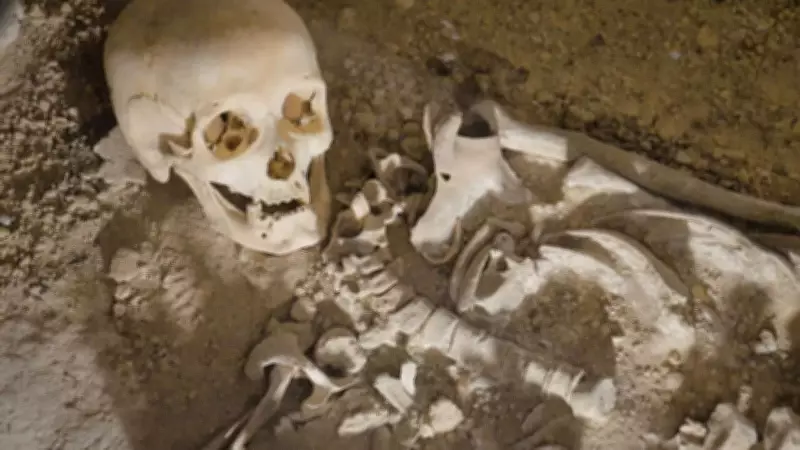
The burial chamber contained the remarkably preserved remains of four individuals alongside more than one hundred carefully placed artifacts from ancient funeral rituals. Because the tomb had never been looted or disturbed by grave robbers, scientists now have an extraordinary opportunity to examine burial customs from the formative period of Etruscan civilization with modern archaeological techniques. Researchers emphasize that intact tombs from this era are exceptionally rare, making this discovery particularly significant for historical scholarship.
This remarkable find forms part of the larger San Giuliano Archaeological Research Project (SGARP), an international collaboration involving multiple universities, the Virgil Academy in Rome, and Italian heritage authorities. The project aims to comprehensively understand how people lived, died, and organized their societies in Italy before Roman dominance.

Location and Historical Context
The tomb was discovered at the San Giuliano archaeological site, situated approximately 70 kilometers northwest of Rome in central Italy. This location occupies a plateau that once supported an ancient Etruscan settlement surrounded by an extensive necropolis—an ancient cemetery containing numerous burial chambers. Researchers have been systematically studying this area since 2016, documenting hundreds of tombs carved into the surrounding rock formations.
Contents of the Sealed Tomb
When archaeologists carefully opened the sealed chamber, they discovered four individuals lying on meticulously carved stone beds. The deliberate arrangement of the skeletons suggests intentional placement during elaborate burial ceremonies conducted over two millennia ago.
The tomb contained more than 100 exceptionally well-preserved grave goods, including:
- Ceramic vases and pots of various sizes and designs
- Iron weapons showing sophisticated metalworking techniques
- Intricate bronze jewelry pieces
- Decorative and hair accessories crafted from silver
According to the San Giuliano Archaeological Research Project, these objects were deliberately placed in the burial chamber as part of established Etruscan funeral customs, reflecting beliefs about items that would be useful in the afterlife. Remarkably, many artifacts were found exactly where they had been positioned during ancient burial rituals, providing invaluable context for researchers.
Significance of the Discovery
Archaeologists consider this discovery particularly rare because the tomb remained completely sealed and undisturbed for thousands of years. Most Etruscan tombs discovered in Italy have been looted either in ancient times or during subsequent historical periods. The research team notes that numerous other chamber tombs in the San Giuliano area had been emptied of valuable items centuries ago.
Because this specific chamber remained protected under a substantial stone slab, its contents were preserved from looting. This fortunate circumstance provides archaeologists with a unique opportunity to study burial practices from the 7th century BCE, a crucial period when Etruscan civilization was developing and expanding across central Italy.
Potential Identities of the Interred Individuals
Preliminary examination suggests the tomb may contain two male-female pairs, though scientists emphasize that more comprehensive analysis is required for confirmation. The research team plans extensive further investigation, including detailed bone analysis and scientific testing to determine the age, health status, and potential relationships among those buried within the chamber.

To gain deeper understanding of the people who inhabited this region during that era, archaeologists will employ multiple approaches including artifact analysis, DNA testing, and isotopic studies that can reveal information about diet and geographical origins.
Understanding Etruscan Civilization
The Etruscans constituted an ancient civilization that inhabited parts of present-day Tuscany, Umbria, and Lazio in Italy. Archaeological evidence indicates their culture flourished between the 8th and 6th centuries BCE before gradually being absorbed into the expanding Roman Republic.
While many aspects of Etruscan society remain mysterious, burial sites have provided crucial information about their culture. Archaeologists typically learn about:
- Social hierarchy and class distinctions
- Religious beliefs and spiritual practices
- Artistic traditions and aesthetic values
- Daily life activities and trade networks
Burial sites frequently contain pottery, jewelry, weapons, and artwork that reflect the status and identity of interred individuals, offering tangible connections to this ancient civilization.
Research Objectives and Future Directions
This discovery is expected to help archaeologists better understand how Etruscans organized their burial rituals and how communities were structured during the early stages of their civilization. According to information released by Baylor University, the San Giuliano Archaeological Research Project aims to reconstruct the long-term historical development of the region, tracing its evolution from an Etruscan settlement to a Roman site, later transformation into a medieval fortress, and eventual abandonment before the 14th century.
Researchers will now conduct careful analysis of the artifacts and human remains found within the chamber. These studies may reveal detailed information about diet, health conditions, trade networks, and cultural practices of people who lived in central Italy thousands of years ago.
Ongoing Research and Future Excavation Plans
Although the physical excavation of the tomb has been completed, scientists emphasize that the research process has only just begun. Archaeologists are currently cataloging artifacts, examining human remains, and conducting laboratory studies to understand the findings in greater detail.
According to the San Giuliano Archaeological Research Project, future investigations will focus on comparing this tomb with hundreds of other burial sites discovered in the surrounding necropolis. Each artifact and skeletal fragment could provide new clues about a civilization that played a crucial role in shaping early Italian history, potentially rewriting our understanding of this formative period.