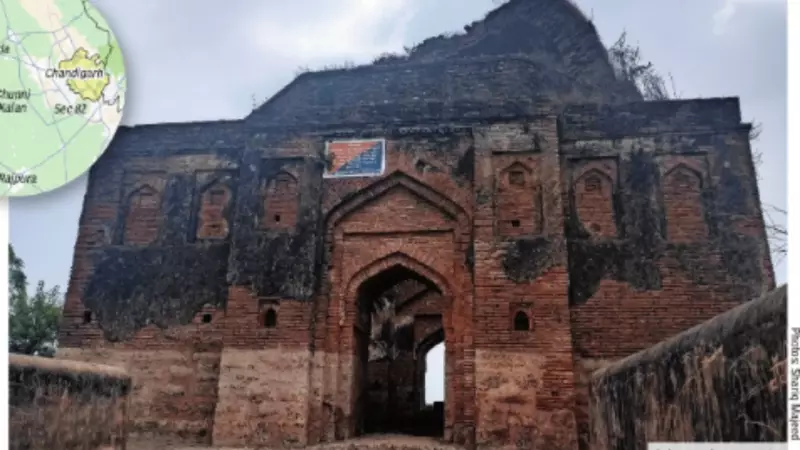
The Silent Echoes of Sirhind: When History Became a Stranger in Its Own Land
Walking through the narrow lanes of this small town located approximately 45 kilometers southwest of Chandigarh, it becomes difficult to imagine that Chinese scholar Hiuen Tsang traversed these very paths around 1,300 years ago. Equally challenging to comprehend is that the legendary north Indian ruler Prithviraj Chauhan once marched through here with his formidable army. Today, history seems to have become an unwelcome guest in Sirhind, retreating into shadows of neglect and indifference.
A Legacy Buried Under Modern Indifference
There was a time when history flowed abundantly through Sirhind's arteries. Known historically as Sar-i-Hind, meaning "the crown of India," this settlement served as the final significant outpost before invaders could reach the Yamuna River. The Hindu Shahis, who established Sirhind as their capital with grandeur reportedly second only to Lahore's, left temples that still stand south of Islamabad—the oldest surviving temples in Pakistan today.
Yet in Sirhind itself, monuments that should eloquently narrate past glories stand as mute spectators, scattered listlessly across farmlands and alleyways. Many historical structures have been reduced to mere construction materials—their bricks repurposed to build anonymous walls of homes that have emerged in recent decades. The town, which forms a twin city with adjacent Fatehgarh Sahib, has not only diminished in physical size and historical significance but has also vanished from Punjab's collective consciousness and cultural dialogue.

Where History Became History's Victim
Sirhind witnessed pivotal moments that shaped the subcontinent's destiny. It was here that Mughal emperor Humayun defeated the Suris to re-establish Mughal supremacy, and where Guru Gobind Singh's young sons met their tragic fate, being cruelly bricked alive. Some historical accounts even trace Sirhind's origins back to the Mahabharata era, making it a melting pot of lore and legend. This raises a poignant question: how did history itself become a casualty in historic Sirhind?
The Cost of Archaeological Neglect
Dr. Daljit Singh, professor of history at Punjabi University in Patiala, emphasizes that Sirhind represents a veritable treasure trove for archaeologists that has never received its due recognition. Encroachments steadily consume spaces that should be protected heritage sites. Speaking with local residents reveals a consistent sentiment: every brick and ancient structure here could tell its own historical story. The real challenge lies in actually locating and properly identifying these remnants.
There appears to be minimal evidence of sustained efforts by the Archaeological Survey of India (ASI) to explore the area's historical significance. Despite Sirhind's rich past as a major provincial center, comprehensive surveys to identify potential historical remains buried underground have not been conducted for years.
Selective Preservation Amid Widespread Decay
Certain sites like Gurudwara Shri Fatehgarh Sahib, Rauza Sharif Shrine, and a Jain Mandir receive proper maintenance. However, numerous historical places including Jahazi Haveli of Diwan Todar Mal (distinct from Raja Todar Mal of Akbar's Navratna), Aam Khas Bagh, and Sadna Kasai Masjid have suffered prolonged neglect. Areas like Harbanspura, Mahadian, Bara, and Talanian—where relics were commonly discovered three decades ago—remain largely unexplored, with buildings and monuments slowly crumbling in wheat fields.
In the 19th century, French traveler V. Jacquemont famously described Sirhind as "the biggest ruins in India after Delhi." Today, few speak of it, as if it has disappeared from the map. Remarkably, no museum in India contains traces of the Hindu Shahis who once ruled from Sirhind.

Voices from the Ground: Memories of a Buried Past
Elderly residents of Sirhind recall frequent instances when farming activities would uncover historical artefacts. "Every few days, we would hear that someone's plough had dug up something from history. Bricks were particularly common finds. Even now such discoveries occur," said 77-year-old Sukhdev Singh. "The famous Laalan Wala Bazar near Talanian village is entirely farmland today. There were at least four tombs in this area, but we only know about two—the Ustad and Shagird tombs. We don't know what happened to the other two."
Shamsher Singh, 75, from Talanian village, remembers regular discoveries of silver coins, distinctive Sirhind bricks, and artefacts of various shapes near tombs and in fields. "A raised structure existed near our village, but it gradually disappeared as people leveled the ground. Now farming occurs on that same land. The government should have protected these historical sites," he lamented.
At Mahadiyan, renowned for how frequently buried history emerged during farming, former sarpanch Balwant Singh, 75, noted that a mausoleum he saw as a child has completely vanished, replaced by houses. "Some 30-35 years ago, 'Tailay'—a form of currency—would be regularly found in fields. Who knows what else might have been discovered with proper archaeological excavations?"
Historical Significance Acknowledged but Ignored
Khalifa Syed Muhammad Sadiq Raza, who manages affairs at the mausoleum (dargah) of 17th-century Sufi saint Shaikh Ahmad Faruqi Sirhindi (Mujaddid Alf Sani), emphasized Sirhind's strategic importance as a Mughal province situated midway between Delhi and Lahore. Punjab Shahi Imam Maulana Usman Ludhianvi echoed this sentiment, stating, "Sirhind represents an important historical area that needs proper exploration within its historical context."
Anecdotes and tales about Sirhind's buried and forgotten history continue to surface in local conversations. However, not everyone welcomes the prospect of excavating the past. Many fear that unearthed history would soon be overwhelmed by present-day developments, potentially transforming Sirhind from a land of historical fact into merely a realm of fables and myths.
Official Responses and Restoration Efforts
When questioned about excavations in Sirhind, Sanjeev Kumar Tewari, Director of Tourism, Culture, and Archaeology, confirmed that none have been conducted recently. He noted that ASI is currently carrying out excavations at Sanghol in Fatehgarh Sahib and some nearby locations instead.
"Currently, restoration work is underway at Jahazi Haveli, with approximately 80% completion," Tewari stated. Regarding other monuments' disrepair, he mentioned minor restoration work at the Ustad and Shagird tombs and the Tomb of Bibi Subhan. "We are preparing estimates for restoring other monuments. Additionally, property behind Aam Khas Bagh is being allocated for commercial use through Public-Private Partnership mode."
Deputy Commissioner Sona Thind acknowledged that Aam Khas Bagh and other tombs require maintenance, confirming she has written to the tourism and cultural affairs department about these concerns.
The Uncertain Future of Punjab's Crown
As Sirhend continues to fade from public memory and physical landscape, the question remains whether this historically significant town will reclaim its rightful place in India's archaeological consciousness or remain forever lost beneath layers of neglect and modern development. The contrast between its glorious past and neglected present serves as a sobering reminder of how easily history can disappear when not actively preserved and celebrated.