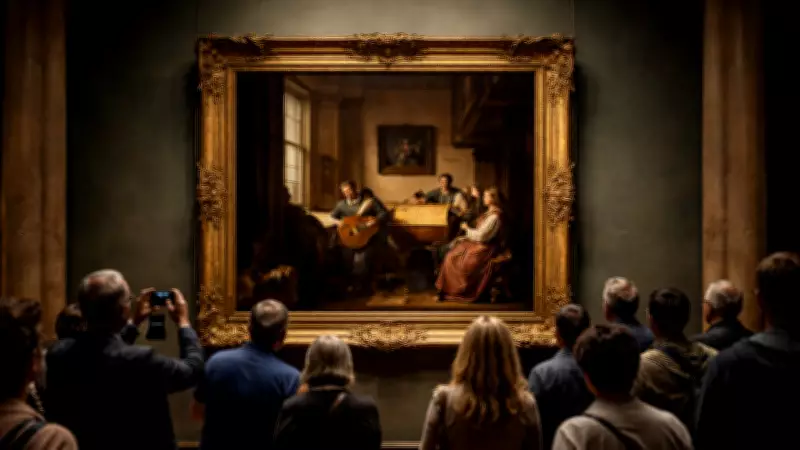
Six Stolen Masterpieces Still Missing: The Endless Hunt for Lost Art
Art theft represents one of the most persistent and intriguing forms of cultural crime, where the resolution does not always involve recovered canvases and closed case files. Numerous high-profile incidents have seen invaluable paintings vanish from museums, galleries, and private collections, never to be located despite extensive police investigations, international reward offers, and coordinated cross-border searches. These unresolved thefts have become critical reference points in the study of cultural heritage crime, raising profound questions about how such significant works were transported, concealed, or potentially destroyed over time.
Below, we explore six major artworks that remain missing today, along with the decades-long efforts to trace them and understand what may have transpired after their mysterious disappearances.
1) The Concert by Johannes Vermeer
In March 1990, two individuals disguised as police officers gained unauthorized entry to Boston's Isabella Stewart Gardner Museum during the night, executing what would become the largest unsolved art heist in modern history. Within just over an hour, thirteen precious works vanished, including an intimate interior scene by the Dutch master Johannes Vermeer, now considered virtually priceless.

More than three decades later, not a single painting from this theft has been recovered. The museum continues to display the empty frames in their original positions as a poignant reminder of the loss, while maintaining a substantial monetary reward for credible information. Federal investigators have pursued numerous theories involving organized crime syndicates, foreign intermediaries, and clandestine private collections, yet each promising lead has ultimately dissipated, leaving the case frustratingly open and unresolved.
2) The Storm on the Sea of Galilee by Rembrandt van Rijn
Also stolen during the infamous Gardner Museum heist was the only known seascape by the legendary Rembrandt van Rijn, a dynamic and turbulent maritime scene that disappeared alongside Vermeer's The Concert. Investigators have long suspected that this painting circulated through underground criminal networks, possibly changing hands multiple times or being used discreetly as collateral in illicit transactions rather than being sold openly on the legitimate art market.
Over the years, unverified tips have suggested its presence in locations ranging from various European countries to the Middle East, but none have yielded concrete evidence or led to recovery. Today, the artwork survives solely in archival photographs and in the conspicuous void it left behind, serving as a lasting reminder of one of art history's most enduring mysteries.
3) Portrait of a Young Man by Raphael
Seized by Nazi forces during World War II from Poland's prestigious Czartoryski collection, a Renaissance portrait attributed to the master Raphael is frequently cited as the most valuable artwork still missing from wartime looting. The painting vanished amid the chaotic final months of the conflict and has never been reliably traced since that period.
Competing theories surround its ultimate fate. Some historians speculate it may have been destroyed as Allied armies advanced, while others contend it survives in a secretive private European collection, meticulously hidden from public view. Polish investigators and cultural authorities have pursued sporadic leads for decades, keeping the case officially open long after official wartime documentation ceased to provide new clues.
4) The Just Judges Panel by Jan van Eyck
This crucial panel from the celebrated Ghent Altarpiece mysteriously disappeared in 1934 from St. Bavo's Cathedral in Belgium under circumstances that continue to baffle investigators. The thief sent ransom letters to authorities and even hinted at potential hiding places, but died unexpectedly before revealing any concrete details about the panel's location.
Nearly a century later, the original work has never resurfaced. Search efforts have encompassed cathedral crypts, nearby canals, and sealed rooms within historic buildings across the region. A painted replica now occupies the altar space, while the authentic Just Judges panel remains one of Europe's most persistent and enigmatic art-world puzzles.

5) Nativity with St. Francis and St. Lawrence by Caravaggio
In October 1969, thieves surgically removed this monumental canvas from its frame inside the Oratory of San Lorenzo in Palermo, Italy, leaving behind an empty wall and a stunned international art community. Investigators quickly suspected involvement by organized crime groups, and over subsequent years, informants have provided conflicting accounts, alleging the painting was damaged, buried, or smuggled overseas.
None of these leads have been substantiated with proof. Italian authorities still classify the case as active and open, and high-quality reproductions now hang where the original once glowed, standing as substitutes for a Baroque masterpiece whose fate remains unknown more than half a century after its disappearance.
6) The Pigeon with Green Peas by Pablo Picasso
This significant Cubist-era work was among five paintings stolen in a swift and audacious 2010 burglary from Paris's Musée d'Art Moderne de Paris. While three of the missing pieces were eventually recovered through police operations, The Pigeon with Green Peas has never been traced or located.
Law enforcement agencies believe it vanished almost immediately into the shadowy private art market, circulating among collectors who are either unwilling or unable to display it publicly due to its notoriety. More than a decade later, the investigative trail has grown cold, leaving the painting as a central component of one of France's most notorious modern art thefts.
Why These Art Hunts Never Truly End
Unlike conventional stolen goods such as jewellery or cash, famous paintings are nearly impossible to sell openly on legitimate markets. Their images are meticulously catalogued in international databases, their provenance histories are well-documented, and their absences are closely monitored by global cultural institutions, which ensures that law-enforcement agencies continue watching auction houses, shipping routes, and private dealers long after media headlines fade.
Periodically, a single tip can reignite an investigation: a cryptic letter claiming insider knowledge, a seized cache of stolen goods during an unrelated raid, or an informant hinting at a hidden collection. While most leads collapse under rigorous scrutiny, these cases remain officially active because historical precedent has demonstrated that stolen artworks can resurface unexpectedly after decades of obscurity. Authorities maintain hope that somewhere in storage rooms, concealed cellars, or sealed private vaults, some of these missing masterpieces may still survive intact, awaiting eventual rediscovery and return to public view.