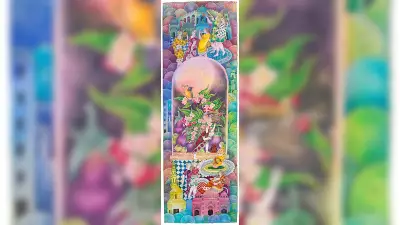
The age-old question, "Mirror, mirror on the wall, who is the fairest of them all?" posed by the evil queen, did not return the answer she desired. Instead, it declared, "Snow White!" This iconic moment from a beloved fairy tale is more than just a plot point; it serves as a powerful metaphor for the darker currents that run through our own reality. According to commentator Prasanna S Harihar, such narratives from our collective consciousness act as a clear reflection, or mirror, of the jealousy and numerous vices that simmer within the human experience.
The Fable as a Reflection of Reality
Stories like that of Snow White and the jealous queen are not confined to the pages of a book. They persist because they echo fundamental human emotions and conflicts. The queen's inquiry to the magical mirror represents a deep-seated insecurity and an obsessive need for external validation. When the mirror fails to affirm her superiority, it ignites a destructive jealousy. This sequence, as highlighted by Harihar, is a direct parallel to the ways in which envy and comparison brew in our own phenomenal world, often leading to negative actions and moral decay.
Unpacking the Roots of Vice
The simple fable efficiently unpacks a complex psychological chain. The vice of jealousy, once awakened, becomes the cause for many other transgressions. In the story, it leads to deception, attempted murder, and a profound lack of empathy. Harihar's perspective suggests that in our daily lives, similar patterns unfold. The illusion that happiness or worth is a finite resource to be won from others—symbolized by the title of "fairest of them all"—creates a fertile ground for negativity. This mindset shifts focus from internal growth to external competition, eroding compassion and ethical conduct.

Timeless Lessons for a Contemporary Audience
The publication of this opinion piece on 04 January 2026, serves as a modern-day reminder. While technology and society evolve, core human frailties remain constant. The narrative device of the talking mirror brilliantly externalizes the internal dialogue of insecurity and envy that many grapple with. By analyzing this, readers are encouraged to look inward and identify their own "mirrors"—the sources and metrics through which they measure their self-worth. The challenge is to break the cycle, to seek validation from within rather than from a fickle external reflection, thereby neutralizing the seed of jealousy before it can sprout into full-blown vice.
Ultimately, the enduring power of the Snow White story lies in its stark warning. It teaches that an obsession with superficial comparisons, symbolized by the magic mirror's verdict, can corrupt the soul and lead to one's downfall. Prasanna S Harihar's analysis, published at 20:43 IST, invites us to be mindful of the stories we tell ourselves and the reflections we choose to trust in our own complex and often illusory world.