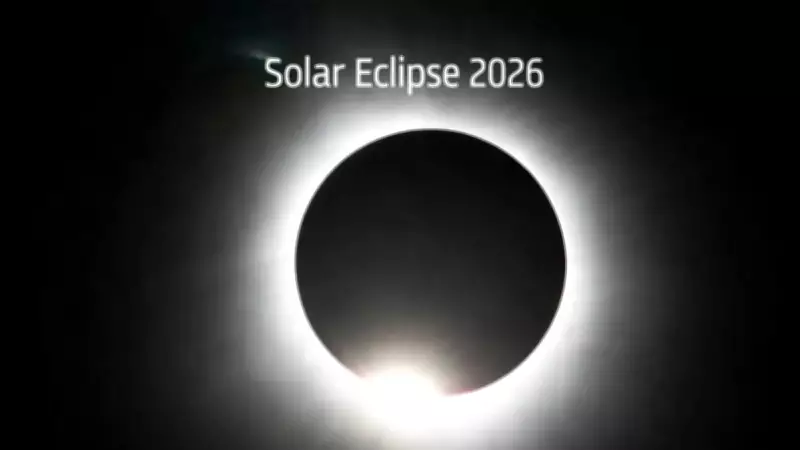
Solar Eclipse 2026: A Celestial Event on Phalguna Amavasya
The year 2026 will witness a significant astronomical phenomenon with a total solar eclipse, commonly known as Surya Grahan in India, scheduled to occur on Phalguna Amavasya. This event holds both scientific and spiritual importance, drawing attention from astronomers and devotees alike.
Exact Date and Timing of the 2026 Solar Eclipse
The solar eclipse is set to take place on August 12, 2026. According to astronomical calculations, the eclipse will begin at approximately 15:34 UTC and reach its maximum phase around 17:46 UTC, concluding by 19:53 UTC. In Indian Standard Time (IST), this translates to the evening hours, with the eclipse starting after sunset in most parts of India, making it not visible from the country.
Visibility and Geographic Impact
This total solar eclipse will be primarily visible in regions of South America and Africa. Key areas include parts of Brazil, Uruguay, and Argentina in South America, as well as sections of West Africa. A partial eclipse may be observed in surrounding regions. Unfortunately, due to its timing, the eclipse will not be seen from India or most of Asia, limiting direct observation to those in the Western Hemisphere.

Spiritual Significance in Hinduism
In Hindu tradition, solar eclipses are considered potent times for spiritual practices. Occurring on Phalguna Amavasya, which is the new moon day in the Hindu month of Phalguna, this eclipse is believed to amplify the effects of rituals and prayers. Devotees often observe fasts, perform charity, and engage in meditation during Surya Grahan to cleanse negative energies and seek blessings.
It is advised to follow traditional guidelines, such as avoiding eating during the eclipse period and taking a bath afterward, to align with cultural beliefs.Scientific Insights and Safety Precautions
From a scientific perspective, a total solar eclipse occurs when the Moon passes between the Earth and the Sun, completely blocking the Sun's light. This event provides opportunities for research on solar corona and atmospheric changes. For viewers in visible areas, it is crucial to use proper eye protection, like eclipse glasses, to prevent retinal damage when observing the eclipse directly.
As we approach 2026, this solar eclipse serves as a reminder of the wonders of our universe, blending celestial mechanics with deep-rooted spiritual traditions. Whether you're an astronomy enthusiast or a spiritual seeker, marking this date can enhance your appreciation of this rare cosmic alignment.