Fact Check: Solar and Lunar Eclipses in April 2026 - Separating Myths from Reality
In recent discussions, there has been considerable speculation and misinformation circulating about the solar and lunar eclipses scheduled for April 2026. This article aims to provide a thorough fact-check, debunking common myths and presenting the scientific facts surrounding these celestial phenomena. By examining astronomical data and expert insights, we clarify what is true and what is not about these upcoming eclipses.
Understanding the Eclipses of April 2026
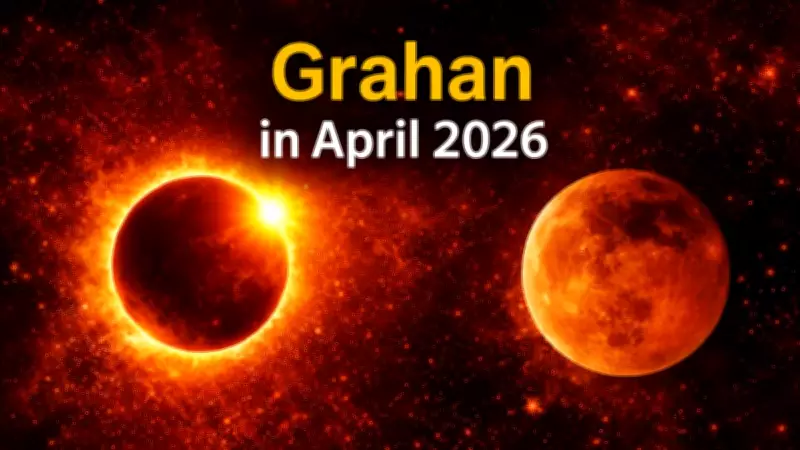
According to astronomical predictions, April 2026 will witness two significant eclipses: a total solar eclipse and a penumbral lunar eclipse. The total solar eclipse is expected to occur on April 8, 2026, and will be visible from parts of the Pacific Ocean, South America, and Antarctica. This event involves the Moon completely covering the Sun, casting a shadow on Earth and creating a brief period of darkness in the affected regions.
The penumbral lunar eclipse is projected for April 23, 2026, and will be observable from Asia, Australia, the Pacific, and the Americas. During this eclipse, the Moon passes through the Earth's penumbral shadow, resulting in a subtle dimming of the lunar surface rather than a dramatic darkening. Both events are part of the natural orbital cycles of the Earth, Moon, and Sun, and are predictable based on celestial mechanics.

Common Myths and Misconceptions Debunked
Several myths have emerged regarding the eclipses of April 2026, often fueled by superstition and lack of scientific understanding. Here are some key misconceptions addressed:
- Myth 1: The eclipses will cause natural disasters or catastrophic events. Fact: There is no scientific evidence linking eclipses to earthquakes, tsunamis, or other natural calamities. Eclipses are astronomical events with no direct impact on Earth's geological or weather systems.
- Myth 2: Looking at a solar eclipse without protection is safe. Fact: Viewing a solar eclipse directly, even during totality, can cause permanent eye damage. It is essential to use proper solar filters or indirect viewing methods to observe the event safely.
- Myth 3: Eclipses have spiritual or astrological effects that influence human behavior. Fact: While eclipses hold cultural and spiritual significance in various traditions, there is no scientific basis for claims that they affect personal fortunes or health. Any perceived effects are subjective and not supported by empirical data.
Scientific Details and Observational Tips
From a scientific perspective, the April 2026 eclipses offer valuable opportunities for astronomical research and public education. The total solar eclipse, in particular, allows scientists to study the Sun's corona, solar flares, and other phenomena that are usually obscured by the Sun's brightness. Amateur astronomers and enthusiasts can also participate in citizen science projects to document the event.
For safe observation, experts recommend using ISO-certified solar eclipse glasses or pinhole projectors for the solar eclipse. The lunar eclipse, being penumbral, is safe to view with the naked eye, though telescopes or binoculars can enhance the experience. It is advisable to check local visibility maps and timing details as the date approaches to plan observations effectively.
Conclusion: Embracing Science Over Superstition
In conclusion, the solar and lunar eclipses of April 2026 are predictable astronomical events that should be approached with scientific curiosity rather than fear or misinformation. By fact-checking the myths and understanding the realities, we can appreciate these celestial wonders safely and knowledgeably. As we look forward to these eclipses, let us rely on verified data and expert guidance to enrich our experience of the cosmos.