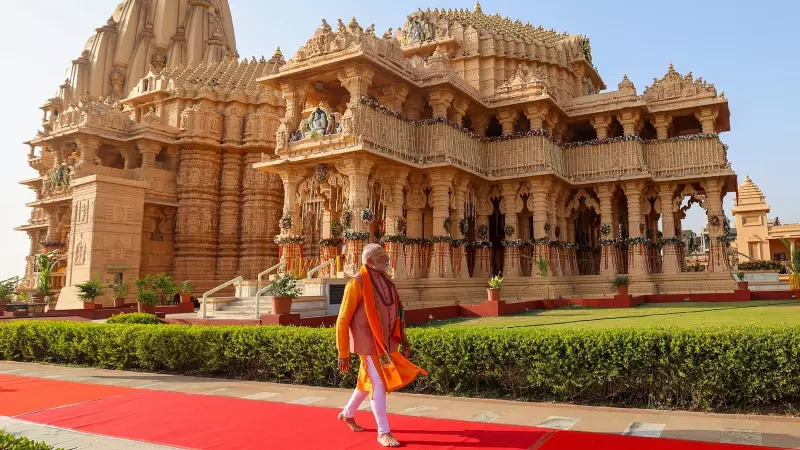
In the year 2026, the sacred Somnath Temple in Gujarat will commemorate a profound milestone: one thousand years since the first foreign invasion aimed at its destruction. This period, marked as the 'Somnath Swabhiman Parv', celebrates not an event of defeat, but a millennium of India's unyielding faith and civilizational resilience. The temple, revered as the first among the twelve Jyotirlings, stands today as a glorious testament to rebirth.
The 1026 Invasion: A Barbaric Onslaught on Faith
The historical trajectory of Somnath was violently altered in January 1026. The Turkic invader, Mahmud of Ghazni, launched a brutal attack on the shrine located at Prabhas Patan on Gujarat's coast. His motive was not conquest but systematic demolition—an attempt to obliterate a paramount symbol of Indian spirituality, culture, and economic vitality. Contemporary accounts detail the devastation inflicted upon the temple and its devotees, painting a picture of profound tragedy.
This attack was catastrophic for the national psyche. Somnath was not just a spiritual center; its coastal position made it a hub for prosperous sea traders who carried its fame across the world. The invasion sought to break the backbone of a confident society. Yet, as history would show, this was merely the beginning of a long saga of resistance and reconstruction.

The Phoenix Rises: Centuries of Rebuilding and Revival
The story of Somnath is defined by relentless rejuvenation. Following the 1026 attack, the temple faced repeated assaults over the medieval period. However, each act of destruction was met with an even stronger resolve to rebuild from the children of Bharat Mata.
Historical figures like the brave queen Ahilyabai Holkar made noble efforts to restore worship at the site. In the 1890s, Swami Vivekananda visited and was deeply moved. He later remarked that temples like Somnath, bearing "marks of a hundred attacks and a hundred regenerations," revealed the indomitable national life-current of India.
The most significant modern restoration began after India's independence. Moved by the site's condition during a Diwali visit in 1947, Sardar Vallabhbhai Patel took up the sacred duty of rebuilding. He was ably supported by K.M. Munshi, whose writings, including 'Somanatha: The Shrine Eternal', chronicle this spirit. Despite political opposition from then-Prime Minister Jawaharlal Nehru, the work continued.
Finally, on May 11, 1951, the restored Somnath Temple was inaugurated in the presence of India's first President, Dr. Rajendra Prasad. This day marked the culmination of a 75-year journey that will itself complete a milestone in 2026.
Somnath in 2026: A Beacon for a Viksit Bharat
As 2026 approaches, the significance is twofold: it marks a millennium since the first attack and 75 years since the temple's grand post-independence reopening. The roaring sea at Somnath remains a constant witness, its waves echoing an eternal truth—that fanaticism can destroy momentarily, but faith has the power to create for eternity.
The temple's journey mirrors the nation's. Just as Somnath rose repeatedly from ruins, India today, as a bright spot of global growth, has overcome centuries of colonial loot. From Yoga and Ayurveda going global to providing solutions to world challenges, the nation's value systems are now center stage.
The verse from the Dwadasha Jyotirling Stotram—"Saurashtre Somanatham Cha"—still holds true. Somnath, the first Jyotirling, continues to awaken profound spirituality, attracting seekers from all walks of life, much like the Jain monk Hemchandracharya centuries ago. With the blessings of Shree Somnath Mahadev, the temple's unbroken spirit fuels a renewed resolve to build a Viksit Bharat, guided by civilizational wisdom for global welfare. Jai Somnath!