The very name 'Somnath' evokes a profound sense of pride and reverence in the Indian consciousness. This majestic temple, situated at Prabhas Patan on Gujarat's western coast, is far more than an architectural marvel; it is considered the eternal proclamation of India's soul. As the first among the twelve sacred Jyotirlingas mentioned in the Dwadasha Jyotirling Stotram, its opening verse 'Saurashtre Somnatham Ch' underscores its paramount civilisational and spiritual importance.
A Millennium of Resilience: From 1026 to the Present
The year 2026 holds immense historical significance for the Somnath Temple. It marks a millennium since the first major foreign invasion aimed at its destruction. In January 1026, Mahmud of Ghazni launched a violent and barbaric attack on this great symbol of faith, seeking to demolish a cornerstone of Indian civilisation. Historical accounts detail the cruelty unleashed on the town's people and the devastation inflicted upon the shrine, narratives that still evoke deep sorrow.
Yet, the story of Somnath is not defined by this destruction. Instead, it is a 1,000-year testament to unbreakable courage and renewal. The medieval barbarism that began in 1026 inspired repeated attacks over centuries, representing an attempt to enslave a people and their culture. However, each assault was met with resistance from great men and women, and every single time, the people of this civilisation picked themselves up to rebuild and rejuvenate their sacred site.

The Modern Rebirth and Key Figures
The sacred duty of rebuilding Somnath after India's Independence fell to the able hands of Sardar Vallabhbhai Patel. Moved by a visit during Diwali in 1947, he vowed to reconstruct the temple. Although Sardar Patel did not live to see the day, his dream was realized on May 11, 1951, when a grand, restored Somnath Temple opened its doors in the presence of the then President of India, Dr. Rajendra Prasad. This milestone will complete 75 years in 2026.
This event was not without political controversy. The then Prime Minister, Jawaharlal Nehru, expressed displeasure, fearing it would create a 'bad impression' of India and advised against the President's association with it. Dr. Rajendra Prasad, however, stood firm. The efforts of K.M. Munshi, who effectively supported Sardar Patel and authored the seminal work 'Somanatha: The Shrine Eternal', were also pivotal in this renaissance.
The spirit of Somnath's regeneration has inspired saints and leaders across ages. In the 1890s, Swami Vivekananda visited and was deeply moved. In a 1897 Chennai lecture, he reflected that temples like Somnath, bearing marks of a hundred attacks and a hundred regenerations, teach the history and indomitable national mind of the race. Centuries earlier, the revered Jain monk Kalikal Sarvagna Hemchandracharya also prayed at Somnath, composing verses in salutation.
The Eternal Spirit and India's Future
The essence of Somnath is captured in the belief that a mere sight of its Shivling frees one from sins, fulfills righteous desires, and ensures heaven. This speaks to a civilisational conviction in the eternity of spirit and ideas, a concept mirrored in the Gita's verse on indestructibility. The temple stands as the ultimate symbol of this indomitable spirit, having overcome relentless odds.
Today, a thousand years after the first attack, the sea at Somnath roars with the same intensity. Its waves tell a timeless story of rising again and again. The aggressors of the past are now footnotes in history, while Somnath radiates glory, reminding us that hate may destroy momentarily, but faith and conviction have the power to create for eternity.
This same spirit is visible in modern India, a bright spot of global growth that has overcome centuries of invasion and colonial loot. If Somnath could rise repeatedly after relentless attacks, it inspires the belief that India can restore itself to the glorious heights it embodied a millennium ago. With the blessings of Shree Somnath Mahadev, this resilience fuels the renewed resolve to build a Viksit Bharat, guided by civilisational wisdom for global welfare.

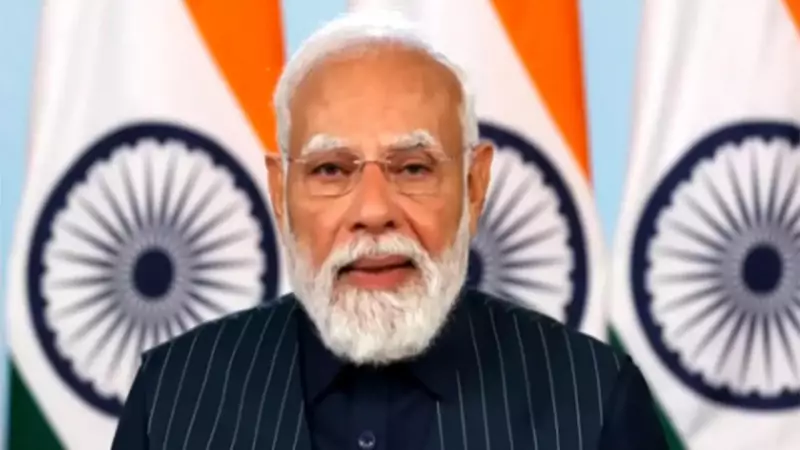
(Narendra Modi is the Prime Minister of India and the Chairman of the Shree Somnath Trust).