More than a century after Rabindranath Tagore became the first non-European to win the Nobel Prize for Literature, his musical legacy has found an unlikely but vibrant home in the historic Swedish university town of Lund. Here, a unique choir sings his compositions, known as Rabindrasangeet, in their original Bengali, performed largely by Swedish voices.
A Poetic Question Answered in Sweden
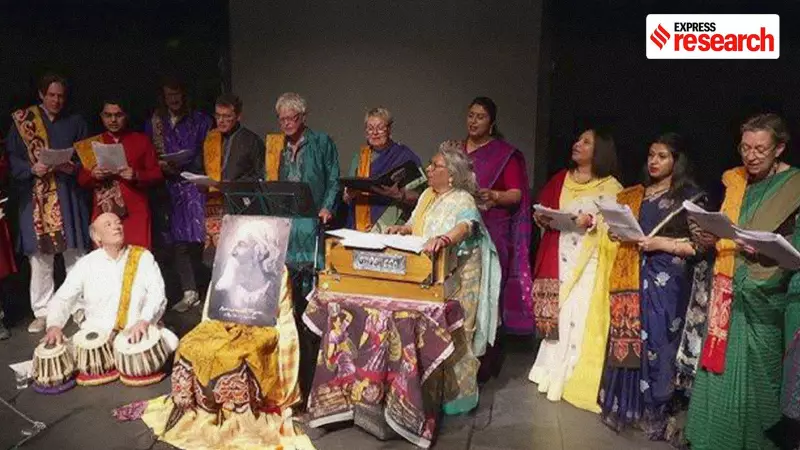
Tagore once poetically wondered who would be reading his verses a hundred years later. The answer today comes from a corner of the world he might never have imagined. In Lund, recently designated a UNESCO City of Literature, the Lund International Tagore Choir stands as a living testament to the poet's enduring global appeal. Founded in 2012 by Bubu Munshi Eklund and her Swedish husband Lars Eklund, the choir embodies how cultural memory and art can transcend geopolitical borders and linguistic barriers.
From Calcutta to Lund: A Love Story Built on Music
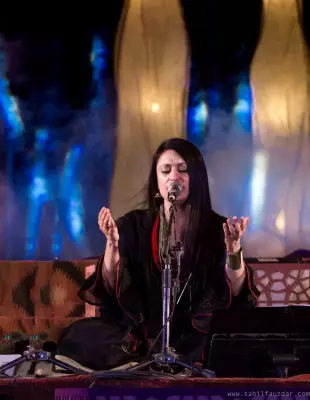
The choir's origins trace back to a chance meeting in Calcutta in 1982. Lars Eklund, a young Swedish journalist, was a guest at the home of pioneering Indian artist Annada Munshi. There, he met Munshi's daughter, Bubu, an accomplished exponent of Rabindrasangeet trained under legends Suchitra Mitra and Kanika Bandyopadhyay.

Their connection was instant. They married later that year and moved to Lund in 1983. While Lars worked in journalism and later as deputy director of the Swedish South Asian Studies Network (SASNET), Bubu immersed herself in the local music scene, joining a Swedish choir.
The pivotal moment arrived in 2011. SASNET organised events in Lund to celebrate Tagore's 150th birth anniversary. Bubu guided her Swedish choir, Svart på Vitt, to perform Tagore's "Ontoro momo bikoshito koro." The warm reception revealed a deep, unexpected resonance, planting the seed for a dedicated Tagore choir.
Building a Choir, Forging Cultural Kinship
Formally established in 2012, the Lund International Tagore Choir began its deliberate journey. Bubu, with immense patience, taught Swedish singers to pronounce Bengali with remarkable accuracy, guiding them through the nuances of Tagore's melodies at her harmonium. The rehearsal sessions became more than music practice; they transformed into a medium for forging deep cultural understanding and emotional connection.
The choir's commitment was soon tested and proven. In 2013, to mark the Nobel centenary, they performed at Stockholm's Public Library. The same year, they embarked on a landmark tour of India, performing in Odisha, Kolkata, and the hallowed grounds of Santiniketan's Sangeet Bhavan at Visva-Bharati University—a homecoming for Tagore's music in its most authentic form.
Their journey continued with a 2019 tour of Bangladesh, visiting Tagore's Kuthibari at Shilaidaha. Notably, for this unfunded trip, choir members used their own resources, a powerful testament to their personal dedication to Tagore's philosophy and music.
Where Tagore's Philosophy Finds New Voice
Today, the choir continues to gather every alternate Wednesday at the Eklund residence on Råbygatan 5B in Lund. Its members are a mix of Swedes, Indians, and Bangladeshis. Lars, whom Bubu credits as the backbone of the initiative, handled translations, logistics, and organisation, while scholars like the late Professor William Radice helped refine the lyrical translations.
This initiative is more than a musical group; it is a bridge built on human connection, friendship, and a shared love for Tagore's humanist vision. As Swedish voices fill a living room in Lund with songs like "Maati toder daak diyeche," Tagore's call feels personal and immediate, even 9,000 kilometres from Bengal.
Over a century after his poetic query, Tagore's answer resonates not in words, but in songs—carried across continents, sustained by devotion, and kept vibrantly alive in a Swedish choir he never foresaw.