As a child, Abhishek Khedekar discovered Tamasha by sound. Music and applause travelled to him from its throbbing tents, but the performance itself remained hidden—his family considered him too young for its risqué dances and ribald humour. Little did they know that years later, he would travel with Tamasha troupes, documenting a folk form caught between tradition and transformation.
From Sound to Sight: Khedekar's Journey
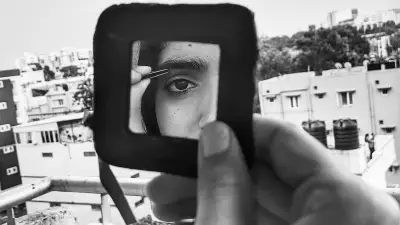
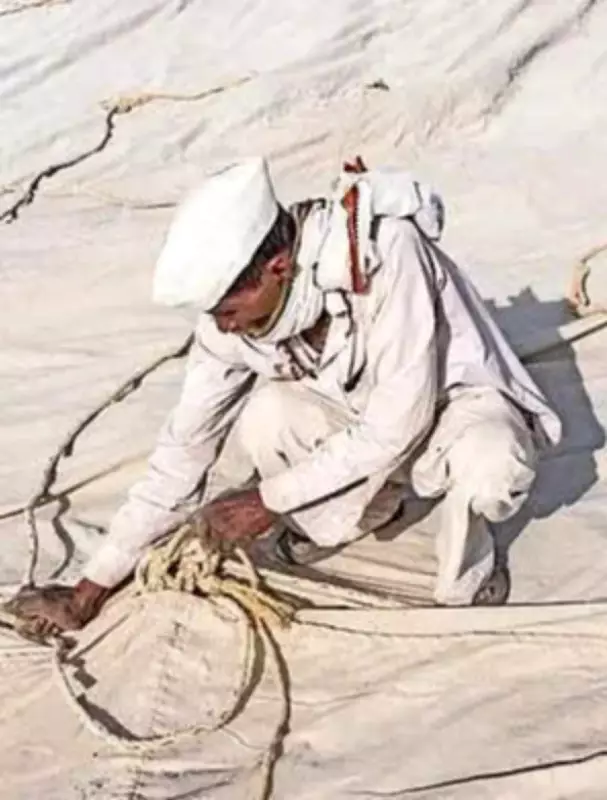
Khedekar, who prefers the term “lens-based artist”, produced a substantial body of work during the six months he spent with Tamasha companies between 2015 and 2016. These images are now on display at the Dilip Piramal Art Gallery at the NCPA. Titled simply ‘Tamasha’, the exhibition, curated by Bharat Sikka, is a work of docufiction that combines photographs with photographs of photographs, alongside archival and assembled imagery, to create a layered narrative—not merely a straightforward documentation of the form, but an interpretation of Khedekar’s encounters with it.
Understanding Tamasha: A Centuries-Old Tradition
Tamasha is a centuries-old form of entertainment in Maharashtra that blends several performance traditions. It begins with the gan (invocations to Ganesh), moves to the gavalana (a playful segment on Krishna and the gopis), and then the dance and music set. Traditionally, performances also incorporated jagran gondhal—devotional songs and skits—and powadas, ballads of heroism. In recent decades, however, these latter elements have given way to contemporary forms of entertainment. An itinerant variety show staged for one night and occasionally a morning in a village or town (and formerly in cities like Mumbai and Pune), Tamasha starts doing the rounds around Dusshera and winds down in summer.

The Documentary Challenge: Gaining Access
Khedekar decided to document Tamasha for his final-year project at the National Institute of Design, but getting a foot in the tent wasn’t easy. Inquiries at Pune’s Bal Gandharva Ranga Mandir, once a hub for Tamasha, led him to Narayangaon, 75 km away, where he was promised an introduction to a troupe. “However, when I arrived, they had already left for Pandharpur,” he says. So, that’s where he headed in search of the Tukaram Khedkar Sahe Pandurang Mule Manjarvadikar Tamasha Mandal, into whose world he was soon absorbed.
Life in the Troupe: Immersion and Observation
Khedekar immersed himself in Tamasha life, eating its simple meals of bhakri and sabzi, sleeping in its tents and buses, and keeping its hours, which often meant pulling all-nighters. “There were three trucks (for equipment, tents and costumes) and one sleeper bus with berths so narrow you had to sleep ramrod straight. We’d fall off to sleep in one village and wake up in another.”
A rectangular tent was typically their living quarters in a village, where each member staked their space with a steel trunk that contained their belongings: rugs, utensils and clothes. “There were singles as well as families with children; the oldest in the Tukaram Khedkar company was Ba in her 80s. She started out as a dancer as a young girl, and now sings and acts,” said Khedekar, who slipped easily among them, documenting what he observed and working those images into constructed collages later.
Artistic Techniques: Constructed Collages and Symbolism
One image, for instance, shows a man’s face partially submerged in water, scattered with thorns that appear suspended impossibly on its surface, making the image appear simultaneously two- and three-dimensional. “The original image was a portrait of a man swimming in a river. I placed thorns on the print and scanned it to create the final work,” Khedekar explains.
The composition emerged from a moment of warning. “Once, when we reached a village, I stepped barefoot off the bus and walked along a path flanked by thorny bushes. ‘Be careful,’ Ba cautioned. ‘Those thorns may look harmless, but if they scratch you, you’ll fall ill by evening. They are poisonous. . . like the people here.’”
Social Realities: Caste and Gender Discrimination
Khedekar soon realised that although Tamasha troupes were invited to perform, they were seldom welcomed as guests. He documented both subtle and overt acts of hostility—some rooted in caste discrimination, others in gender-based aggression.

One woman he photographed bore a scar from a bottle hurled at her mid-performance by a drunk member of the audience. “They even try to peek into tents where the women are changing,” he says.
Historically associated with Mang and Mahar communities, Tamasha today draws performers from different castes, though social prejudice persists. On one occasion, Khedekar himself was turned away from a village water pump by local women who told him to “wait for your water to come”—a remark he interpreted as either caste prejudice or occupational stigma “Or perhaps they simply had a water shortage,” he adds, cautiously.
Evolution of Tamasha: Adapting to Modern Tastes
Khedekar’s photographs are not quick reads. They demand close study to decode their embedded meaning. In one image, a round shiny object hangs in sharp focus against a blurred audience. It turns out to be a close-up of a disco ball being hoisted into place. Both foreground and background tell a story: as interest in Tamasha declines, troupe owners are introducing new props and modifying old acts to remain commercially viable.
Avikshkar Mule, or Pappudada, the third-generation owner of the Tukaram Khedkar company, has flooded his tent with extra lights and fitted in a large disco ball and rain machine. He even employs a hip-hop troupe. “Nowadays, audiences want popular Hindi and Marathi songs instead of devotional music,” says Khedekar. “Tastes are changing.”
Exhibition Details
Tamasha shows at DPAG, NCPA, until June 14.