Telugu States Renew Push for Global Artefact Loans After Smithsonian Repatriation
In a significant development for cultural heritage, the Smithsonian Institution in the United States has agreed to return three stolen sculptures to India, originally taken from temples in Tamil Nadu. This positive step has rekindled hopes in the Telugu states of Andhra Pradesh and Telangana for at least securing loans of their precious artefacts currently displayed in museums across the globe.
MEA Advises Strategic Loan Approach for Colonial-Era Artefacts
While the repatriation of stolen items is relatively straightforward, recovering objects moved out of India during the colonial period presents a far more complex, tedious, and often near-impossible challenge. Recognizing this, the Ministry of External Affairs has recommended that local authorities develop a comprehensive plan to seek loans of Indian objects of historical, cultural, archaeological, and religious significance from international museums.
This advice comes in response to the Andhra Pradesh government's intensified demand for the return of the Amaravati artefacts housed in the United Kingdom. Piyush Srivastava, Additional Secretary (EW) in the MEA, communicated to Ajay Jain, Special Chief Secretary (Culture), that the Indian High Commission in London has initiated discussions with the British Museum regarding the repatriation of these sculptures.

"It may be worth considering that as a first step it might be more feasible to discuss the loan of these artefacts," stated the official. He elaborated that "the permanent return of such artefacts, which have been in the custody of British Museum for a long time, could take relatively longer, and could also potentially involve conditions which could take time to address."
The official suggested that successfully negotiating a loan agreement between the British Museum and appropriate Indian agencies could pave the way for further dialogue, eventually creating conditions favorable for permanent repatriation. To facilitate these talks, he urged the state government to submit a detailed proposal for the loan and specify which agency would assume ownership of the artefacts during their stay in India.
Treasures from Telugu States Abroad: A Rich but Dispersed Heritage
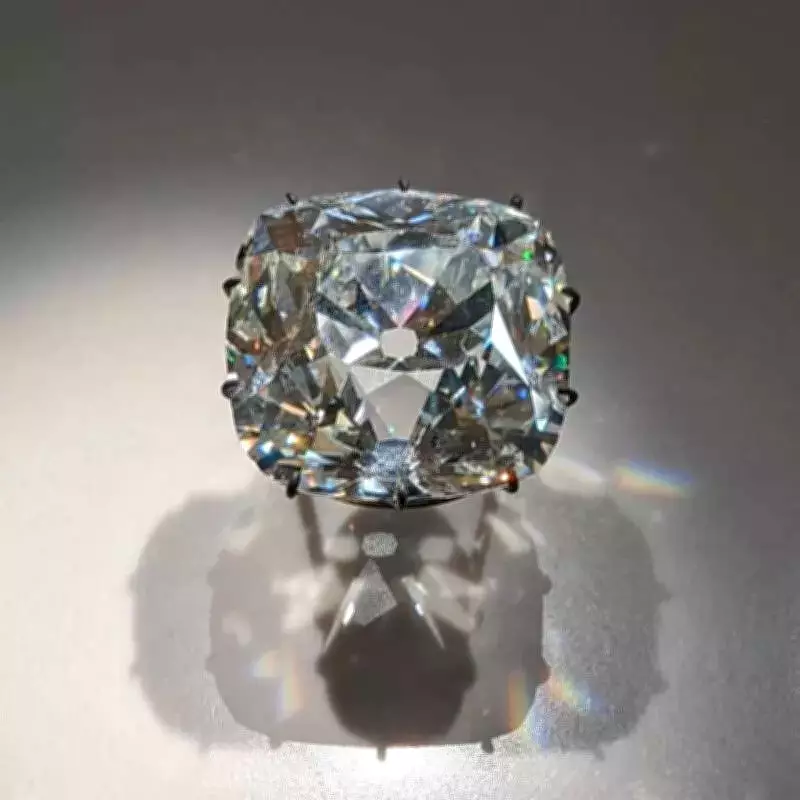
The scale of the cultural dispersion is vast. The British Museum alone displays at least 120 sculptures and artefacts from Amaravati, dating from the first century BCE to the fifth century CE. Furthermore, about a dozen famous diamonds discovered in the Krishna river basin during the Qutub Shahi period are housed in museums in France, the UK, Iran, and the USA, including the renowned Kohinoor, Hope, and Regent diamonds.
The global footprint extends to various other unique items:
- The Bata Museum possesses the footwear of Sikandar Jah, founder of Secunderabad, listed among the world's top ten most expensive shoes ever made.
- The Royal Air Force Museum in London displays a DH9A aircraft from the Hyderabad Squadron used in World War II, donated by the Nizam of Hyderabad.
- Buddhist sculptures from the Nizam's collection and Golconda paintings from Telangana are also found in international institutions.
- Notable pieces include the Nizam's ceremonial sword in the Glasgow Museum, Buddhist artefacts in the New York Museum, and a brass Alam (a Muharram standard) previously held by the National Gallery of Australia and since returned to India.
- The National Museum of Korea in Seoul also holds objects from the two Telugu states.
The Amaravati marbles, often called the Elliot marbles after Sir Walter Elliot who participated in their excavation, were transported to London in 1859. Initially stored poorly after the East India Company's abolition, they were moved from the Indian Museum in Kolkata to the British Museum in 1880.
Repatriation Push and Legal Complexities
Dr. Jasti Veera Anjaneyulu, a champion for repatriating Amaravati artefacts, notes that approximately one-third of sculptures discovered in Amaravati between 1845 and 1853 were sent to London. While many remain in the Government Museum in Chennai, others are scattered in museums worldwide, including in Singapore and France.

"The Centre earlier made it clear that since these objects were shifted out of India before Independence, they do not fall under the Antiquities and Art Treasures Act, 1972. Further, we cannot call it illegal trafficking as they were taken away prior to Independence," Anjaneyulu explained, urging the state to accelerate the loan process as an interim step before final return.
P. Anuradha Reddy of INTACH highlights that the British Museum holds the largest collection of Amaravati artefacts outside India, and the Indian government can pursue their repatriation. "We can claim rights over objects stolen from India. In the case of Amaravati sculptures and other artefacts they were documented by the British before transporting them to London," she stated.
However, she pointed out the distinct case of the Kohinoor diamond, given that Maharaja Duleep Singh of the Sikh Empire, who presented it to the Queen, was a minor and the Treaty of Lahore was imposed on him. Reddy added that India has previously loaned artefacts to foreign museums and, in cases where objects were not stolen or illegally sold, can seek them on loan while working towards permanent repatriation.
A recent success story occurred in August 2021 when the National Gallery of Australia returned 14 antique pieces to India, including two from Hyderabad: a brass Alam and an original photograph of Maharaja Kishen Pershad, the prime minister of the princely state.