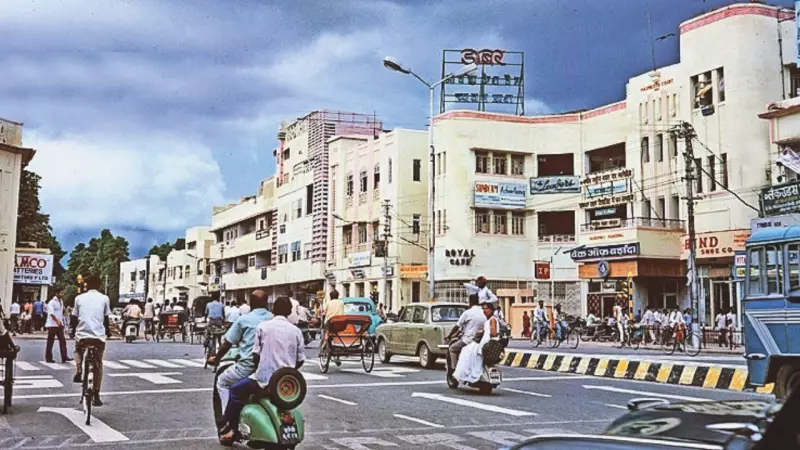
For over two centuries, Hazratganj has stood as the vibrant, beating heart of Lucknow. More than just a central business district, this iconic high street has been a silent witness to the city's evolving history, culture, and social life, weaving itself into the personal memories of generations of Lucknowites.
From Colonial Beginnings to a Mughal Namesake
The story of Hazratganj began in 1810, established as the colonial High Street during British rule. Its commercial character expanded in 1827 when Nawab Nasir-ud-Din Haidar introduced the China Bazaar and Kaptaan Bazaar, dedicated to imported goods. The market received its enduring name in 1842, christened Hazratganj in honour of Nawab Amjad Ali Shah, who was affectionately addressed as 'Hazrat'.
The seismic shift of the 1857 Uprising reshaped its physical landscape. As the British consolidated control over Lucknow, they remodelled Hazratganj, drawing inspiration from London's Queen Street. This period saw the gradual replacement of Mughal-style architecture with structures reflecting European aesthetics, forever altering the market's visual identity.

The Golden Era of 'Ganjing' and Cultural Landmarks
For decades, Hazratganj was the epicentre of Lucknow's social and cultural life. The tradition of 'Ganjing' – leisurely strolling through its posh lanes – became a beloved pastime. Families and friends created cherished rituals: catching a film at the legendary Mayfair theatre, followed by dinners at iconic eateries like Kwality's, Ranjana, or the old Royal Café.
The pre-movie experience was itself a delight, featuring mouth-watering pastries from Ben Bows or delicious Lakhnavi chaat from stalls like King of Chaats and Chowdhury Sweet House. Shopping excursions were incomplete without a visit to Halwasiya Market for knick-knacks, a saree from Modern Silk House or Ram Lall, or elegant bone-china crockery from Azim Ali's.
Intellectual and romantic pursuits also flourished here. Book lovers spent hours at Universal, British, and Ram Advani booksellers or in the serene British Library. The Indian Coffee House buzzed with debates among scholars, intellectuals, and politicians, while the iconic Lover's Lane quietly nurtured many a city romance. Establishments like the Ambassador dance hall and Valerios, though lost to time, live on in nostalgic accounts.
The 21st Century Revival: Restoring Lost Elegance
By the early 2000s, Hazratganj's heritage glory had faded under the onslaught of consumerism and civic neglect. Recognizing its cultural value, one of India's notable heritage-rejuvenation projects was launched in 2009-10 under a public-private partnership.
This ambitious transformation was driven by the Uttar Pradesh government, citizen groups, the Hazratganj Traders’ Association, and supported by the Jawaharlal Nehru National Urban Renewal Mission (JNNURM). The scale of the effort was massive:
- Over 350 hoardings and encroachments were removed following court orders.
- Buildings were repaired and unified with a crème and pink colour scheme and monochrome signage.
- New infrastructure was introduced, including stone pavements, Victorian-style lamp posts, benches, an open-air amphitheatre, and fountains.
- A multi-level parking facility was built to enforce a no-parking zone in the main market.
- Electrical and telecom cables were shifted underground, and a new drainage system was installed.
Despite facing temporary business losses during the festive season, traders cooperated wholeheartedly. The result was a triumphant restoration of Hazratganj's old-world elegance, a success story celebrated widely in local and national media.
Today, Hazratganj continues to be a magnet for people across generations – for shopping, walking, worship, or simply soaking in its unique ambience. From the historical Sibtainabad Imambara to the culinary delights of kebabs, biryani, and kulfi near the Press Club, its appeal is timeless. There remains a strong collective hope for a Phase-2 rejuvenation, ensuring that Lucknow's timeless romance with its most iconic high street flourishes for generations to come.