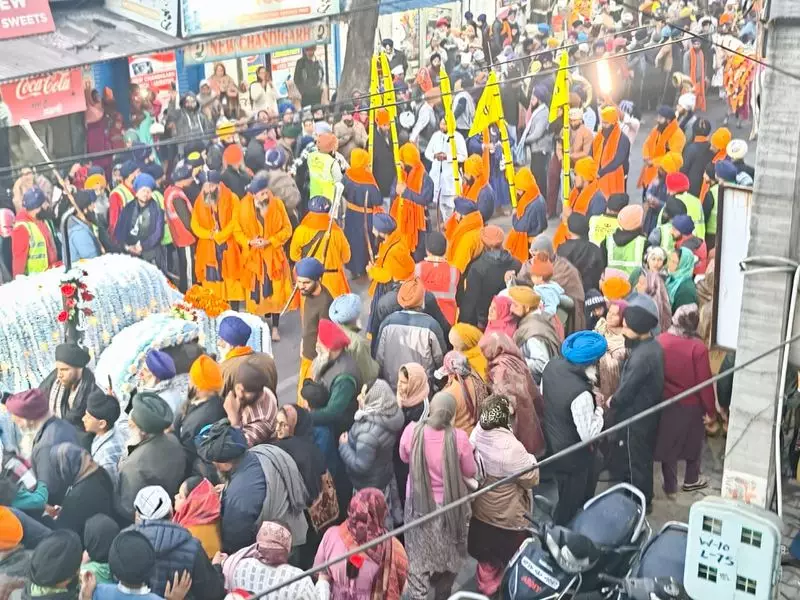
The story of the Sahibzadas, the four sons of the tenth Sikh Guru, Gobind Singh, is a profound saga of faith, resilience, and ultimate sacrifice that continues to define the Sikh spirit. The events of late 1704 and early 1705, centered around the siege of Anandpur Sahib, represent one of the most testing chapters in Sikh history.
The Gathering Storm at Anandpur Sahib
In 1704, the Mughal forces, allied with the hill chiefs of the Shivalik ranges, laid a prolonged and brutal siege on the city of Anandpur Sahib. Their target was Guru Gobind Singh, who they saw as a threat to their authority. The siege lasted several months, cutting off essential supplies of food and water to the fort's inhabitants. Despite facing starvation and constant attacks, the Sikhs, under the Guru's leadership, held their ground with remarkable courage.
The Mughal commanders, frustrated by their inability to capture the fort, eventually resorted to deceit. They offered a solemn oath on the Quran, promising safe passage for the Guru and his followers if they vacated Anandpur Sahib. Trusting this pledge, Guru Gobind Singh and a band of his devoted Sikhs, including his family, left the fort on a cold December night in 1704.

Betrayal at the Sarsa River and Separation
The promise of safety was swiftly broken. As the group reached the swollen and icy waters of the Sarsa River, the Mughal forces launched a treacherous attack. In the ensuing chaos and fierce battle, the Guru's family was separated. The Guru's mother, Mata Gujri, and his two youngest sons, Zorawar Singh (aged 9) and Fateh Singh (aged 7), became separated from the main group. They were eventually escorted by a loyal cook, Gangu, to his native village of Saheri, near Morinda.
However, Gangu proved disloyal. Tempted by the Mughal reward for information on the Guru's family, he betrayed the young princes and their grandmother. They were arrested by the local Mughal authorities and taken to the grand haveli of Sirhind's governor, Wazir Khan.
The Ultimate Test of Faith in Sirhind
The young Sahibzadas were presented before Wazir Khan in his court. He tried every tactic to make them renounce their faith. He offered them wealth, comfort, and a future of luxury if they converted to Islam. The children, barely out of their infancy, displayed a spiritual fortitude that stunned their captors. Firmly and without fear, they refused to abandon the path of their father and their Sikh beliefs.
Seeing persuasion fail, Wazir Khan resorted to threats. He declared they would be bricked alive and sentenced to death if they remained steadfast. Unmoved, Zorawar and Fateh Singh chose martyrdom. On December 26, 1704, the two young boys were cruelly entombed within a wall. As the masonry reached their chests, it is said the wall was torn down, giving them one final chance to save their lives. They remained resolute. The order for their execution was given.
Their grandmother, Mata Gujri, who had been imprisoned in a cold tower (Thanda Burj), passed away upon hearing the news of her grandsons' martyrdom. The bodies of the children were secretly cremated by a brave Hindu noble, Diwan Todar Mal, who paid for the required piece of land with gold coins laid side by side.
Legacy of the Sahibzadas' Sacrifice
The martyrdom of the Sahibzadas was not an end, but a catalyst. It steeled the resolve of Guru Gobind Singh and infused the Khalsa with an unbreakable spirit of sacrifice for justice and religious freedom. The Guru immortalized their sacrifice in his writings, and the site of their cremation in Sirhind later became the revered Gurdwara Jyoti Sarup.
Today, the story of Sahibzada Zorawar Singh and Fateh Singh is recited in Sikh congregations worldwide. It serves as a timeless lesson in courage, conviction, and the power of standing firm for one's principles against overwhelming tyranny. Their sacrifice during the siege of Anandpur Sahib remains a cornerstone of Sikh identity and history.