Italian Archaeologists Unearth Three 5,000-Year-Old 'Fairy House' Tombs in Sardinia
In the rugged heartland of Sardinia, a team of Italian archaeologists has made a remarkable discovery, excavating three exquisitely decorated underground tombs known as Domus de Janas, or "houses of the fairies." These 5,000-year-old subterranean burial chambers, concealed for millennia beneath layers of earth near the renowned Sant'Andrea Priu tombs, offer a fascinating window into the Neolithic population's beliefs and practices surrounding death and the afterlife.
The Discovery at Sant'Andrea Priu
The three recently unearthed Domus de Janas were found as part of an extensive cultural heritage program sponsored by the Italian Ministry of Culture. This initiative aims to enhance facilities and conduct systematic excavations in the Meilogu region of northern Sardinia. At the Archaeological Complex of Sant'Andrea Priu in Bonorva, researchers had previously identified several tombs but were prompted to resume work due to subtle terrain irregularities between two known hypogea.
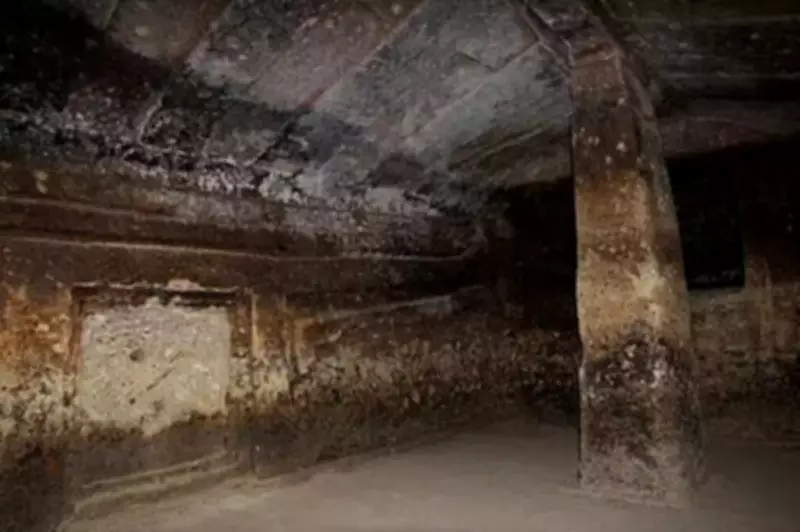
What they uncovered was a series of three underground tombs in exceptionally preserved condition, still displaying traces of original paint and ritual adornments. One particularly intricate tomb, temporarily designated Tomb XX, features seven chambers and contains over thirty Roman-era artifacts including jugs, plates, and oil lamps. This suggests the site maintained sacred significance across multiple historical periods.

Understanding the 'Fairy Houses'
The Domus de Janas are small, beehive-shaped chambers carved directly into bedrock, often accessible through short tunnels leading to one or more rooms. In Sardinian folklore, these structures have long been called "houses of the fairies" or "houses of the witches," with oral traditions describing them as dwellings of magical creatures rather than burial sites.
Inside these chambers, archaeologists have documented:
- Carved bench spaces for ritual purposes
- Symbolic designs including spirals, bull horns, and false doors
- Evidence suggesting Neolithic inhabitants believed the afterlife mirrored earthly existence
Modern archaeology classifies the Domus de Janas as crucial evidence of burial practices spanning the Neolithic period through the Copper Age, approximately 3400 to 2700 BCE. The intimate scale of these structures indicates ancient Sardinians envisioned the afterlife as a continuation of present life, with the deceased residing in homes carved into the rocky landscape.
Historical Significance and UNESCO Recognition
This discovery brings the total number of tombs identified at the site to an increased count, providing valuable insights into prehistoric burial customs. In July 2025, UNESCO recognized eighteen Domus de Janas as a collective World Heritage Site, acknowledging their importance within Sardinia's broader prehistoric landscape that includes nuraghi towers, stone settlements, and extensive necropolises.
Archaeologists emphasize that these are not merely decorative caves but integral components of Sardinia's ancient history, predating Roman occupation and offering understanding of early human habitation on the island. The combination of Neolithic carvings with later Roman artifacts demonstrates how sacred spaces maintained reverence across millennia.
From Folklore to Living Heritage
Sardinian heritage experts stress that the Domus de Janas represent tangible archaeological evidence rather than mythological constructs. Once restoration and safety work concludes, these sites will welcome visitors as open-air history museums, with guides and historians developing materials that connect the carved benches and doorways to Neolithic inhabitants' beliefs and daily practices.
For both tourists and local residents, the rediscovery of these hidden rock tombs serves as a powerful reminder that beneath Sardinia's surface lies another world—stone dwellings, quiet passageways, and symbolic art that has shaped regional identity for thousands of years. These "fairy houses" are not escapes from history but its most intimate records, literally carved into the bedrock beneath contemporary landscapes.

Archaeologists involved with the Sant'Andrea Priu Project note that these discoveries have redrawn the map of known funeral sites in central Sardinia, proving that even after two centuries of intermittent excavations, the island continues to reveal ancient secrets. As one researcher quoted by the Italian Ministry of Culture described them, these hypogea are "silent dwellings of an ancient world, where the careful positioning of bodies and objects reveals the depth of the community's sense of the universe."