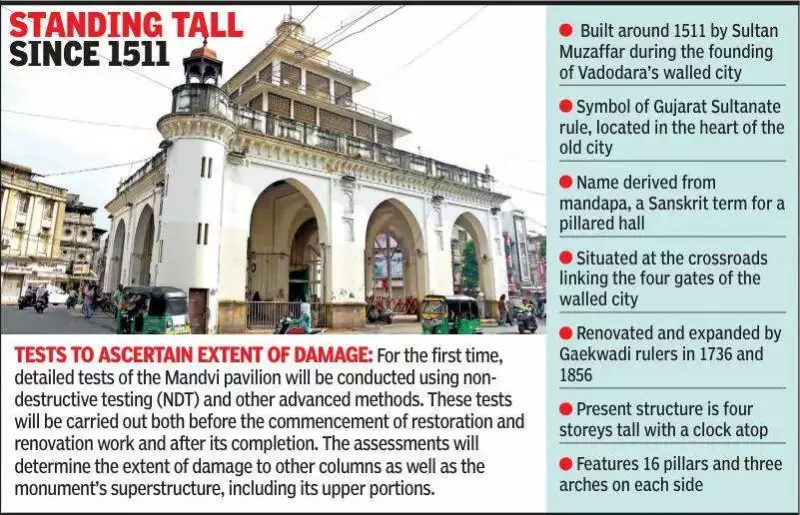
The Vadodara Municipal Corporation (VMC) has finally tabled a concrete proposal to rescue the historic Mandvi pavilion, a move that comes over a year after alarming cracks first threatened the integrity of the beloved heritage structure. The civic body's administrative wing has placed a Rs 4.96 crore restoration plan before its standing committee, aiming to begin a comprehensive renovation that is estimated to take 27 months, excluding monsoon periods.
A Year of Deterioration and Delayed Action
The crisis at the Mandvi monument became visible in January 2025, when a column on the south-west side of the pavilion began developing cracks. Alert heritage activists and regular visitors to the site promptly reported the damage to VMC officials. However, decisive action was not immediate.
By February 2025, the situation had worsened dramatically. The cracks had widened so much that a person's entire forearm could fit into them. This visible escalation finally prompted the VMC to raise the alarm and initiate a response. In April 2025, experts from the Archaeological Survey of India (ASI) were called in for an assessment. Their opinion was clear: the monument's condition was fragile and required urgent attention.

As a stop-gap measure, the corporation began erecting steel girders to support the arches of the iconic structure. Meanwhile, the column at the opposite end continued to deteriorate. With material falling off at an alarming rate, engineers were forced to create a cylindrical steel casing around it, filled with hot lime concrete for support. These emergency measures, combined with multiple girders and a maze of steel grill barricades, transformed the once-magnificent pavilion into a rickety eyesore, much to the dismay of heritage lovers.
The Road to a Rs 4.96 Crore Restoration Proposal
Following the emergency stabilization, the VMC appointed a project management consultant (PMC) to oversee the proper restoration work. After a detailed study, the PMC prepared an initial estimate of Rs 4.2 crore. However, they cautioned that this was a preliminary figure, as testing could reveal hidden damage, leading to additional expenses.
The search for a competent agency to execute such specialized conservation work proved challenging. After two attempts, the VMC identified a firm willing to take on the project. The agency's initial quote was Rs 5.08 crore, which was negotiated down to the final proposed amount of Rs 4.96 crore. Sources indicate the agency was reluctant to reduce the price further, citing the highly specialized nature of the conservation work and the logistical challenges of operating in a high-traffic area.
A Long Road Ahead for Mandvi's Revival
The proposal now rests with the VMC's standing committee, which is scheduled to discuss it in a meeting later this week. If approved, the work order will be issued, formally kicking off a restoration process that should have begun a year ago.
The planned 27-month timeline underscores the complexity of the task. The delay between the first signs of damage and the formal proposal highlights the often slow bureaucratic processes that plague heritage conservation efforts in India. For the citizens of Vadodara, the approval will mark the beginning of a long-awaited journey to restore the glory of a key historical landmark, hoping to undo the visual damage caused by the temporary supports and return the Mandvi pavilion to its former splendour.