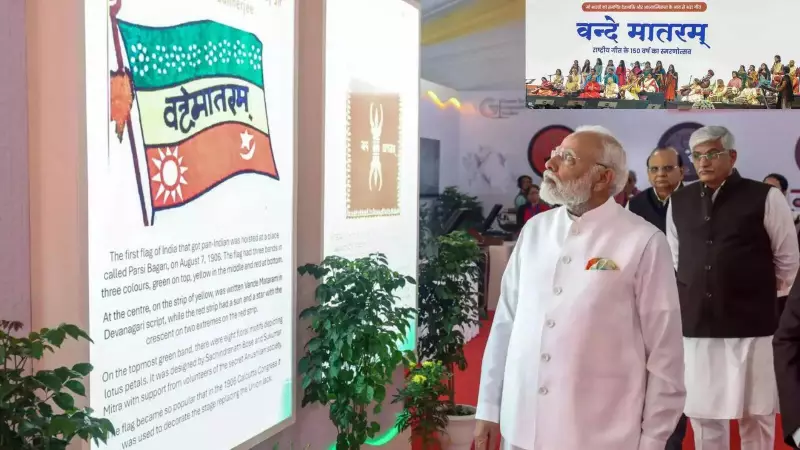
Vande Mataram at 150: A Republic Day Tribute to India's Soulful Anthem
For countless Indians, the opening notes of Vande Mataram instantly transport them back to school assemblies – standing shoulder to shoulder with classmates, voices rising in heartfelt, if imperfect, unison. This year, as the nation marks its 77th Republic Day, those childhood memories carry profound new significance. The government has designated "150 Years of Vande Mataram" as the central theme, placing this deeply personal national song at the very heart of India's ceremonial, cultural, and civic celebrations.
From Parade Grounds to Public Squares: A Nationwide Resonance
Throughout Republic Day festivities, Vande Mataram will echo powerfully across multiple platforms. From the grand spectacle of the Republic Day Parade on Rajpath to state tableaux, cultural performances, public competitions, and extensive outreach programs, the song will serve as a unifying thread. It aims to remind citizens of their shared historical journey while prompting thoughtful reflection on India's continuously evolving national identity in the 21st century.
Born in Poetry: The Literary Origins of a Patriotic Masterpiece
The story of Vande Mataram began not on a battlefield, but in the quiet realm of literature. It originated as a poem composed in the 1870s by the renowned Bengali writer and civil servant, Bankim Chandra Chatterjee. Written in a spontaneous and beautiful blend of Sanskrit and Bengali, the verses were later published in his influential 1882 novel, Anandamath.

Chatterjee penned this work during a period when British colonial authorities actively promoted "God Save the King" as the anthem for Indian subjects. In deliberate contrast, his poem offered something radical: a purely lyrical and devotional ode to the motherland. The opening verses masterfully praised India's natural abundance, beauty, and character without any explicit religious references, making it broadly inclusive. It was in the later stanzas that imagery associated with Hindu goddesses was introduced, an element that would later spark significant national debate.
From Page to Protest: The Song That Fueled a Freedom Movement
What began as beautiful poetry rapidly transformed into a mighty battle cry for liberation. By the late 19th and early 20th centuries, Vande Mataram had become one of the most potent and unifying slogans of the Indian independence movement. Its journey into the public consciousness was remarkable:
- The great Rabindranath Tagore sang it at the Calcutta Congress session in 1896, lending it immense cultural prestige.
- Its verses were published in underground revolutionary journals, spreading the message of resistance.
- The song reverberated through subsequent Indian National Congress meetings, becoming a staple of political gatherings.
- It even featured in some of India's earliest political films, using new media to inspire the masses.
Alarmed by its growing power, colonial authorities banned public performances of the song and proscribed Anandamath. Activists faced imprisonment for defying these orders. Yet, the refrain only grew louder—shouted in defiance during protests, whispered in secret strategy meetings, and sung with determination in marches. The song traveled across regions with freedom fighters; it was inscribed on Bhikaiji Cama's 1907 version of India's first national flag. Tragically, the song's opening line was reportedly the last words uttered by the brave martyr Matangini Hazra before she was shot by colonial police.
Navigating Debate: The Path to Official National Status
As independence approached, discussions about the song's future intensified, particularly regarding the religious imagery in its later stanzas. Seeking a harmonious solution, the Indian National Congress convened in 1937. After extensive consultations with towering figures like Rabindranath Tagore, Jawaharlal Nehru, Subhash Chandra Bose, Maulana Azad, and Mahatma Gandhi, a historic compromise was reached.

The Congress decided that only the first two stanzas—which celebrate the motherland in purely secular, descriptive terms—would be adopted for national use. Mahatma Gandhi remained a steadfast advocate, insisting the song must not be discarded. He believed it carried the sacred memory of immense sacrifice and warned against treating this cultural heritage carelessly.
This compromise paved the way for the song's formal recognition. In 1950, the Constitution of independent India officially accorded Vande Mataram the status of National Song, granting it equal respect and dignity with the National Anthem, Jana Gana Mana.
Why Vande Mataram Still Resonates Deeply Today
As India commemorates 150 years of this iconic composition, the occasion calls for more than nostalgic remembrance. It invites every citizen to revisit a shared cultural inheritance—a legacy shaped by poetic genius, fearless resistance, thoughtful debate, and pragmatic compromise.
For many, the song began as a memorized verse in a school textbook. Over a lifetime, it has evolved into a profound reminder of how a diverse nation learned to find its common voice. This Republic Day, as the familiar, stirring words return to center stage, Vande Mataram stands not merely as a tribute to history. It serves as a living, breathing bridge between generations, eloquently echoing India's extraordinary journey—from colonial struggle to hard-won sovereignty, and from collective memory to enduring, shared meaning.