Varanasi Ghat Rejuvenation Project Faces Allegations of Idol Desecration
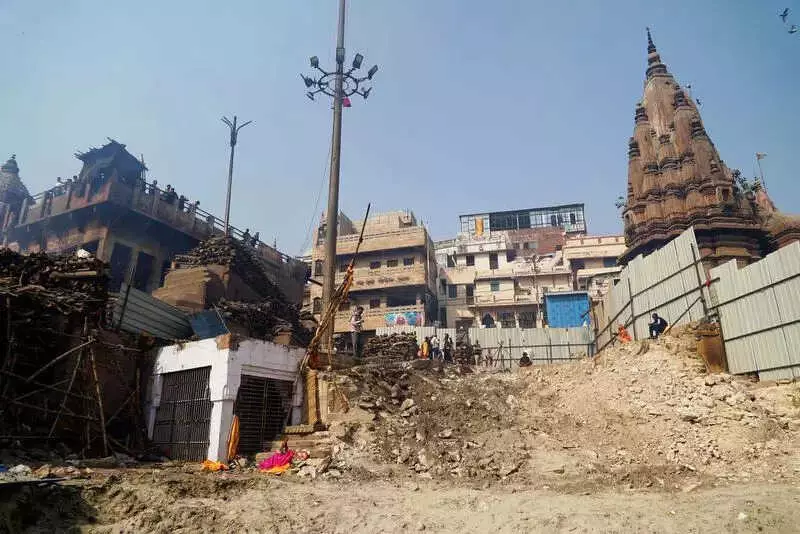
In Varanasi, a major controversy has erupted over the ongoing rejuvenation work at the historic Manikarnika Ghat. Local residents have leveled serious accusations against the administration, claiming that idols kept inside some structures at the ghat are being desecrated during the development process.
Administration Firmly Denies All Charges
The administration has strongly rejected these allegations. Officials explained that the stone pieces containing carved images, which are being presented with false claims, do not depict deities. Instead, they represent architectural artwork from the walls of structures known as Madhi, or platforms.
According to administration statements, these structures are being carefully preserved. They will become part of the walls in the new, rejuvenated ghat structure once the project is complete.

Social Media Videos Fuel Controversy
The situation escalated when videos circulated widely on social media platforms. These clips showed a large earthmover machine demolishing a stone structure at the Manikarnika Ghat rejuvenation project site.
Accompanying claims suggested that idols of deities were being desecrated. This sparked strong reactions from various groups and some local residents, who described the actions as hurtful to religious sentiments.
Officials Conduct Site Inspection
Following the social media uproar, officials from multiple departments visited the site. Representatives from the Varanasi Municipal Corporation, local police, and district administration all conducted thorough inspections to assess the situation firsthand.
District Magistrate Provides Clarification
District Magistrate Satyendra Kumar addressed the concerns directly when contacted on Wednesday. He stated clearly that all idols of deities and Shivlingas discovered at the Manikarnika Ghat rejuvenation project had already been relocated to safe locations.
Kumar explained that the carved stone pieces found in debris near the project site are actually artifacts. These artifacts originally formed part of the lower portions of round platforms called Madhi, located near the Masan Nath temple area where ghat steps are currently being rebuilt.
The district magistrate confirmed that all three artifacts discovered in the debris remain under the custody of the culture department. These pieces will be re-established in the new walls and structure once the ghat rejuvenation work concludes.
Ghat Rejuvenation Project Details
Rejuvenation work continues at an accelerated pace at both Manikarnika Ghat and Harishchandra Ghat. These sites represent the great cremation grounds of Varanasi, known as the city of salvation.
The project receives funding through corporate social responsibility initiatives. The Rupa Foundation and JSW's Sajjan Jindal have provided CSR funds to support this significant development work.
Comprehensive Rejuvenation Plan
The Manikarnika Ghat rejuvenation plan includes several important features. The renewed ghat will feature eighteen pyres each on both the lower and upper platforms.
The project aims to bring all necessary facilities to the site in an organized manner. This includes proper arrangements for performing various rituals associated with cremation ceremonies.
Additional provisions cover proper storage of pyre-wood by traders and appropriate disposal of ashes. The plan also addresses immediate segregation of other waste materials, including floral waste, with proper disposal mechanisms.
Architectural Vision for the Ghats
Artistic renderings of the project reveal that both cremation ghats will feature exterior designs matching the look of Kashi Vishwanath Dham. This creates visual harmony across important Varanasi landmarks.
The rejuvenated ghats will include properly spaced facilities for various needs. These encompass paths for final processions, designated areas for performing corpse bathing rituals, waiting areas for families, and storage spaces for pyre-wood among other necessary amenities.