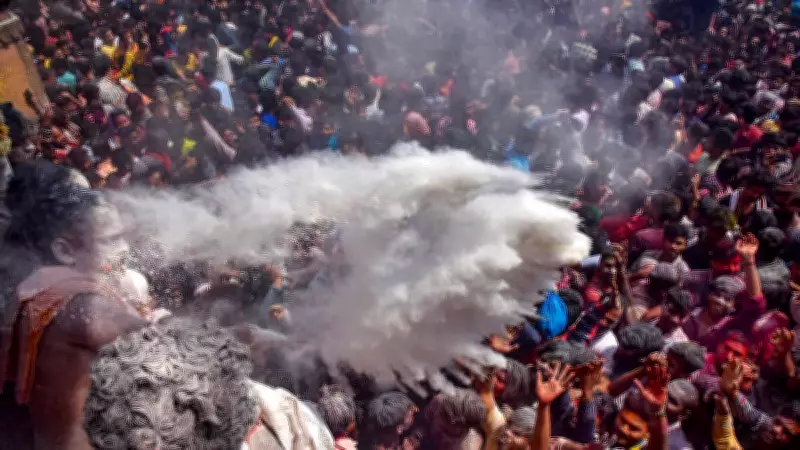
Kashi Vidvat Parishad Voices Opposition to 'Masane Ki Holi' Celebrations in Varanasi
The Kashi Vidvat Parishad, a prominent religious and scholarly body in Varanasi, has issued a strong statement opposing the 'Masane Ki Holi' festival held in the city's cremation grounds. The group argues that such festivities are inappropriate for these sacred spaces, which are traditionally reserved for mourning and last rites.
Sanctity of Cremation Grounds at Stake
According to Vinay Pandey, a member of the Kashi Vidvat Parishad, cremation grounds, or shamshans, hold a deep spiritual significance in Hindu culture. "There is a certain sanctity attached to a 'shamshan' (cremation ground). It is not a place for festivities. Youths are now violating established traditions there," Pandey claimed in a recent statement. He emphasized that these areas should be treated with reverence, as they are where families bid farewell to their loved ones.
The Parishad's concerns highlight a growing tension between traditional practices and modern celebrations in Varanasi, a city known for its rich cultural heritage. The group fears that allowing Holi festivities in cremation grounds could erode the solemnity associated with these sites.

Background and Cultural Context
Varanasi, often referred to as Kashi, is one of the oldest living cities in the world and a major pilgrimage site for Hindus. The city's cremation grounds, such as the famous Manikarnika Ghat, are integral to its spiritual landscape, where rituals are performed round the clock.
- The 'Masane Ki Holi' festival involves playing with colors and celebrating Holi in or near cremation grounds.
- This practice has gained popularity among some youth groups in recent years, who view it as a unique way to mark the festival of colors.
- However, traditionalists like the Kashi Vidvat Parishad argue that it disrespects the sanctity of death and mourning rituals.
The opposition comes amid broader debates in India about balancing cultural evolution with the preservation of age-old traditions. Similar controversies have arisen in other parts of the country where festivals intersect with sacred spaces.
Implications and Future Outlook
The Kashi Vidvat Parishad's stance could influence local authorities and community leaders in Varanasi to reconsider permitting such celebrations. There is a possibility of increased dialogue between traditional bodies and younger generations to find a middle ground that respects both cultural heritage and contemporary expressions of festivity.
As the issue gains attention, it underscores the need for sensitive handling of cultural practices in a diverse society. The Parishad's opposition serves as a reminder of the deep-rooted values that many in Varanasi hold dear, even as the city continues to evolve.