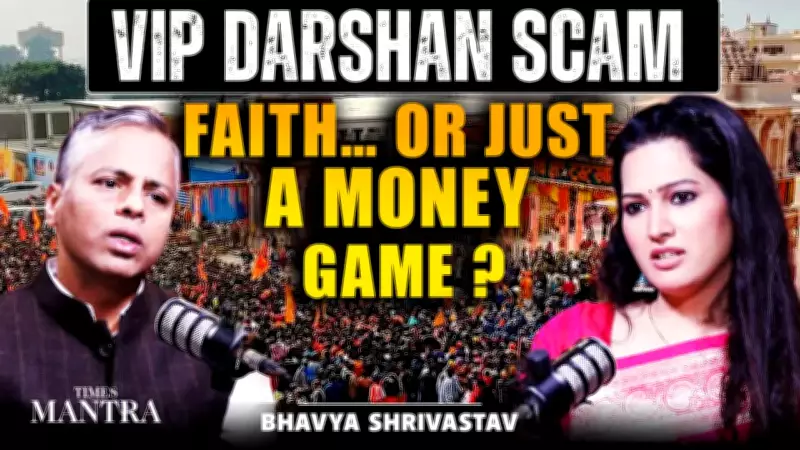
VIP Darshan Exposed: Are Temples Turning Into Money Machines?
In a thought-provoking analysis, Bhavya Shrivastav delves into the controversial practice of VIP darshan at temples across India, raising critical questions about whether these sacred spaces are prioritizing devotion or profit. This discussion sheds light on the growing trend of commercializing faith, where access to deities is increasingly monetized, potentially undermining the spiritual essence of religious visits.
The Reality Behind VIP Access
Shrivastav breaks down the mechanics of VIP darshan, revealing how it often creates a two-tier system: one for those who can afford paid shortcuts and another for ordinary devotees enduring long, exhausting queues. This disparity highlights a shift from traditional bhakti, or devotion, towards a model where financial capability dictates spiritual experience. The conversation explores whether this practice is merely a convenience or a form of exploitation that commodifies faith.
Faith vs. Commercialization
The clip questions the very meaning of true bhakti in contemporary times, as temples implement schemes that allow faster access for a fee. This commercialization raises ethical concerns, as it may alienate sincere worshippers who cannot afford these privileges. Shrivastav emphasizes that such practices could erode the core values of spirituality, turning temples into money-making ventures rather than sanctuaries for communal worship and reflection.

Impact on Devotees and Society
For many devotees, the unfairness of VIP darshan is palpable, creating feelings of inequality and disillusionment. The discussion touches on how this trend reflects broader societal issues, such as class divides and the monetization of cultural heritage. By examining real-life examples, the clip encourages viewers to reflect on whether these practices align with the principles of equality and devotion that many religions espouse.
A Call for Perspective
Shrivastav urges viewers to watch the full analysis for a nuanced perspective that challenges conventional views on temple management. This conversation is not just about criticizing current practices but also about fostering a dialogue on how to preserve the sanctity of religious spaces in an increasingly commercialized world. It serves as a reminder to prioritize spiritual integrity over financial gains in matters of faith.