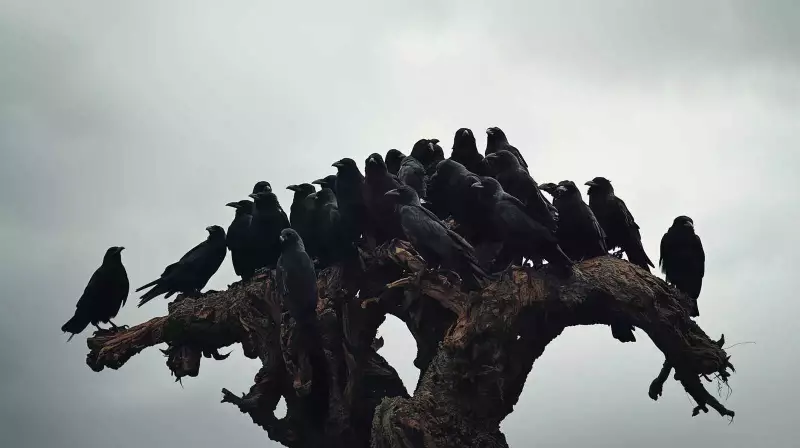
Why Are Crows Called a Murder? The Dark History Behind the Collective Noun
Crows are rarely seen alone in nature. These intelligent birds typically gather in large numbers on rooftops, open fields, and tree branches, often drawing human attention through their sheer presence and noisy chatter. When such gatherings occur, many people find themselves asking a common question: What is a group of crows called? The most familiar and intriguing answer is murder. This term appears in dictionaries and popular writing, carrying a far darker connotation than the birds themselves. While it is not a scientific label, it has persisted for centuries, alongside other older and more practical names. This article delves into the origins of the word murder, its contemporary usage, and the broader phenomenon of unusual English names for animal groups.
The Reason a Group of Crows Is Called a Murder
A group of crows is generally referred to as a murder. This word traces back to the Late Middle Ages and belongs to a set of traditional collective nouns that were often more poetic or dramatic than accurate. Most of these terms have fallen into obscurity over time, but murder of crows has maintained its popularity, largely because it is a memorable and evocative phrase that captures the imagination. It reflects a historical fascination with language and symbolism rather than strict biological classification.
The Root of the Term 'Murder' Lies in Folklore
The word murder is a reflection of old perceptions and folklore surrounding crows. Historically, these birds were thought to be connected to death, battlefields, and evil omens. Their black feathers and harsh, croaking calls contributed to such associations, leading to tales that even narrated crows gathering to decide the fate of other animals. Thus, the term murder aligns with these conventional beliefs, even though it does not accurately represent actual crow behavior, which is more social and cooperative than sinister.

Scientists Prefer Plain Language Over Poetic Terms
In modern ornithology, the term murder is rarely used. Researchers and birdwatchers typically opt for simpler, clearer words like flock or group to avoid confusion and maintain scientific precision. Murder survives mainly in literature, museums, and general conversation, highlighting its cultural rather than scientific significance. This shift underscores how language evolves to meet practical needs in different contexts.
Mob Describes Behavior Rather Than Symbolism
Another accepted term for a group of crows is mob, particularly when describing their behavior of working together to chase away predators. In this case, the word focuses on action rather than a fixed group, making it more practical though far less well-known than murder. This usage emphasizes the dynamic and protective nature of crow communities, offering a different perspective on their social structures.
Collective Nouns Reflect Language More Than Nature
English is rich with old names for animal groups, from a parliament of owls to an unkindness of ravens. Most of these terms are no longer common in daily speech, but murder of crows endures because it matches the bird’s dark reputation and adds drama to an ordinary sight. Ultimately, these collective nouns tell us more about human storytelling, cultural history, and linguistic creativity than they do about the animals themselves, serving as a fascinating window into how we perceive and describe the natural world.