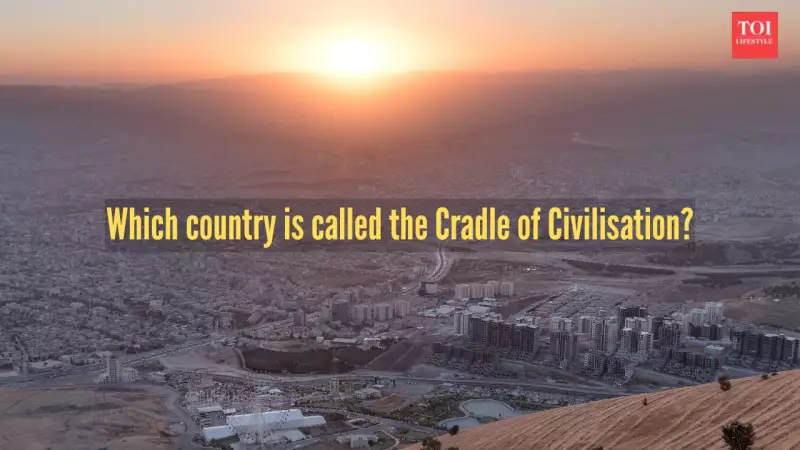
Often hailed as the very birthplace of complex human society, the land between the Tigris and Euphrates rivers holds an unparalleled place in history. This region, known as Mesopotamia and encompassing modern-day Iraq along with parts of Turkey, Syria, and Iran, is universally acknowledged as a cradle of civilization. Its story is one of agricultural innovation, urban planning, and cultural milestones that set the template for human development.
The Defining Hallmarks of a Civilizational Birthplace
What exactly earns a region the title "cradle of civilization"? Scholars identify it as a place where a complex society emerged independently, without influence from other established cultures. The key markers include the formation of a state, a defined social hierarchy, the growth of cities, and the creation of advanced communication like writing and art. Globally, experts recognize six such primary cradles. In Afro-Eurasia, the earliest are Mesopotamia, Ancient Egypt, Ancient India, and Ancient China. In the Americas, the Caral–Supe in Peru and the Olmec in Mexico are considered the pioneers.
Agriculture was the common engine for most, generating surplus food that supported centralized authority, priests, and large public projects. The Caral–Supe civilization, interestingly, might have first relied more on rich marine resources before fully embracing farming.

The Fertile Grounds of Mesopotamia's Rise
The rise of Mesopotamia was fundamentally tied to its geography. The confluence of the Tigris and Euphrates created exceptionally fertile soil and a reliable water source for irrigation. This rich environment of the Fertile Crescent supported Neolithic cultures from around 8000 BC, allowing nomadic groups to transition into some of the world's first settled farming communities.
This shift to a permanent agricultural life is precisely why Mesopotamia is so frequently called the "cradle of civilization." The Ubaid period (c. 6500–3800 BC) marks the earliest distinct cultural phase on the Mesopotamian plains, where communities began the gradual journey toward urbanisation. While northern areas (later Assyria) practiced agriculture and animal husbandry, the south developed intensive irrigated farming, overcoming the challenges of a landscape marked by harsh deserts and rugged mountains.
Engineering, Trade, and Cultural Flourishing
The development of large-scale irrigation systems in southern Mesopotamia was a game-changer, turning river water into agricultural abundance. However, the region lacked essential natural resources like stone, metal, and timber. This scarcity necessitated long-distance trade, with Mesopotamians exchanging their grain for these crucial materials.
Managing this complex web of trade, agriculture, and water distribution required an early administrative framework. This need for organization helped shape the earliest true cities. With a stable food supply and structured governance, a thriving artistic tradition and highly skilled craftspeople emerged. This powerful combination of urban planning, labour specialisation, and cultural innovation cemented Mesopotamia's defining place as the earliest cradle of civilization in the Western historical narrative.
From the administrative needs that built the first cities to the invention of writing, Mesopotamia's legacy, rooted in the soil of modern Iraq, remains the foundational chapter in the story of human urban society.