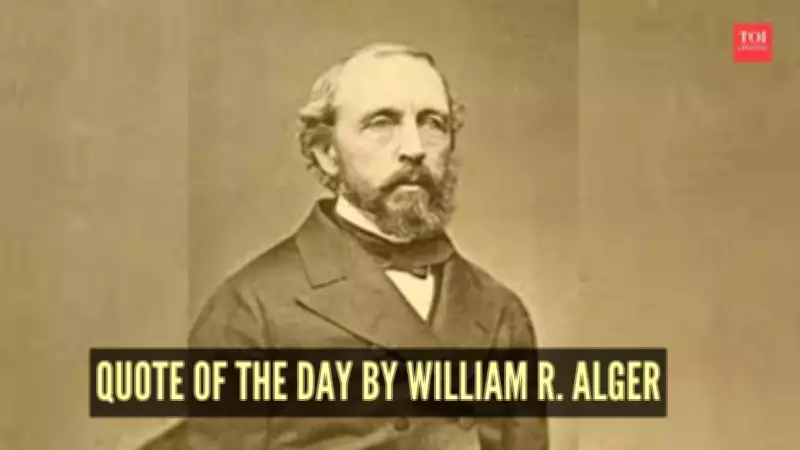
William R. Alger: A Beacon of Hope in 19th-Century America
William Rounseville Alger was a prominent 19th-century American Unitarian minister who made significant contributions as an author, poet, hymnist, and editor. His career was marked by a deep commitment to social causes, including active involvement in the abolitionist movement, and he also served as chaplain in the Massachusetts House of Representatives. Alger is best remembered for his thoughtful writings that delved into belief systems, ethical frameworks, and the human condition, often focusing on the emotional and spiritual challenges faced by ordinary individuals.
The Philosophical and Spiritual Blend in Alger's Work
Alger's writings uniquely blended spirituality with philosophy, making his insights not only relevant in religious contexts but also applicable to everyday life. He consistently emphasized hope as a foundational guide to help people overcome hardships, portraying it as a vital force in navigating life's adversities. Throughout his illustrious career, Alger championed the power of resilience and optimism, exploring themes of character development and moral responsibility. His works encouraged hopefulness even in the face of adverse circumstances, steering away from negative perspectives on failure.
Due to the uplifting nature of his contributions, many of Alger's quotes continue to circulate today, serving as timeless reminders of the human necessity for hope and optimism. One of his most famous quotes, widely attributed to him, encapsulates this ethos: “After every storm the sun will smile; for every problem there is a solution, and the soul's indefeasible duty is to be of good cheer.” This statement reflects Alger's profound belief in optimism as both a spiritual principle and a practical approach to living.

Analyzing Alger's Timeless Quote on Resilience
The first part of the quote conveys that life's difficulties are temporary, much like storms that eventually give way to sunny weather. It suggests that hard times will inevitably change, and when challenges seem overwhelming, approaching them with calmness and thoughtfulness can make solutions possible. Alger teaches that answers exist, even if they are not immediately visible, thereby promoting the concept of resilience—the ability to persevere through tough situations and continue moving forward despite obstacles.
The second part of the quote advances a deeper moral message by framing good cheer as the soul's “indefeasible duty.” This implies that maintaining hope is not optional but essential. Alger's perspective does not advocate minimizing pain or suffering through pretense; instead, it calls for a mindset characterized by courage, gratitude, and trust in renewal. This form of optimism not only aids in personal recovery but also inspires and encourages those around us, fostering a supportive community spirit.
Relevance of Alger's Wisdom in Modern Society
In today's world, filled with uncertainty, rapid change, and emotional pressures, Alger's words hold particular significance. Individuals often confront storms such as professional setbacks, personal losses, health issues, or emotional struggles. In these moments, remembering that sunshine follows rain can prevent despair, while faith in forthcoming solutions can motivate proactive action. Alger's teachings serve as a classic reminder of the importance of hope, perseverance, courage, and optimism as integral aspects of the human spirit.
We may face unexpected storms, but they are not permanent; solutions may require patience, yet hope assures they will emerge. Ultimately, the duty to stay hopeful lies at the core of human courage and compassion, enabling us to live with confidence and optimism for better times ahead.