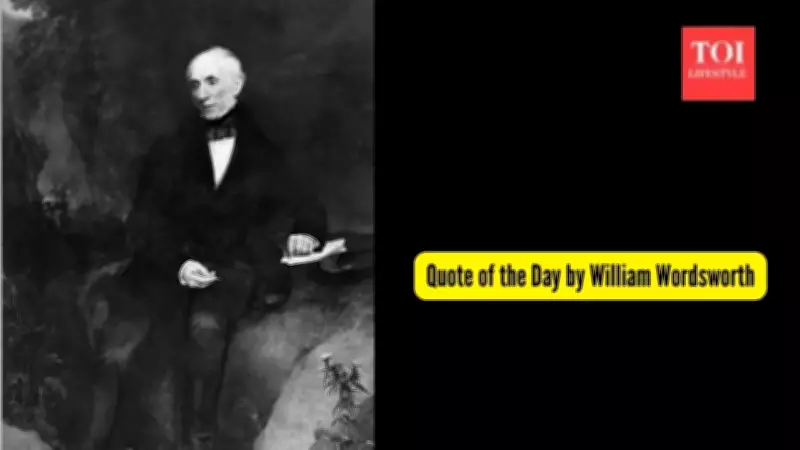
William Wordsworth stands as one of the most significant Romantic poets in English literary history. His profound influence reshaped how poetry was perceived and created, marking a departure from traditional conventions towards a more personal and natural expression.
Early Life and Inspirational Beginnings
Born on April 7, 1770, in Cockermouth, located within England's picturesque Lake District, Wordsworth's childhood was immersed in a landscape of majestic mountains, flowing rivers, and expansive open spaces. This natural environment deeply impacted his imagination, becoming more than just a backdrop—it fundamentally shaped his thoughts, writings, and emotional responses. Nature, for Wordsworth, was not merely a setting but a transformative force that guided his creative vision.
Founding the Romantic Movement
Together with his close friend and fellow poet Samuel Taylor Coleridge, Wordsworth pioneered the Romantic movement in English literature. This revolutionary shift emphasized emotions, personal experiences, and a profound connection to nature over rigid rules and classical forms. In the preface to their collaborative work, Lyrical Ballads (1798), Wordsworth famously advocated for poetry to employ the "real language of men," challenging the era's trend of complex language aimed at the educated elite. He believed that genuine emotions did not require embellishment but authenticity, describing poetry as "the spontaneous overflow of powerful feelings" tempered by thoughtful reflection rather than dramatic excess.

Nature as a Central Theme
Wordsworth's poetry is renowned for its celebration of nature, which he viewed as a teacher, healer, and moral guide. In iconic poems such as I Wandered Lonely as a Cloud, Tintern Abbey, and Lines Written in Early Spring, nature is portrayed as a living entity that soothes the mind, balances emotions, and offers spiritual insights. He argued that immersion in natural settings could foster kindness, calmness, and introspection in individuals. His depictions often feature simple landscapes—fields, flowers, rivers, and hills—yet they resonate with deep emotional and philosophical depth.
Embracing Everyday Life and Simplicity
Beyond nature, Wordsworth's work is distinguished by its focus on ordinary people and daily experiences. He wrote about shepherds, farmers, children, beggars, and solitary figures, finding dignity and emotional truth in their lives. Poems like We Are Seven and The Solitary Reaper illustrate how seemingly minor moments can carry significant meaning. Rather than addressing grand themes, Wordsworth concentrated on personal, intimate scenes that evoke universal emotions such as love, loss, joy, and memory.
Literary Style and Enduring Impact
Wordsworth's writing is characterized by clarity, musicality, and an avoidance of ornate language. He favored straightforward speech and natural rhythms over elaborate imagery or complex metaphors. This simplicity allows readers to connect directly with the emotions in his poetry, often feeling as though he is speaking to them personally rather than performing. His ability to convey profound feelings through accessible words is a key reason his work continues to resonate across generations.
The Role of Memory in His Poetry
Memory is another pivotal theme in Wordsworth's oeuvre. He believed that cherished moments linger in the mind, nourishing the soul during challenging times. This concept recurs throughout his writings, suggesting that recalling small, meaningful experiences often holds greater value than pursuing monumental achievements. It underscores a philosophy that emphasizes inner reflection and the lasting impact of personal memories.
Recognition and Legacy
In 1843, Wordsworth was appointed Poet Laureate of England, a testament to his widespread influence and contributions to literature. He revolutionized English poetry by demonstrating that simplicity, honesty, and a focus on nature and everyday life could reveal profound human truths. His passing in 1850 marked the end of an era, but his legacy endures through his timeless verses.

Iconic Lines and Philosophical Insights
Among his most celebrated lines is, “The best portion of a good man's life: his little, nameless unremembered acts of kindness and love.” These words are regarded as some of the most beautiful in literature, highlighting the essence of human goodness. According to Wordsworth, a person's nobility lies not in wealth, lineage, or accomplishments but in the small, often overlooked acts of kindness performed throughout life. While external markers may garner attention, they do not define moral worth, reinforcing his belief in the intrinsic value of compassionate actions.