In the vibrant landscape of Indian fashion, a new wave of designers is redefining what it means to wear heritage. Among them, Khushi Shah stands out with her label, Khushi Shah, which has become synonymous with a delicate and powerful fusion of India's rich past with a sleek, modern sensibility. Her work is not merely about clothing; it's a narrative woven in fabric, telling stories of tradition through a contemporary lens.
The Philosophy: A Bridge Between Eras
For Khushi Shah, design is a deeply personal journey of connection. Her creative process begins with a profound respect for traditional Indian textiles, embroidery, and silhouettes. She immerses herself in the history and techniques, from the intricate weaves of Banarasi silk to the detailed artistry of Chikankari and Zardozi. However, she doesn't stop at preservation. Shah's vision is to reinterpret these age-old crafts for the global, modern woman. She actively deconstructs classic forms, experiments with drapes, and plays with proportions, ensuring each piece feels both familiar and refreshingly new. The core of her brand's philosophy is to create garments that are timeless—pieces that can be passed down as heirlooms yet feel perfectly at home in a contemporary wardrobe.
The 'Kashish' Collection: A Testament to Fusion
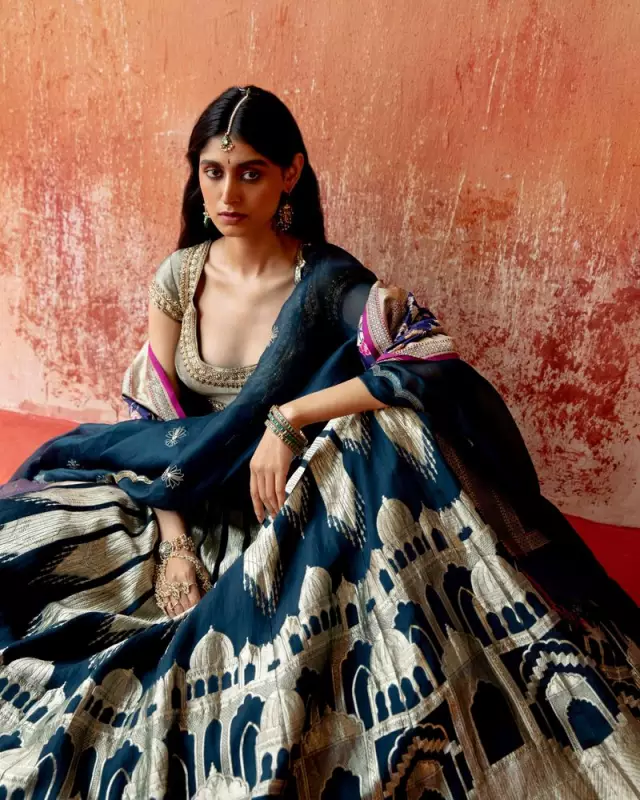
This design ethos finds its most eloquent expression in her recent showcase, the 'Kashish' collection. The line serves as a perfect case study of her ability to balance heritage and modernity. Here, one might find a classic Bandhani print, a tie-dye technique from Gujarat and Rajasthan, but instead of a traditional saree or kurta, it adorns a structured blazer or a fluid, contemporary dress. Similarly, the luxurious texture of a Banarasi weave might be cut into a sleek pantsuit or a sophisticated co-ord set, moving it far from its conventional bridal context.

The collection emphasizes versatility and wearability, focusing on separates that can be mixed and matched. Think tailored jackets with hand-embroidered motifs paired with wide-leg trousers, or minimalist silhouettes elevated with a sudden, stunning flash of traditional embroidery at the cuff or neckline. The color palette often respects the earthy, natural dyes of Indian heritage while also embracing modern neutrals and bold accents. This approach makes the pieces accessible for various occasions, from formal events to sophisticated daily wear, allowing the wearer to carry a piece of Indian heritage with effortless style.
Craftsmanship and the Modern Market
A critical pillar of Khushi Shah's work is her commitment to the artisans. She collaborates closely with karigars (craftsmen) across India, ensuring that traditional skills are not only utilized but also valued and sustained in the modern economy. This collaboration is a two-way street; while she provides design direction for contemporary markets, the artisans' expertise informs and enriches the final product with authenticity and soul. This model highlights a sustainable and ethical approach to fashion, where growth does not come at the cost of cultural erosion.
Shah's designs resonate strongly with a clientele that is globally aware yet rooted. Her customers are often women of Indian origin living abroad or modern Indian professionals who seek a connection to their culture without compromising on a global, minimalist aesthetic. They are drawn to the story behind the garment—the knowledge that they are wearing a piece of art that supports traditional communities and carries forward a legacy.
In an industry often swayed by fast trends, Khushi Shah's focus on slow, thoughtful fashion is a significant statement. She demonstrates that heritage is not static; it is a living, breathing inspiration that can evolve. By placing traditional Indian craftsmanship on a contemporary platform, she ensures its relevance for future generations. Her work answers a growing desire for fashion with meaning, identity, and longevity, proving that the past and present can not only meet but create something truly beautiful and enduring for the future.