Just a few years ago, the ultimate badge of cool for young urban Indians was an agonising wait. It was the anticipation for an international shipping notification, the reliance on a cousin flying in from abroad, or the 4 AM scramble on a glitchy app for a global drop. The unwritten rule was simple: the farther a sneaker traveled, the higher its status. But a recent encounter in a Bandra coffee shop line revealed how dramatically that code has been rewritten.
The New Hype: Local Tribes, Not Global Calendars
The man ahead wasn't sporting the ubiquitous global logos. Instead, his feet were clad in a scuffed, lived-in pair of Comets—the "SpaceWalk" edition that had famously sold out in just two hours months prior. This silent exchange of nods said it all. The axis of hype has shifted. It's no longer dictated by exclusive foreign marketing schedules but is generated by tight-knit local communities. Brands like Comet aren't just selling shoes; they're building tribes that resonate with Indian streets and social media feeds. Spotting them in the wild now feels like recognizing a secret handshake, a signal that you're tuned into the creative pulse right here at home.
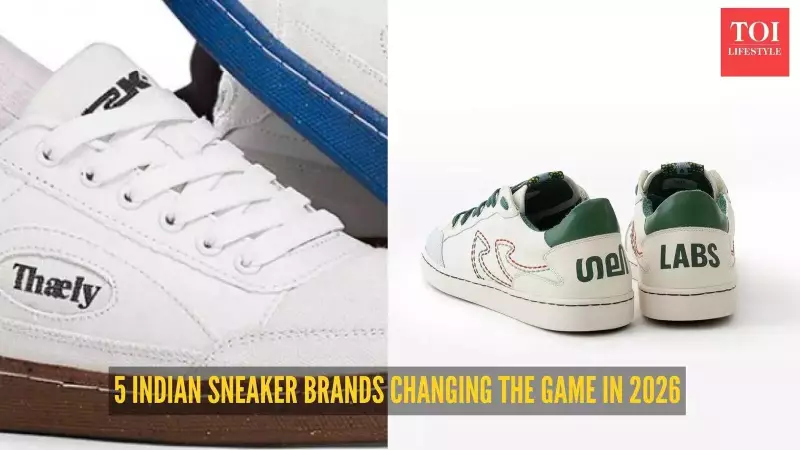
The very definition of "premium" is also being overhauled. Take Thaely, for instance. At first glance, their designs are crisp, high-end objects. The revelation comes when you learn the name means "plastic bag" in Hindi, and the shoes are engineered entirely from waste materials. The purchase transforms into a conversation. It represents a smarter, sharper choice than leather or canvas—a flex that combines responsibility with cutting-edge style. It feels like wearing a future that is consciously built on addressing the past.

Cultural Ownership and Quiet Ubiquity
Another powerful shift is towards authentic cultural ownership. For years, Indian streetwear often mimicked American skate culture. Brands like Gully Labs have flipped that script. Seeing Devanagari script or Rangoli motifs on a sneaker isn't about costume; it's about wearing an archive. It celebrates the chaotic, dusty, and vibrant visual language of Indian streets on leather and rubber. Wearing them feels less like following fashion and more like embodying your own context.
Not every statement needs to be loud. Some brands achieve a quiet ubiquity that signals market maturity. Neeman's, with its comfortable Merino wool footwear, has become the default choice for techies in Bengaluru's Indiranagar, creatives in Delhi's Hauz Khas, and travelers at airports. They represent the point where sustainable, homegrown footwear transitions from a niche, activist choice to the sensible, stylish norm for everyday life. Their widespread acceptance is a quiet revolution.
Luxury Redefined as Rebellious Craftsmanship
Perhaps the most profound change is in the concept of luxury itself. Examine a pair from Banjaaran Studio, and you'll find obsessive, hand-crafted detailing involving hundreds of steps. This luxury doesn't scream; it sits with a heavy, confident craftsmanship that dares you to compare it to mass-produced alternatives. It feels inherently rebellious. It proves that "slow fashion" is a tangible return to a deliberate pace of making, a luxury that stands in direct opposition to fast, anonymous factory lines.
This movement is about far more than footwear. It signifies a generation that has stopped seeking external validation. The question is no longer "Is this good enough for the global market?" but "What does 'good' look like on our own terms?" The sneaker, once a ticket to a global monoculture, has become a canvas for standing out within our own rich, complex story. The era of waiting for the drop is over. In India's vibrant fashion landscape, we are now the drop.