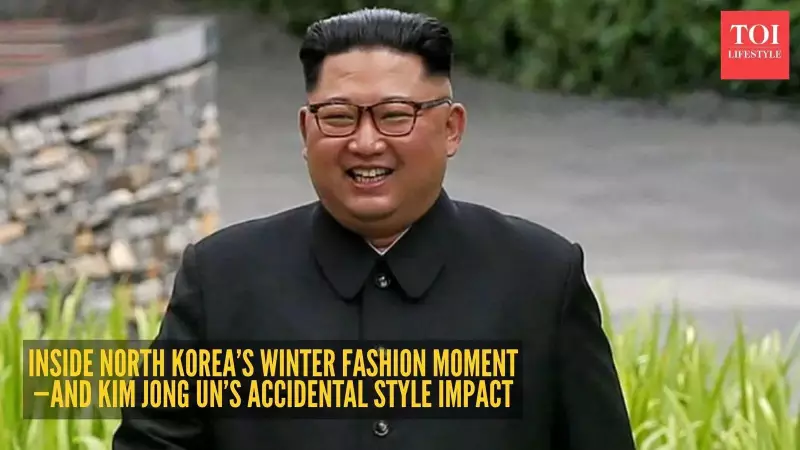
Forget Milan and Seoul. This winter, the world's most unexpected fashion revolution is unfolding in the streets of North Korea. In a surprising twist, the country's youth are turning their backs on global trends and looking closer to home for style inspiration—specifically, to their Supreme Leader, Kim Jong Un, and his daughter, Kim Ju Ae.
The "Supreme" Winter Look: Leader Leather and Faux Fur
Reports emerging from the isolated nation indicate a massive surge in demand for specific winter wear. The coveted items are not from foreign luxury brands but are direct copies of the outerwear frequently worn by the ruling family during their televised public inspections. The centerpiece of this trend is a structured, heavy-duty leather jacket, mirroring the one often sported by Kim Jong Un.
Given that genuine leather is far too expensive for most citizens, local markets have ingeniously adapted. Tailors are now producing affordable replicas, or "dupes," using synthetic leather and faux fur materials imported from neighboring China. These jackets, typically lined with cotton for insulation against the harsh cold, are selling briskly at prices ranging from 50 to 120 Chinese yuan (approximately ₹600 to ₹1,400). This allows everyday North Koreans to adopt the elite's "luxury" aesthetic without directly violating strict rules against foreign cultural influence.

The Rise of the "Combat Boot" as a Status Symbol
Completing the look is a utilitarian footwear choice. Young men, particularly in the northern provinces, are increasingly opting for ankle-high "combat style" work boots. Designed to resemble military-issue gear but polished for civilian wear, these boots often feature fur lining for warmth. Priced between ₹700 and ₹1,800, they have become a powerful status symbol. They offer a rugged, masculine alternative that is more practical than formal shoes and sharper-looking than ordinary sneakers.
Why This Trend Is Boosting Local Economies Now
This peculiar fashion wave is providing a crucial economic lifeline for local vendors. After a slow autumn season where financially strained families avoided buying transitional clothing, the sudden plunge in winter temperatures has compelled people to spend. Merchants who stock these "Kim-approved" styles are reportedly seeing their best sales figures in months. Young consumers are prioritizing these highly visible pieces of outerwear over other winter essentials, driving a mini-boom in the local garment market.
The takeaway from this phenomenon is a stark lesson in the universal nature of style. Fashion does not necessarily require political freedom to flourish; sometimes, it only needs a clear hierarchy. Even in the world's most sealed-off nation, the innate human desire to signal status and importance remains alive. In Paris, it might involve acquiring the latest designer trench coat. In Pyongyang, it means scouring the market for a knock-off leather jacket that makes you look like the most powerful man on national television. The underlying impulse is the same. The key difference is that in North Korea, an algorithm doesn't dictate what's cool—the Supreme Leader does.