The Hidden Gem of Indian Handloom: Lalitpur Zari Silk Sarees
India's textile industry stands as one of the world's richest, with every region and culture contributing unique weaving traditions that carry profound historical and cultural significance. While globally recognized textiles like Banarasi and Kanjeevaram sarees dominate the spotlight, numerous lesser-known weaves continue to thrive in local communities, awaiting broader recognition. Among these hidden treasures is the exquisite Lalitpur zari silk saree, originating from the culturally rich Bundelkhand region.
Origin and Historical Significance
Lalitpur, situated in the Bundelkhand region of Madhya Pradesh, is renowned for its historic temples, ancient forts, and deep-rooted craft traditions. This city lies at the strategic intersection of Uttar Pradesh and Madhya Pradesh, serving as a cultural crossroads. For generations, local weaving communities have meticulously preserved the unique technique of creating these sarees, passing down their skills through artisan families. The sarees are celebrated for their opulent zari work and exceptional fabric durability, embodying centuries of craftsmanship.
What Makes Lalitpur Zari Silk Sarees Unique?
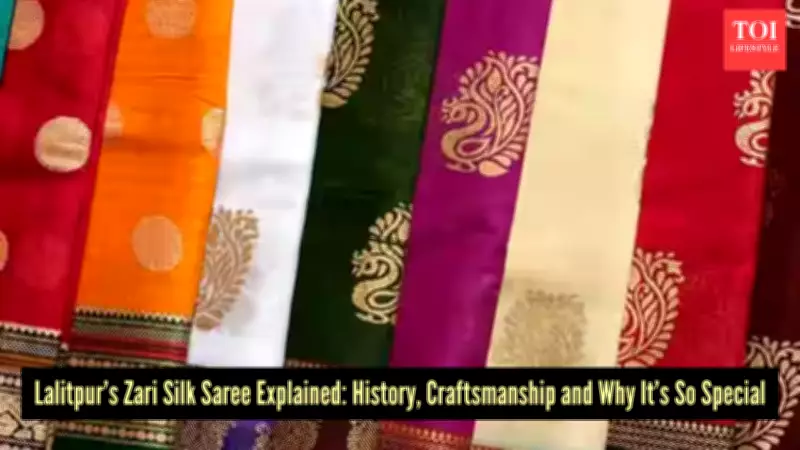
The defining characteristic of these sarees is the masterful combination of metallic zari with fine silk fabric. The silk base provides a soft yet structured drape, while traditional zari motifs are intricately woven along the border and pallu. These patterns draw inspiration from:

- Natural elements and flora native to the region
- Architectural details from local temples and forts
- Traditional geometric and cultural symbols
The color palette predominantly features gold and silver hues, which dramatically highlight the zari detailing and create a luxurious visual appeal.
The Traditional Weaving Process: A Labor of Love
Creating these magnificent sarees involves an intensive, multi-step process that demands exceptional skill and patience:
- Silk Yarn Preparation: Raw silk threads undergo thorough cleaning, careful dyeing, and precise winding onto spools
- Design Planning: Artisans meticulously map out motifs and patterns before weaving commences
- Loom Setup: Handlooms are carefully prepared with precisely arranged weft and warp threads
- Zari Weaving: Metallic threads are painstakingly inserted to form intricate borders and detailed motifs
- Finishing and Polishing: Each completed piece undergoes final refinement, with the entire process taking several days per saree
Why This Craft Remains Lesser-Known
Despite its exceptional craftsmanship, Lalitpur's weaving tradition has remained relatively obscure due to several factors:
- Limited marketing compared to major textile hubs like Varanasi or Kanchipuram
- Small, localized weaving clusters with restricted production capacity
- Insufficient national and international exposure
- Competition from mass-produced, machine-made textiles
However, the contemporary shift toward sustainable fashion, appreciation for slow craftsmanship, and growing interest in regional textiles presents new opportunities for this traditional art form to gain the recognition it deserves.