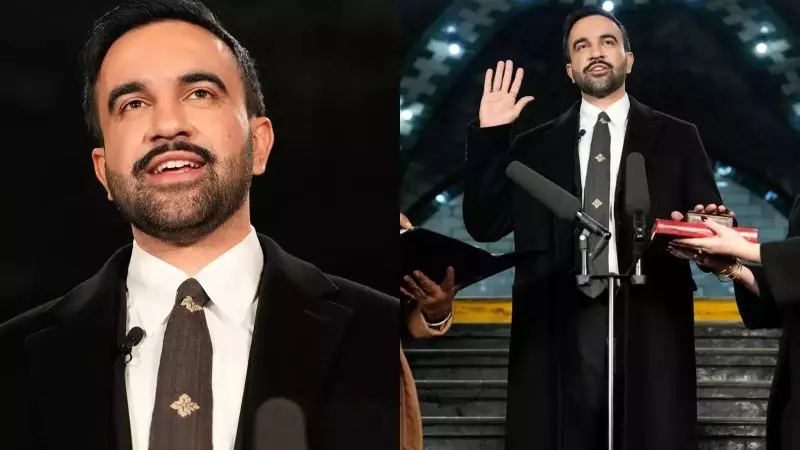
When Zohran Mamdani was sworn in as the new Mayor of New York City on January 1, 2026, his victory made headlines for its historic significance. Yet, in the days that followed, a different detail captivated the world of fashion and culture: the distinctive, textured tie he chose to wear for the ceremony. This was no ordinary accessory, but a carefully chosen piece made from Assamese eri silk, transforming a sartorial choice into a powerful narrative of identity, heritage, and conscious fashion.
A Sartorial Choice Rooted in Heritage and Ethics
Breaking away from the conventional inauguration uniform of navy suits and plain ties, Mamdani introduced a multi-layered story through his attire. The focal point was a custom-made, gold-embroidered necktie crafted by the celebrated New Delhi menswear label, Kartik Research, founded by designer Kartik Kumra. The brand is renowned for its deep engagement with Indian artisanal traditions.
The tie was fashioned from eri silk, a fabric traditionally woven in the Indian state of Assam, and also produced in Meghalaya and Nagaland. Unlike conventional mulberry silk, eri silk is known as ahimsa or non-violent silk. This is because the silkworms are not killed in the process, feeding on castor leaves instead, making the textile both cruelty-free and environmentally considerate. The tie's delicate four-petal floral motifs subtly paid homage to classic Assamese weaving techniques, bringing a piece of Northeast India's rich textile heritage to one of the world's most watched political stages.

Why This Fashion Moment Resonated Globally
Styled by Gabriella Karefa-Johnson, Mamdani’s choice resonated deeply in 2026, a time when fashion is increasingly valuing sustainability, narrative depth, and cultural craftsmanship. The eri silk tie perfectly encapsulated these trends. It served as a bold yet elegant departure from neutral political wardrobes, offering texture and cultural depth while remaining dignified.
Fashion commentators and social media quickly lit up, recognizing the move as a meaningful fashion statement. The accessory accomplished several things at once: it spotlighted sustainable and ethical materials in an industry grappling with its ecological impact; it celebrated regional craftsmanship on a metropolitan global stage; and it acted as a conversation starter about inclusive representation and personal identity in politics.
Redefining Political Style with Substance
Mamdani’s eri silk tie suggests a new horizon for political fashion, where global figures are embracing authentic, culturally specific items as part of their public persona. This shift mirrors a broader movement in contemporary fashion away from homogenous dress codes and towards diversity and storytelling. It moves beyond mere aesthetics to show something meaningful.
Fashion insiders noted that such a statement holds particular relevance today, as consumers and audiences expect public figures to reflect values like sustainability and cultural awareness. The tie, therefore, was more than an accessory; it was a medium for cross-cultural dialogue and a testament to style with substance. In a world of fleeting trends, Mamdani’s intentional choice—blending Assamese heritage, ethical production, and modern elegance—created one of the most discussed and meaningful fashion moments of the year.