

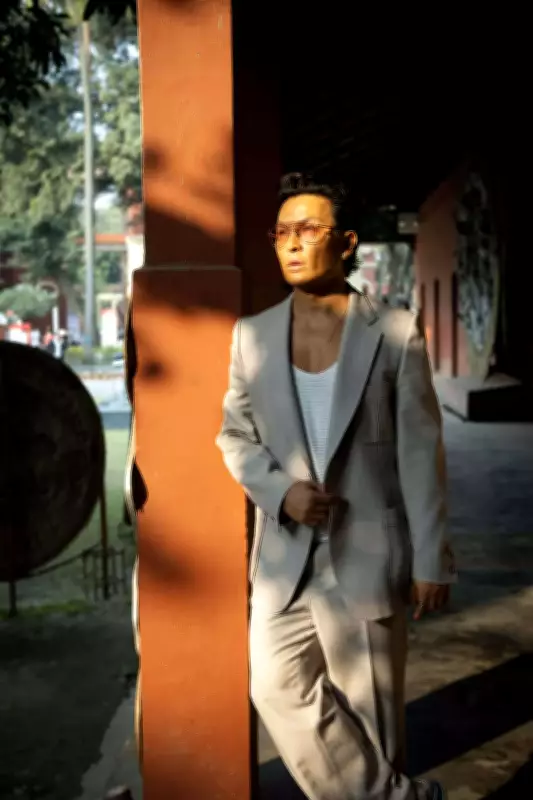
Prabal Gurung: The Journey from Kanchu to Global Fashion Trailblazer
To his mother, he remains Kanchu – the Nepali-born boy nurtured amidst strong women, vibrant colors, boundless creativity, and enduring grace. To the international fashion world, Prabal Gurung stands as a pioneering South Asian designer whose remarkable trajectory has taken him from Delhi and NIFT classrooms to dressing Michelle Obama and commanding attention at the Met Gala. During his inaugural visit to Kolkata, coinciding with his appearance at the city's literary festival for his memoir launch, Gurung engaged in a profound conversation about identity, colonial legacies, and why hope persists as a powerful creative act of resistance.
‘I Never Assume People Know Me’ – Navigating Global Stages with Humility
In a fashion industry dominated by status and presumption, Gurung consistently introduces himself with a simple, “Hi, I’m Prabal Gurung.” He elaborated on this mindset, stating, “I never assume people know me – not in New York, not even back home.” This philosophy fundamentally shapes his approach to global platforms like the Met Gala. “When I invite someone like Diljit or Alia, it’s my responsibility to explain their body of work,” he emphasized. “You can’t expect the world to recognise someone without context; that’s not grace.”
He vividly recalled the moment when Diljit Dosanjh arrived at the Met Gala in traditional attire, firmly rooted in his cultural identity. “There was a collective hush. He became one of the most photographed people there,” Gurung remembered. “He could’ve worn a tuxedo, but he chose representation.” For Gurung, this powerful moment resonated deeply with his own American journey – the choice to present his authentic self fully rather than contort to fit restrictive Western molds.

Rejecting Colonial Narratives: Heritage as Strength
In Kolkata to discuss his memoir, Walk Like A Girl, Gurung connects both his personal struggles and professional triumphs to the enduring colonial hierarchies that continue to influence global systems, including fashion. “The western world has been influenced politically, culturally and psychologically by a colonial lens,” he observed. “Even with centuries of heritage, we’re often made to feel our stories aren’t worthy.”
His career trajectory transformed when he decisively rejected this damaging narrative. “My mother reminded me that where we come from is our biggest strength—there was no need to diminish it.” Opting for consistency over conformity, Gurung ceased attempts to align with Western ideals. “We were told, ‘You don’t look like this. Your story isn’t like this.’ But the majority of the world has stories like mine,” he asserted. “We told them diligently, and eventually, they had to listen.”
This same conviction guided his early decisions to spotlight South Asian luminaries like Alia Bhatt, Deepika Padukone, and Diljit Dosanjh at the Met Gala, long before they received widespread global acknowledgment. “Stardom isn’t followers,” he clarified. “Stardom is impact – how many people you make feel seen.”
Transforming Perceived Weakness into Unshakeable Power
Reflecting on his experiences, Gurung shared, “Every feminine attribute was used to diminish me – softness, vulnerability, emotion. But the women who raised me were my heroes. I learned that what the world calls weak is actually where real power lives.” This realization underscores his commitment to authentic representation, where cultural pride and personal truth take precedence over assimilation.
Embracing the Outsider Perspective to Forge a Unique Path
Confronting school bullying, sexual assault, rejection, and life on the margins, Gurung never adopted a victim mentality. “At home, I was completely celebrated. The outside world didn’t see it, but my strength came from my family,” he revealed. Early on, he accepted that he would never conform to narrow societal definitions of masculinity or success, liberating himself from the pursuit of fitting in.

“Fitting in was never my ambition. I enjoyed solitude and carving my own identity. The Western world puts you in very limited boxes,” he noted, “but being in the minority gave me the freedom to imagine differently and recreate my own future.” As America continues to grapple with complex issues of race, immigration, and belonging, Gurung believes progress is inherently non-linear. “It’s never linear — one step forward, ten steps back. But heart-led ideas always win.”
This belief informs his view of art as intrinsically political. “An artist’s real job isn’t expensive clothes or fame,” he stated. “It’s telling stories that make even one person feel seen. Everything else is a byproduct.” Summarizing his resilient philosophy, Gurung affirmed, “I never let the bullying, abuse, assault define me. With pain came strength, and with strength I carved my own world.” Through his designs, advocacy, and unwavering authenticity, Prabal Gurung continues to redefine global fashion, proving that true influence stems from empowering others to feel recognized and valued in their own unique stories.





