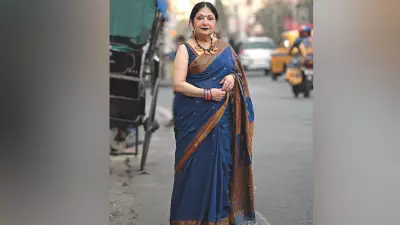
When international music sensation Tyla arrived in India in December 2025, her fashion choice became an instant headline. She stepped out in a stunning saree-inspired outfit that was not from a luxury atelier but was hand-stitched at home by Delhi-based digital creator Nancy Tyagi. This single act of sartorial selection has sparked a profound conversation about the changing face of Indian fashion and cultural representation on the global stage.
From Online Tutorials to Global Spotlight: The Nancy Tyagi Story
Nancy Tyagi's journey is a blueprint for the modern, digital-first creator. A self-taught designer from Delhi, she mastered the art of stitching by watching online videos. Operating from her home and sourcing fabrics from local markets, Tyagi built her brand not through traditional fashion channels but on social media. Her content strategy was revolutionary: she shared the entire process, from cutting and sewing to correcting mistakes and starting over. This raw transparency and undeniable skill cultivated a massive, deeply engaged online following.
Her big international breakthrough came at the 2024 Cannes Film Festival. On the iconic red carpet, a space synonymous with luxury fashion houses and celebrity stylists, Tyagi stood out in a dramatic gown she had designed and sewn herself. This moment went viral precisely because it challenged entrenched norms about who gets to participate in elite global cultural events and redefined how Indian fashion could be presented—with authenticity over pedigree.

Disrupting the Old Guard: A New Democratic Wave
For decades, India's fashion narrative for the world was curated by two dominant forces. The first was high couture from established designers, showcased on international red carpets. The second was the pervasive influence of Bollywood, carried abroad through films and award ceremonies. Nancy Tyagi belongs to neither of these worlds. Her rise from modest beginnings, fueled purely by digital community building, represents a seismic shift.
Tyla's decision to wear Tyagi's creation is therefore loaded with significance. It demonstrates that India's soft power—its ability to influence through culture—is no longer the exclusive domain of traditional cultural elites or luxury brands. It is now being powerfully shaped by grassroots creators who build influence through genuine connection and skill, broadcast from their homes to the world.
Beyond the Costume: A Nuanced Cultural Exchange
There is deeper meaning in the garment itself. While Western celebrities have often worn Indian attire like the saree, it has frequently been treated as an exotic costume or a nostalgic accessory. Tyagi's interpretation, chosen by Tyla, is different. It does not merely replicate tradition. Instead, it respectfully nods to the saree through its drape and silhouette while being a contemporary, original design. This represents a mature cultural exchange—an evolution from imitation to inspired innovation.
This moment underscores that Indian identity can travel globally without being reduced to a stereotype. It shows that the story of Indian fashion is now also a story of digital empowerment, democratic access, and authentic representation. The next major Indian fashion moment may very well emerge not from a celebrated runway in a metropolitan city, but from a dedicated creator sewing late into the night in a small home, sharing her journey with the world one stitch at a time.
The event, which took place in December 2025, is more than a viral trend. It is a testament to a fundamental realignment in how Indian creativity is perceived globally and how Indians themselves are rewriting the rules of influence, proving that cities, pedigrees, and industry connections are no longer the only keys to success.