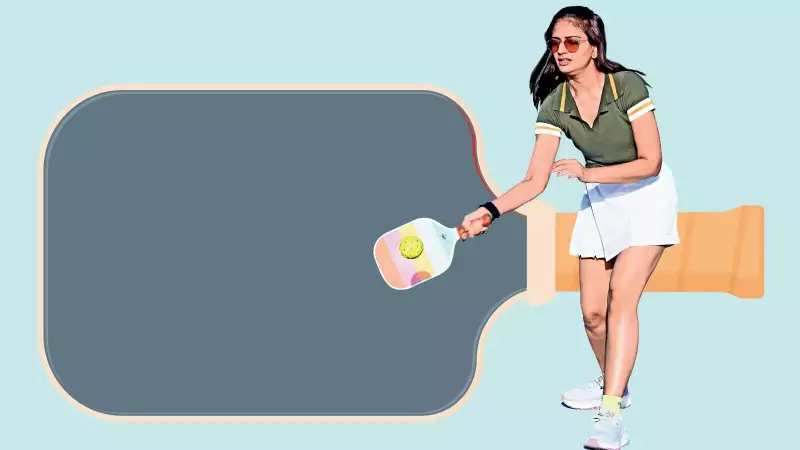
In a quiet but steady revolution, a new sound is echoing in the social clubs and recreational spaces of urban India. It's the distinct, gentle pop pop pop of a perforated plastic ball meeting a paddle. This is the sound of pickleball, an American sport with an unusual name, which has quietly planted its roots in the country and is now blossoming into a significant social movement.
From Curious Import to Community Craze
The journey began just a few years ago, around the early 2020s, in the exclusive corners of a handful of clubs in Mumbai. Initially met with mild curiosity, the sport was a puzzling novelty. A few early adopters took the plunge. Fitness enthusiasts intrigued by a new activity, a couple of Non-Resident Indians (NRIs) who had played abroad and became its evangelists, and even some tennis players looking for a lighter, less strenuous alternative, were among the first to pick up a paddle.
What they discovered was more than just a game. They found an antidote to the modern ailments of loneliness and digital fatigue. In an era dominated by screens and virtual interactions, pickleball offered something profoundly simple: old-fashioned, real-world joy. The small court became a stage for human connection—a place where people meet, share laughter, engage in friendly arguments over line calls, and ultimately, leave the court feeling happier and more connected than when they arrived.

The Simple Recipe for a Social Phenomenon
Pickleball's rapid adoption isn't accidental. Its rules are easier to grasp than tennis, the court is smaller, and the gameplay is less physically demanding, making it accessible to a wide age range. This accessibility is its superpower. It has transformed from a niche activity into a new badge of belonging for urban Indians. It provides a structured yet informal setting for social bonding, creating micro-communities that extend beyond the court.
The sport fosters a unique blend of light competition and heavy camaraderie. The arguments over whether a ball was in or out are not sources of conflict but rather rituals of engagement, breaking the ice and strengthening bonds. It fills a void for many seeking a sense of community in fast-paced metropolitan lives.
More Than a Game: A Cultural Shift
The rise of pickleball, as highlighted by business leader Harsh Goenka, points to a larger cultural shift. Indians are actively seeking out activities that pull them away from passive digital consumption and towards active, shared experiences. The game's growth signifies a collective yearning for analog pleasures in a digital world.
From its humble beginnings in Mumbai clubs, the pickleball wave is now spreading to other major Indian cities. It is establishing itself not just as a sport, but as a lifestyle choice for the socially conscious. It represents a conscious step towards wellness that prioritizes mental and social health alongside physical activity.
In conclusion, pickleball's story in India is a testament to the enduring power of simple, shared play. It proves that sometimes, the best solutions to complex modern problems—like isolation and screen addiction—come in the form of a paddle, a wiffle ball, and a willing partner on the other side of the net. The soft pop pop pop is now the soundtrack of a growing community finding its way back to genuine connection.